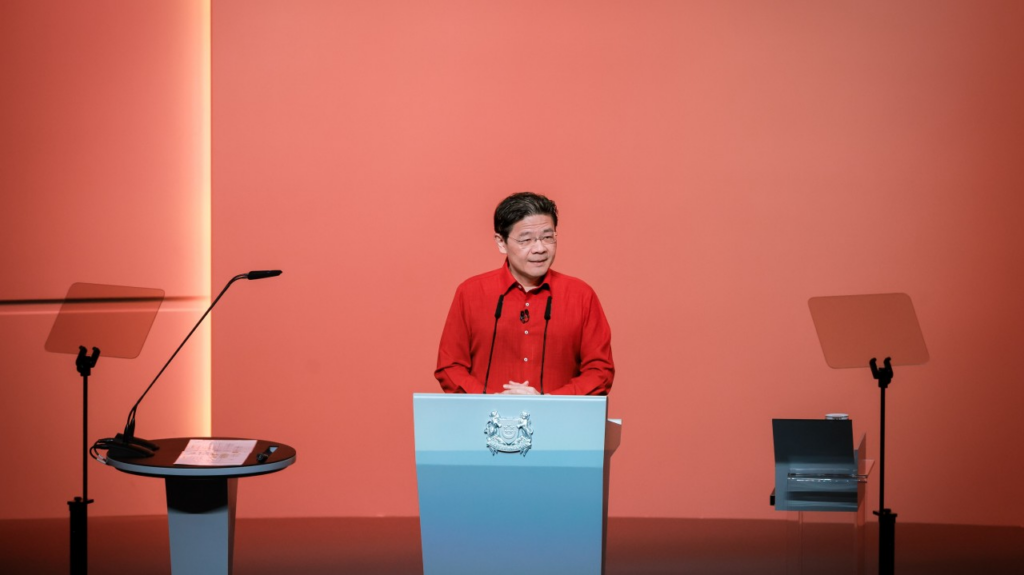
Watching the National Day Rally last night made me feel conflicted. On the one hand, Singapore just posted some record-making economic figures last week – GDP growth was up, industrial output expanded and consumer spending remained strong. Our economy was looking pretty robust and we were hiking pay for low-paying jobs in retail.
On the other hand, Prime Minister Lawrence Wong’s speech wasted no time on this. He chose instead to strike a cautionary tone. He highlighted two huge challenges facing Singapore: the coming artificial intelligence disruption and our move toward a super-aged society.
He talked about big moves to transform neighbourhoods and homes, as seniors make up over one in five, amid a suite of measures to expand health and other public services for the elderly.
And he announced the expansion of Covid-era government-funded traineeships for graduates from ITE, polytechnics and universities. His overall message to young people was not to fear. “I know that growing up is not easy. The world today can feel overwhelming. The future at times, distant and unclear,” he said.
Plus, he evoked the Singapore spirit in asking Singaporeans to adopt a “we first” mindset and emphasising the importance of unity and resilience in addressing global gloom and building a shared national identity. The US’ baseline tariff offers little comfort in a world where it is every country for itself, he said.
This vibe shift was not lost on observers who called the speech “a rallying cry”.
But to me, the dissonance was jarring. The National Day Rally had all the trappings of a speech delivered to a country facing the prospect of recession, at a time when the Singapore economy has just seen some of its best quarters in a decade.
Perhaps that is why ensuring national solidarity for the road ahead will be the toughest challenge. Because fresh grads will witness such an upheaval in entry-level jobs that government supported traineeships must be resuscitated, yet pockets of the economy will see some of the fastest growth owing to AI adoption. This is a worrying concern appearing already in China, India and many parts of the world as senior columnists Dawn Tan and Ravi Velloor outlined this week.
Perhaps, as OCBC’s Selena Ling hinted at in an op-ed for The Straits Times last week, AI could eat our lunch or provide it in the future. And it will go differently for each of us.
The bottom line: We may be witnessing the start of a two-track economy. Some sectors will be propelled forward while others will see major headwinds. It might not be so easy for Singaporeans in the former group to empathise with the challenges faced by the second.
Until next week, here are my picks of the week to get yours started.