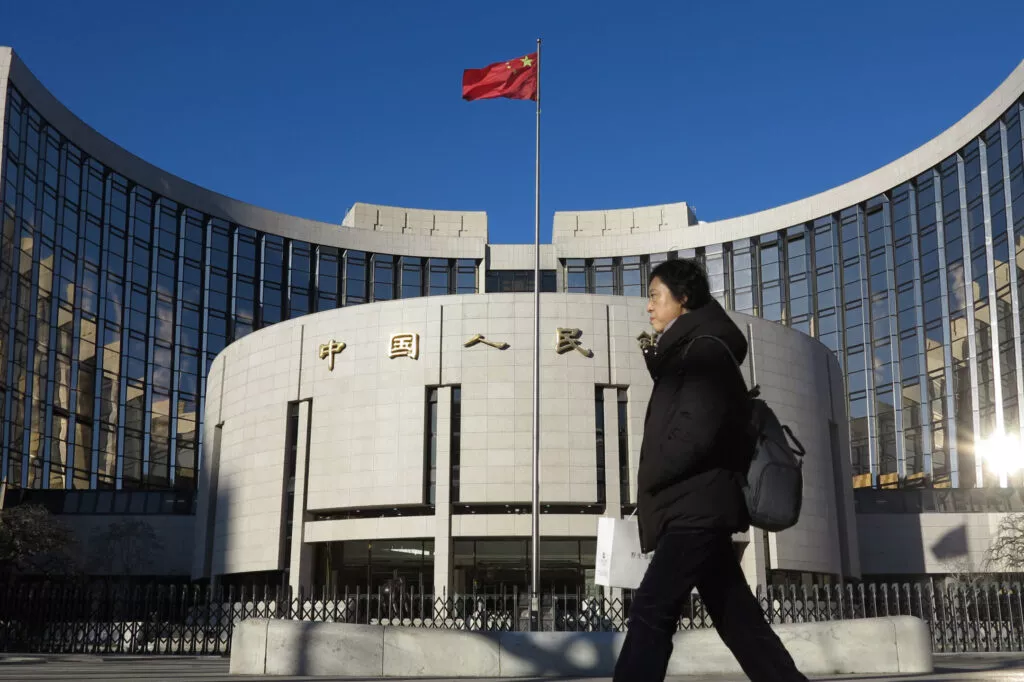
China is grappling with the rise of US dollar-backed stablecoins, which it sees as deepening American monetary dominance, while experimenting with yuan-pegged alternatives to boost its currency’s global reach. The state is keeping the domestic focus on its centralised e-CNY while allowing Hong Kong to trial more flexible stablecoin regimes, aiming to balance innovation abroad with strict control at home.
The expanding use of US dollar-backed stablecoins in international finance is prompting concern in Beijing about their potential role in reinforcing dollar dominance. While most stablecoins are privately issued, the overwhelming majority are backed by the US dollar or dollar-denominated assets, embedding American monetary power into the emerging infrastructure of global digital finance.
For China, long an advocate of a multipolar currency order, this trend is worthy of attention. Recent comments by People’s Bank of China (PBoC) Governor Pan Gongsheng, and former governor Zhou Xiaochuan make clear that stablecoins are seen as both a risk and an opportunity. While stablecoins risk reinforcing dollar hegemony, yuan-based stablecoins might offer a pathway to expanding the global role of China’s currency.
This growing awareness within China’s monetary establishment reflects a deeper dilemma. Beijing began developing its central bank digital currency, the digital yuan or e-CNY, over a decade ago and has invested heavily in its rollout since pilot programs began in 2020.
The e-CNY is issued by the PBoC, operates under centralised authority and is programmable by design. It is designed not only to modernise China’s fiat currency, but also to extend the Chinese Communist Party’s regulatory oversight into the digital realm and strengthen its control over the domestic monetary system.
In contrast, stablecoins are typically issued by private entities and operate on public blockchains. While they are pegged to fiat currencies, stablecoins lie outside the direct authority of central banks. They are valued for their efficiency, cross-border functionality and rapid settlement capabilities, but are largely misaligned with the institutional logic of state-led, centralised monetary governance. While these tensions are particularly pronounced in China’s political context, they also reflect broader challenges faced by traditional financial systems as they contend with the disruptive implications of decentralised finance.
This contrast is especially significant in China, where the state has moved to assert authority over digital monetary innovation. The e-CNY was developed not only to strengthen central bank oversight, but also to regain control over a digital payments ecosystem dominated by private sector giants such as Alipay and WeChat Pay. It is also a response to perceived threats posed by cryptocurrencies, which the state banned outright in 2021.
Recent developments suggest that Beijing is cautiously reassessing its position. At the 2025 Lujiazui Forum, Governor Pan noted that stablecoins and central bank digital currencies are accelerating the transformation of global payment systems — a process made more urgent by rising geopolitical rivalry and the weaponisation of traditional financial infrastructure.
Pan noted that these innovations are fundamentally reshaping the traditional cross-border payment landscape. Former Governor Zhou, speaking at the same event, warned that dollar-linked stablecoins could further entrench US monetary dominance, while suggesting that yuan-linked stablecoins could enhance the renminbi’s (RMB) international role.
These remarks reflect growing recognition within China’s monetary establishment that stablecoins are no longer peripheral or speculative. Instead, they are becoming embedded in the rapidly evolving architecture of global digital finance.
The implications of this shift are taking shape in Hong Kong, where a new regulatory framework for stablecoins came into effect on 1 August 2025. Unlike the mainland, which maintains strict controls over digital financial instruments, notably cryptocurrencies, Hong Kong is pursuing a more permissive approach.
The new legislation allows stablecoin issuers to obtain licences and offer digital assets to the public provided they meet reserve and governance requirements. Analysts have suggested that Hong Kong could become a testing ground for yuan-pegged stablecoins, offering Chinese authorities an offshore mechanism to promote the RMB in global digital finance. This trajectory aligns with broader shifts in China’s RMB internationalisation strategy and fits with a broader pattern in China’s political economy where experimentation on the periphery is permitted, but strict control at the core is maintained.
The geopolitical logic of this approach is clear. Stablecoins have emerged as powerful vehicles for extending US dollar dominance, particularly through cross-border use. This has been most notable in emerging markets where they often function as de facto digital dollars. They facilitate low-cost remittances, digital asset trading and cross-border transactions with minimal friction. For China, the challenge is to compete with this functionality while preserving its own regulatory and political model.
This cautious stance also reflects a broader culture of regulatory risk aversion, in which avoiding policy failure is often prioritised over enabling disruptive innovation. A domestically circulating stablecoin may risk undermining capital controls and central bank authority. In contrast, an offshore, yuan-pegged stablecoin could enable international adoption without exposing the domestic system to market volatility.
In this sense, China appears to be pursuing a compartmentalised approach to its digital currency strategy. At home, the digital yuan is intended to reinforce the primacy of state-led monetary governance. Abroad, the state may be willing to permit more flexible instruments, such as yuan-linked stablecoins regulated by Hong Kong to enhance the currency’s global reach. This strategy allows Beijing to manage risk, preserve domestic control and selectively engage with global financial innovation.
The tension between these imperatives should not be underestimated. Stablecoins rest on fundamentally different assumptions about governance, trust and monetary authority. The political foundations of the Chinese system are structurally and ideologically incompatible with the core tenets of decentralised finance.
The challenge for Beijing is to harness the functional benefits of stablecoins without relinquishing control. How China manages this balancing act will have important implications not only for the international role of the RMB, but also for the broader evolution of digital monetary governance amid rising geopolitical tensions.
Dr Monique Taylor is University Lecturer in World Politics in the Faculty of Social Sciences at the University of Helsinki.
This work has received funding from the European Union’s Horizon Europe coordination and support action 101079069–EUVIP–HORIZON-WIDERA-2021-ACCESS-03. Funded by the European Union. Views and opinions expressed are however those of the author(s) only and do not necessarily reflect those of the European Union or the European Research Executive Agency (REA). Neither the European Union nor the granting authority can be held responsible for them.