Trade levies are starting to drive up costs for goods from cans of soup to car parts
Official data and statements from companies are pointing to accelerating price rises for an assortment of trade-dependent products after companies sold off inventories and moved to shift the cost burden of tariffs on to consumers.
Data from the Bureau of Labor Statistics showed that in the six months to August, prices for audio equipment rose by 14 per cent, dresses were up by 8 per cent and tools, hardware and supplies had risen by 5 per cent. Most of these goods are imported.
“Over the past two years, goods inflation has been about zero. We are beginning to see goods inflation creep up,” said Mark Mathews, chief economist at the National Retail Federation.
President Donald Trump shocked markets six months ago when he declared sweeping “reciprocal” tariffs on virtually every country. But his trade wars have so far been less damaging than many economists feared, with the US headline inflation rate running at 2.9 per cent in August.
Some retailers rushed imports to beat tariff deadlines. Others are protecting margins by raising prices on particular items. Costco, the warehouse club retailer, curtailed its tariff exposure by displaying fewer imported winter holiday items such as toys and decorations, while filling vacated floor space with high-value saunas and backyard sheds, Ron Vachris, chief executive, told analysts last week.
But many businesses are becoming more explicit about price rises as they offset the higher costs of imported goods, which make up just over a tenth of US consumer spending.
Some content could not load. Check your internet connection or browser settings.
Since April, leading retailers have raised prices on 11 of 29 “soft line” products, such as T-shirts and shoes; 12 of 18 “hard lines”, such as bicycles and dishwashers; and five of 16 sporting goods items, according to a sample of imported goods tracked by Telsey Advisory Group, a Wall Street research firm.
“That indicates to us that tariffs are having an impact and causing prices to go up,” said Joe Feldman, an analyst at Telsey.
Ashley Furniture, the world’s largest furniture manufacturer, plans to raise prices for the majority of its products by 3.5 to 12 per cent starting on Sunday, according to a notice to customers first reported by Home News Now, an industry publication.
“The ongoing tariff situation has created significant challenges with cost impacts across our industry,” said the notice from Todd Wanek, chief executive. Ashley did not respond to requests for comment.
Ashley’s notice came before Trump’s announcement this week of a new 25 per cent on upholstered furniture, to take effect on October 14.
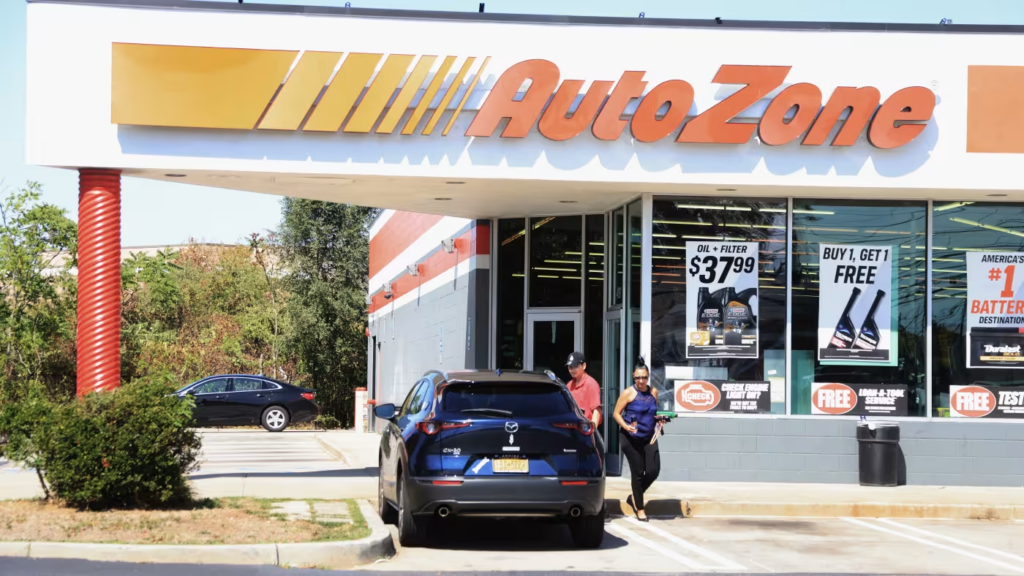
At car parts retailer AutoZone, “there probably will be more” price rises as the full impact of tariffs becomes felt, Philip Daniele, chief executive, told analysts late last month.
He said many customers would be willing to pay. “If the starter breaks, your car is not going to start,” Daniele said. Drivers are faced with a choice: “Either bum a ride or get your car fixed or take an Uber,” he added.
Coffee prices have been surging, in part because of 50 per cent duties on Brazil, the world’s largest coffee exporter. Tariffs on imported tin-plate steel has also driven up the price of food cans.
“We’re limited to where we can source tin-plate. And as a result, we do have to look at some surgical price increases,” Carrie Anderson, chief financial officer at soup maker Campbell’s, said at a conference last month.
An Institute for Supply Management survey released on Friday pointed to tariff concerns in industries including food services, construction and utilities.
“Tariffs continue to inject an unnecessary level of uncertainty across the broader economy, and costs are now beginning to increase with the full effect of the tariffs now coming into play,” an anonymous real estate executive told the survey.
Fed chair Jay Powell said last week that, so far, US importers and retailers, and not US shoppers, had shouldered most of the burden of Trump’s tariffs.
Nathan Sheets, global chief economist at Citigroup, estimates US consumers have paid only 30 to 40 per cent of tariffs’ cost, with about two-thirds borne by companies. But he forecast consumers’ share to expand to 60 per cent in the months ahead.
“We think there is more to come for the consumer,” he said on a call with Citi clients on Friday.