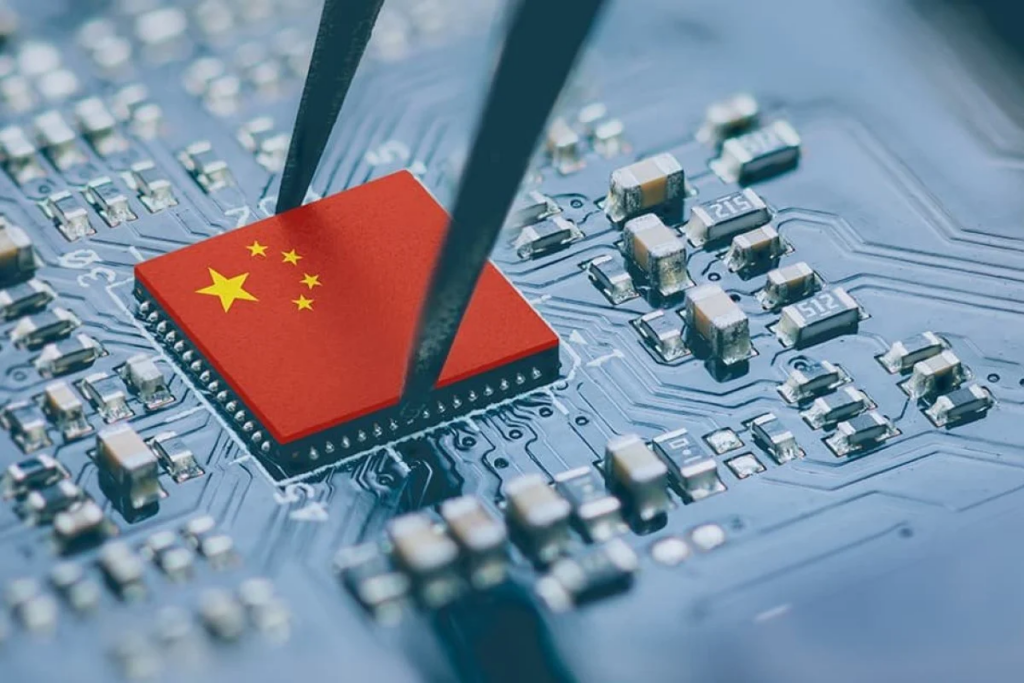
In a new trade move against China’s semiconductor industry, the US Trade Representative Office said it had determined that Beijing’s drive for dominance in the sector is “unreasonable and discriminatory” and poses a direct threat to US commerce.
In a formal notice of action filed with the Federal Register, the agency said the US is implementing a tariff action on a wide range of Chinese semiconductors, with an initial rate of 0 per cent. The rate is set to rise in 18 months, on June 23, 2027, to a higher level that will be announced 30 days before the deadline.
Analysts said the delayed timetable underscores that the move is intended as much to signal resolve and retain leverage over Beijing as to deliver an immediate economic impact, with Washington opting to keep pressure in reserve rather than escalate tensions now.
The investigation, launched on December 23, 2024, concluded that China has employed “sweeping non-market policies” to capture global market share and displace foreign competitors. The USTR said China’s industrial plans target “every major segment of the semiconductor supply chain,” including fabrication, design, assembly, testing and packaging.
“China’s pursuit of its dominance goals has severely disadvantaged US companies, workers, and the US economy generally,” the notice said, citing lost sales, reduced competition, and the creation of dangerous economic dependencies.
The notice alleged China’s willingness to “weaponise dependencies” for economic coercion. It cited Beijing’s recent export restrictions on critical minerals like gallium, germanium and antimony. These materials are essential for chip production.
The tariff action covers a broad range of semiconductor products and inputs, including raw materials like silicon and doped chemical elements used in electronics.
The new measures are in addition to the existing 50 per cent Section 301 tariffs already imposed on Chinese semiconductors under previous investigations into forced technology transfer.
The notice highlights that over the past 25 years, China has issued over 100 industrial plans with more than 170 quantitative targets to force the “indigenisation” of the chip supply chain.
“Foreign firms are increasingly unable to compete with the resources of the Chinese state,” the determination concluded, noting that China’s market share targets necessarily require the displacement of foreign incumbents.
But the delayed timetable suggests the move is as much about signalling and leverage as it is about immediate economic impact, analysts say.
According to Christopher Padilla, who served as an under secretary for international trade within the US Department of Commerce during the George W Bush administration between 2002 and 2008, “the White House appears to have effectively shelved any new China tariffs until after the 2026 summits – and likely until after next year’s midterms.”
“The June 2027 deadline keeps some leverage intact, but China’s rare earth export limits have become a potent counterweight to US tariff threats”, he said.
Padilla, now a senior adviser at the Brunswick Group, a global advisory firm in Washington, added that “with affordability concerns rising among American consumers, the political space for additional tariffs has narrowed considerably”.
Wendy Cutler, a former US trade negotiator and senior vice-president of the Asia Society Policy Institute, a think tank in Washington, contended that the postponement of additional tariffs on semiconductors until 2027 had “less to do with building negotiating leverage”.
She said that the move had “more to do with keeping the US-China trade truce intact and avoiding actions that could hasten the return to tariff escalation.”