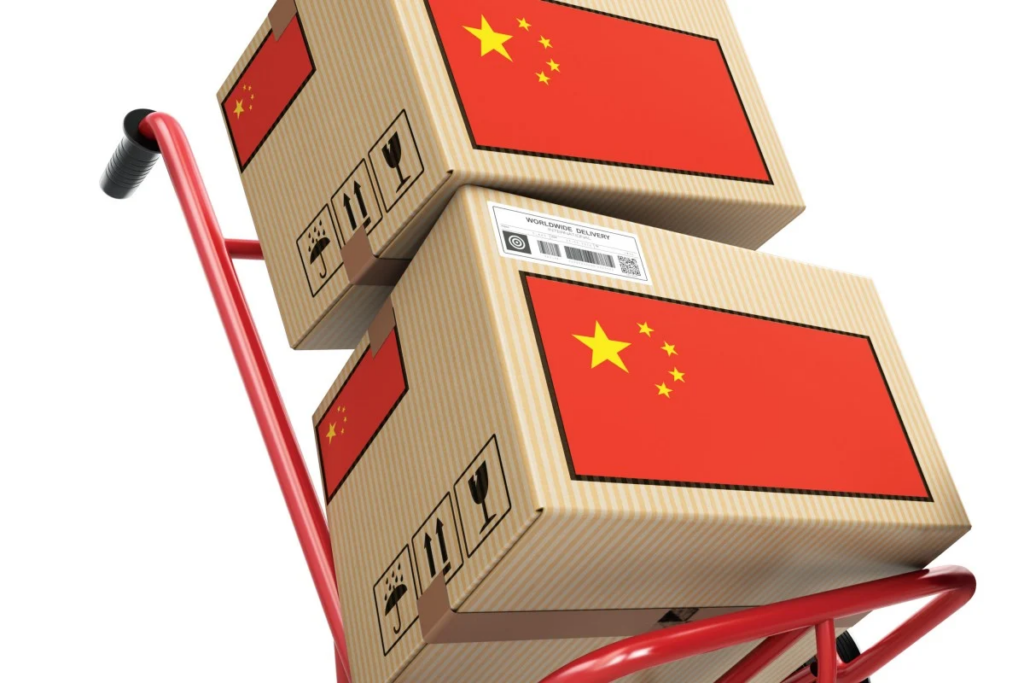
Importers in the United States are expected to front-load goods from China after the Supreme Court struck down the use of emergency powers as the legal basis for US President Donald Trump’s sweeping global tariffs, potentially opening a brief window of relief, analysts said.
Companies selling products made in China, or using Chinese raw materials, were likely to place larger orders in the coming weeks amid uncertainty over whether Trump’s pledge to raise a new tariff – from 10 per cent to 15 per cent – would take effect under a non-emergency statute or win congressional approval within the required 150 days, they said.
Trump had partly justified last year’s tariff hikes on nearly all America’s trading partners under the International Emergency Economic Powers Act (IEEPA), but the Supreme Court rejected that rationale on February 20.
Jeff Bowman, CEO of Cocona, a Colorado-based seller of sweat-drying additives used in clothing fabrics, said the ruling had been “well received” and that the company was watching how its Chinese clients would respond.
“There’s always a high degree of uncertainty in the current administration and how to plan for it,” Bowman said. “That’s sort of endemic.”
For Excel Dryer, an American hand-dryer manufacturer, the shifting tariffs had affirmed its strategy to source all parts domestically, said William Gagnon, the company’s executive vice-president.
“This environment reinforces the value of investing in American manufacturing and maintaining close relationships with domestic suppliers,” he added.
Liang Yan, a professor of economics at Willamette University in the US, said duties could fall again if Congress rejected Trump’s new 10 per cent tariff, which might weaken the incentive to front-load at today’s rates.
“It would make sense to stockpile Chinese imports, as the current tariff [imposed after the Supreme Court ruling] is lower than that under the IEEPA tariff truce,” Liang said.
But she predicted that front-loading was likely to remain relatively subdued, given that Trump was scheduled to meet with President Xi Jinping in Beijing in late March. The meeting is expected to at least confirm the continuation of the US-China trade truce, effective since November.
The US counted China – often dubbed the world’s factory – as its second-largest single-country import source in 2024, before Trump launched his “Liberation Day” tariffs last April.
In March 2025, China’s worldwide exports – including toys, garments, electronics and coveted raw materials – reached US$314 billion, up 12.4 per cent from the same month a year earlier, partly driven by front-loading ahead of Washington’s steep new duties, according to business consultancy Dezan Shira & Associates.
The Trump administration’s tariffs on China had exceeded 100 per cent in April before negotiations pushed them down.
“The recent tariff uncertainty may fuel a second round of front-loaded exports,” said Jayant Menon, a visiting senior fellow at the ISEAS – Yusof Ishak Institute in Singapore.
But if Trump were to find another statute to ramp up tariffs again, rates could increase so fast that importers would not have a chance to front-load, said Charles Chang, a finance professor at Fudan University in Shanghai.
“I think it’s going to go back on fairly quickly at this point,” he said. “I don’t think they’re going to have time to front-load.”