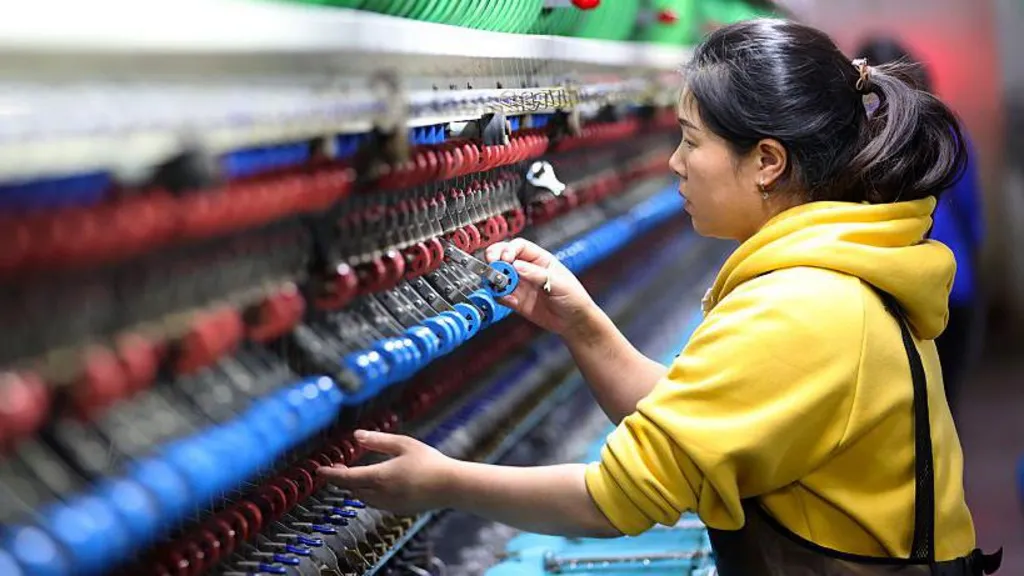
When the US Supreme Court struck down a central pillar of President Donald Trump’s sweeping tariff regime last week, businesses across Asia did not celebrate.
Instead, exporters, manufacturers and logistics companies were left grappling with more confusion over access to the world’s largest consumer market.
“No-one likes uncertainty,” said Push Sharma, founder of Singapore-based wellness brand Haldy, which had spent years preparing to enter the American market before abruptly shelving its plans last year.
“We had already done the trademark registrations, the groundwork, discussions with distributors,” he said. “Then everything suddenly felt very drastic. We had to defer our plans.”
Trump’s tariffs were designed to reduce global dependence on China among other things.
But exporters now warn that shifting US trade policy could have the opposite effect – and reinforce Beijing’s manufacturing dominance, rather than weaken it.
New year, same problems
On Friday, the US Supreme Court ruled that the emergency powers law used by Trump to impose tariffs did not authorise his policy regime, effectively invalidating billions of dollars in levies.
Within hours Trump signed an executive order to impose a new 10% global tariff, using legislation that allows the president to impose import taxes for 150 days without congressional approval. The next day he threatened to raise it to 15%.
When the duty actually came into effect on Tuesday official documents showed the rate was 10% as no new directive had been issued to increase it.
Anyone hoping for clues on Trump’s tariffs plans in Tuesday’s State of the Union address would have been disappointed.
He repeated his criticism of the ruling and said levies “will remain in place under fully approved and tested alternative legal statuses”, but offered little in the way of detail on his plans.
On Wednesday, US Trade Representative Jamieson Greer said the president will raise the global tariff to 15% in the coming days “where appropriate” but did not name which countries would be effected.
“The ruling only adds to the uncertainty right now,” said Monica Gorman, a former White House trade official, describing the new tariffs as a “stop-gap” while Washington prepares fresh measures.
Dan Ives of Wedbush Securities said in a briefing note that companies embedded in Asian production networks now face investment decisions without guidance from Washington.
“Should we move supply chains from one country to another without knowing the rules of the game? Welcome to navigating tariffs in 2026.”