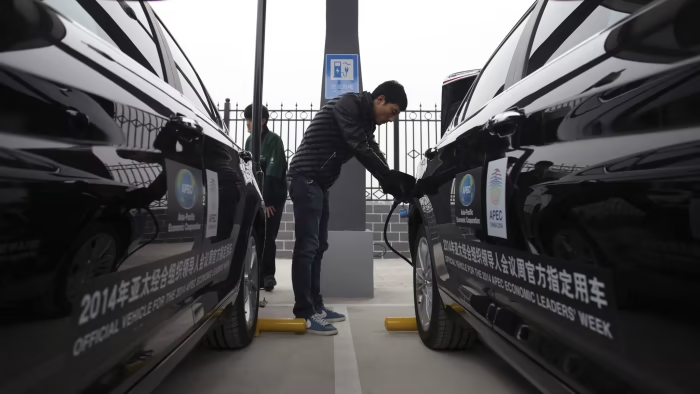
In the global rush toward electrification, China has positioned itself as a leader—touting breakthrough innovation, soaring EV exports, and world-class manufacturing capacity. Yet beneath this polished narrative lies a growing unease. Over recent months, a troubling pattern has emerged: mounting cases of mechanical failures, safety hazards, and consumer dissatisfaction surrounding Chinese-manufactured electric vehicles. These incidents not only challenge the supposed quality of China’s EV industry but expose deeper systemic problems rooted in design, regulation, and market pressures.
Chinese electric vehicles, often showcased as cutting-edge alternatives to their Western counterparts, are increasingly falling short of their promises. In one viral incident from March 2025, a Beijing resident documented a disturbing failure in her brand-new NIO ES8—marketed as a premium SUV priced around 500,000 Yuan, or approximately 70,000 US dollars. Within just three weeks of use, the accelerator pedal detached entirely during normal driving. Upon inspection, the supporting structure was found to be made from astonishingly thin, brittle plastic—flimsier, as many viewers observed, than disposable chopsticks. The video gained traction across Chinese social media, sparking widespread alarm and prompting questions about the safety standards applied to even high-end models.
This was not an isolated case. Around the same time, a professional car mechanic released an in-depth teardown of the Zeekr 001, another luxury EV produced by Geely’s portfolio. His inspection revealed unsettling discoveries: a plastic trunk frame, electrical wiring left loosely secured, and a rear bumper beam so under-engineered it could be bent by hand. Such shortcomings cast serious doubts on crash safety and structural integrity, especially when these vehicles are positioned to compete with established global brands.
The issue is far from cosmetic. Throughout early 2025, multiple Chinese brands—including BYD, the market leader, and Huawei-backed AITO—reported front axle failures in several of their EVs. Witnesses captured video evidence of wheels detaching while vehicles were mid-turn or cruising at modest speeds. Automotive engineers argue that these problems stem from the practice of retrofitting internal combustion engine (ICE) platforms to build electric vehicles—an approach that often lacks the structural reinforcements required for heavier battery packs and electric drivetrains.
Some incidents, however, raise even more alarming concerns. A Xiaomi EV involved in a recent crash reportedly shattered upon impact, with large chunks of the car strewn across the roadway. While the company has yet to issue a detailed response, consumer advocates are questioning how a vehicle can disintegrate so easily under real-world conditions. Fires and explosions are not uncommon either. A particularly harrowing event occurred in Nanjing, where an electric delivery van erupted into a 10-meter-high blaze, allegedly caused by a battery short circuit. As these incidents accumulate, a portrait emerges of an industry where safety may be lagging dangerously behind commercial ambition.
More disturbingly, efforts to address these deficiencies are often met not with transparency, but with silencing. In a high-profile example, a consumer who documented his Denza EV breaking down was banned from major social media platforms after the video went viral. In another case, two independent mechanics attempting to repair EVs outside certified service networks were sentenced to prison for allegedly tampering with proprietary vehicle data. Critics argue that such responses reflect an official emphasis on narrative control rather than consumer protection, undermining public trust even further.
Commercial users, particularly freight operators using electric cargo vans, are also voicing frustration. Many complain of exorbitant maintenance costs, poor load capacity, expensive insurance, and negligible resale value. One user remarked that these vehicles, despite being marketed as cost-effective and eco-friendly, ultimately represent a poor investment. Highway charging costs are often higher than anticipated, making long-distance hauling economically unviable. Such feedback has led some to call the entire “New Energy Vehicle” push a calculated scheme designed more to generate subsidies and headlines than to serve drivers.
Ironically, these cracks in the domestic EV market appear even as Chinese manufacturers boast global triumphs. BYD, for instance, surpassed Tesla in global EV sales in both 2024 and 2025, while promoting its proprietary autonomous driving system called “God’s Eye.” Yet many critics find these announcements uncomfortably familiar—evoking past state-led initiatives like the Great Leap Forward, which emphasized slogans and image-building over practical outcomes, often with disastrous consequences. Similarly, China’s EV industry may be prioritizing optics over durability, scale over substance.
At the heart of the issue lies a volatile mix of aggressive marketing, cost-cutting manufacturing practices, and an unwillingness to tolerate dissent. Substandard parts, particularly in vehicles priced to suggest premium quality, signal deeper flaws in regulatory oversight and consumer rights enforcement. As manufacturers race to capture export markets and consolidate domestic dominance, the long-term credibility of the entire ecosystem hangs in the balance.
As more cases surface and consumers share first-hand accounts of malfunctioning components, fire hazards, and poor after-sales support, the questions become harder to ignore. Is China’s electric vehicle boom built on a foundation that can endure the pressures of global competition and long-term reliability? Or is it a house of cards, vulnerable to collapse under the weight of its contradictions? One fact is increasingly difficult to dispute: behind the glossy billboards and high-tech promises, China’s EV sector is wrestling with a trust deficit that no amount of patriotic branding can paper over.