China’s relentless dumping of cheap goods into Indonesia is eroding the country’s MSMEs, dismantling local supply chains, and exposing deep vulnerabilities in Indonesia’s industrial ecosystem. Latest trade data shows China now accounts for more than one-third of Indonesia’s imports, underscoring the scale of this structural imbalance.
Across Indonesia’s archipelago, from Surabaya’s bustling markets to Jakarta’s digital storefronts, a quiet but devastating transformation is underway. Micro, small, and medium-sized enterprises (MSMEs) which employ 90–95% of Indonesia’s workforceare abandoning production and shifting to reselling Chinese imports. This is not globalization in its benign form; it is a structural displacement driven by China’s industrial dominance and Indonesia’s inability to compete.
Indonesia’s Minister for MSMEs, Maman Abdurrahman, has warned that entrepreneurs are increasingly ceasing production altogether, opting instead to import low-cost goods from China. For a nation that sees MSMEs as the backbone of its industrial future, this trend signals a dangerous erosion of domestic capacity.
China’s factories operate at a scale unmatched globally. Decades of state-directed industrial policy, infrastructure investment, and tightly integrated supply chains have created an environment where even small Chinese producers can churn out goods faster and cheaper than Indonesian firms. In January 2025 alone, imports from China reached USD 6.37 billion, accounting for 35.5% of Indonesia’s total imports. This dominance is not accidental it is the result of Beijing’s deliberate strategy to flood regional markets with low-cost products.
The imbalance is worsened by regulatory loopholes. Many Chinese imports enter Indonesia without proper labelling, certification, or compliance with halal and quality standards. Domestic producers, by contrast, face stringent requirements that increase costs and slow production. This asymmetry effectively penalizes local businesses while allowing foreign goods to bypass scrutiny. Reports suggest that smuggled textiles and unregistered apparel from China saturate Indonesian markets, often rebranded locally to disguise their origin.
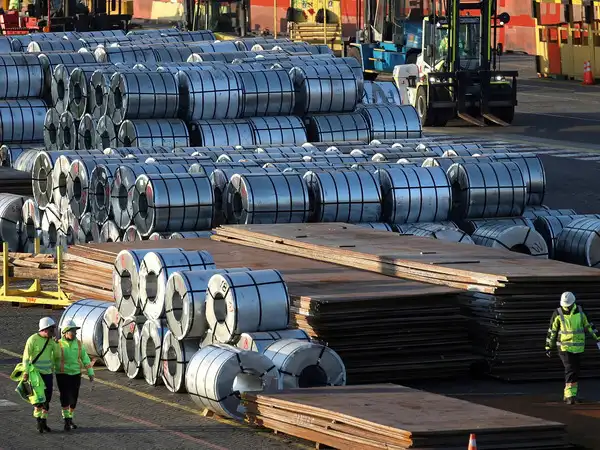
China’s tactics extend beyond Indonesia’s borders. By exploiting weaknesses in international trade enforcement, Beijing sidesteps anti-dumping measures and WTO rules. While Indonesia has attempted to impose anti-dumping duties, enforcement remains weak and inconsistent. Meanwhile, China itself has extended anti-dumping duties on Indonesian steel exports, highlighting the asymmetry: Beijing protects its industries while aggressively undermining others. This double standard underscores how China manipulates trade frameworks to its advantage.
The consequences for Indonesia are severe. The textile industry, once a cornerstone of Indonesian manufacturing, is collapsing under the weight of cheap Chinese imports. Factories are closing, workers are being laid off, and traditional crafts like batik and weaving are losing ground to mass-produced Chinese fabrics. The erosion is not only economic but culturalIndonesia’s creative industries risk being replaced by generic imports circulating through Chinese e-commerce platforms.
The broader supply chain is also unravelling. MSMEs, already constrained by outdated equipment and limited financing, are now squeezed between regulatory burdens and China’s industrial might. Many rationally choose survival reselling importsover the costly path of domestic production.
Indonesia’s dependence on Chinese goods strengthens Beijing’s economic reach and regional influence. With a population of 270 million, Indonesia represents a massive consumer market. For China, flooding this market consolidates its role as Asia’s dominant supplier. For Indonesia, however, the shift threatens long-term industrial development, reducing MSMEs to mere distributors rather than producers.
Indonesia cannot afford to treat this as a simple import issue. Protectionist measures alone will not rebuild its industrial base. Nor will blaming China alter the reality of its manufacturing advantage. Instead, Indonesia must pursue a long-term industrial strategy:
– Simplify regulations that disproportionately burden producers.
– Invest in modern equipment and technology to boost productivity.
– Strengthen domestic supply chains to reduce fragmentation.
– Provide financing and scaling support for MSMEs to compete on quality and consistency.
Only by upgrading its domestic production capacity can Indonesia resist becoming a passive consumer market for Chinese goods. The choice is stark: either rebuild a resilient manufacturing base or resign itself to being another endpoint in China’s export pipeline.
China’s dumping of cheap products into Indonesia is not merely a trade imbalance it is a systemic erosion of Indonesia’s industrial foundation. By evading local laws and bending international rules, Beijing has created conditions where Indonesian MSMEs abandon production for survival. Unless Indonesia acts decisively, its economy risks being hollowed out, with MSMEs reduced to resellers and its cultural industries displaced by mass imports. The crossroads is clear: Indonesia must choose between industrial sovereignty and dependency.