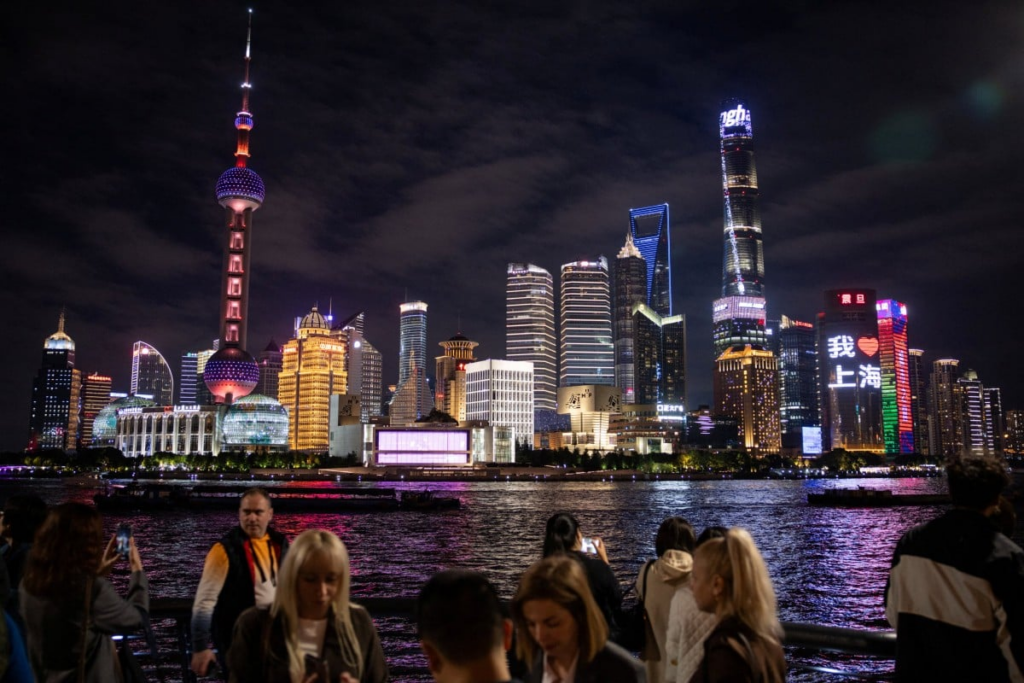
Chinese megacity ranks in the world’s five most powerful metros after New York, Tokyo and Los Angeles, with a GDP of 5.67 trillion yuan
China’s economic locomotive Shanghai is aiming for a growth rate of around 5 per cent this year, after gradually rebounding since 2023 and reaching a better-than-expected 5.4 per cent growth last year.
The megacity, whose economic size is comparable to that of Belgium with last year’s GDP totalling 5.67 trillion yuan (US$816.2 billion), is upgrading its role as a global financial, trade and shipping centre, Mayor Gong Zheng told the city’s annual plenary sessions on Tuesday.
The government is leading more foreign businesses to invest in advanced manufacturing, modern services, cutting-edge technologies and green projects, with research and development expenditure equivalent to 4.6 per cent of total GDP this year, Gong said in his government work report as the city’s legislature and political advisory body gathered.
A batch of foreign-funded projects in finance, telecoms, healthcare, culture and tourism will be launched, he said, vowing to support multinational firms to expand their regional headquarters and R&D centres and protect their legitimate rights.
As a new five-year planning cycle begins in 2026, Shanghai sees the next half-decade as a decisive period to achieve its 2035 goals, including becoming “a socialist modern and international metropolis with global influence”, according to the report.
The city already “accomplished a leap” at the close of the 14th five-year plan period, with its GDP ranking fifth among global cities for the first time in 2025, the Shanghai Academy of Development and Reform was quoted by local official media as saying. In the past it was listed behind Paris and London, with New York, Tokyo and Los Angeles at the top.
As it seeks to rival the world’s top cities in finance, the municipal government is exploring an offshore financial system, pacing up the development of a “home-grown and controllable” cross-border yuan payment system, while channelling more resources towards domestic demand expansion and technological innovation, according to Gong’s report.
Boosting domestic demand and household spending are listed at the top of the government’s priorities for the year amid China’s push for consumption-led growth, as “the impact of the fluid external environment is more profound and uncertainties and unpredictable factors are on the rise,” Gong said.
The city of 24 million people reported a 4.6 per cent increase in retail sales year on year last year, showing signs of recovery from the negative growth reported in 2024 and beating the national average of 3.7 per cent.
The mayor also listed the integration of sci-tech and industrial innovation as a major challenge, though it is seeing faster growth in its three pillar industries – integrated circuits, biomedicine and artificial intelligence – than in overall industrial growth.
The government will fast-track a number of major projects in these industries while cultivating future industries such as brain-computer interfaces and fourth-generation semiconductors, he said.
Shao Yu, director of the Shanghai Institution for Finance and Development and deputy to the municipal political advisory body, said strong export growth despite the trade war with the United States, red-hot inbound tourism spending and a stock market bull run powered Shanghai’s “defying-headwinds rise” in 2025.
Strengthening its service sector would be a key issue for future growth, he said. “Beyond the financial bull market, [Shanghai] needs to open up access in producer services and allow foreign institutions to enter manufacturing-related service sectors.”
“Artificial intelligence is a major trend, but whether it can penetrate deeper into traditional industries like finance, automotive, cultural creativity and cultural tourism [also matters],” Shao added.