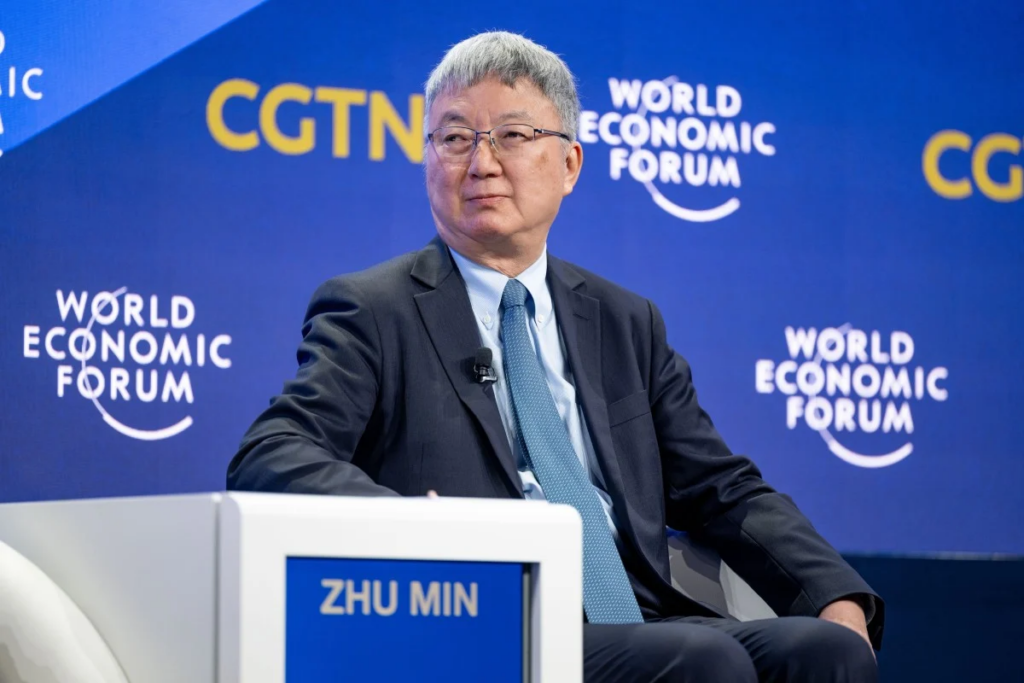
Dwindling global trust in the US dollar is one of the most prominent risks facing a vulnerable world economy this year, according to Zhu Min, an ex-deputy director of the International Monetary Fund and former deputy governor of the People’s Bank of China.
He noted that the credibility of the US dollar was being challenged as its share of global foreign exchange reserves had fallen to 57 per cent – from 70 per cent in the past.
On the other hand, “the proportions of gold, the euro and the yuan are rising, reflecting the market’s confidence that the US dollar is dropping”, Zhu wrote in an article for China’s International Finance magazine on Wednesday.
Zhu added that the US Federal Reserve’s interest rate cuts would be a critical measure for steadying the financial market this year.
“But if the pace of interest rate cuts does not align with the inflation situation, it will create new uncertainties,” he warned.
Chinese President Xi Jinping has said that China must build a “strong currency” that can be widely used in international trade, investment and foreign exchange markets and reach the status of a global reserve currency.
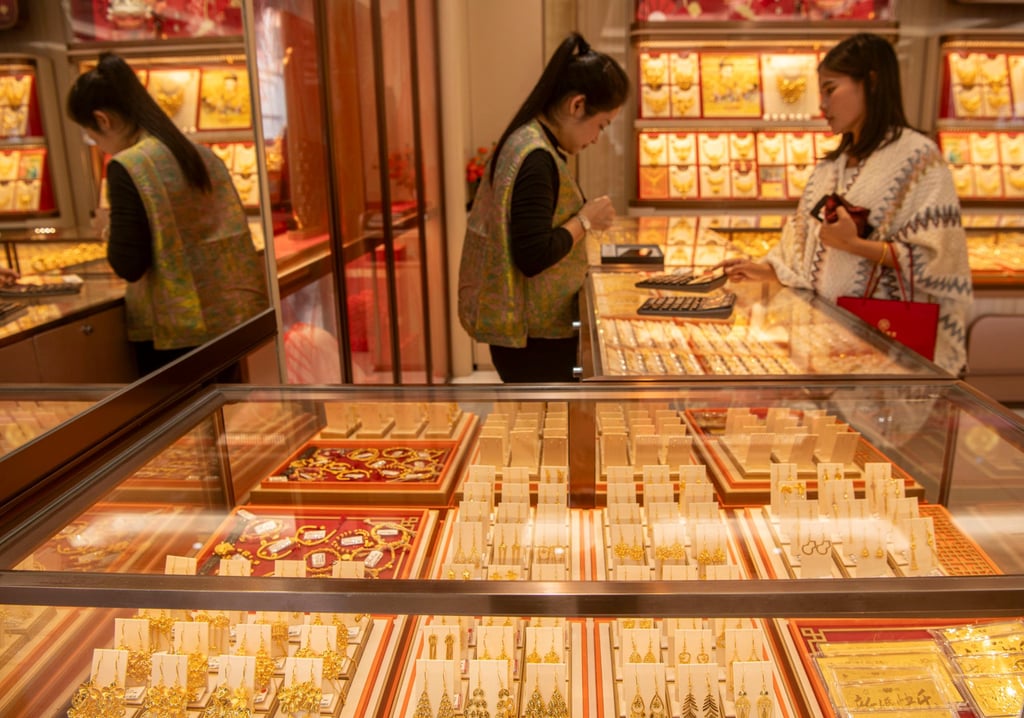
As de-dollarisation gathers pace, investors are increasingly turning to alternatives such as gold and emerging markets, including China, in a bid to diversify away from US dollar assets amid concerns about the long-term financial sustainability of the United States.
Zhu said the US continued to run a budget deficit as public spending on social security and medical welfare continued to climb.
“The proportion of short-term debts is rising [in the US] and new debts are being used to pay off old debts,” he said. “Once the market loses confidence, it would trigger a rise in interest rates and financial market turmoil.”
Zhu added that global government debt was expected to reach around 115 per cent of gross domestic product between 2028 and 2030, up from the current 97 per cent – a level he said reflected unsustainable financial risks.
“To stabilise the US dollar, America has proactively developed stablecoins,” he said. However, Zhu noted that actual US dollars accounted for just 10 per cent of the assets backing leading stablecoins USDT and USDC, while the majority was held in less liquid forms such as interbank overnight loans and US Treasuries, which made up 55 per cent, and corporate bonds at 30 per cent.
While US President Donald Trump has promoted stablecoins, the lack of global regulatory coordination and transparency could lead to uncertainty and volatility in the world’s financial markets, he said.
Another worrying sign was growing military spending triggered by political uncertainty. “The world’s military expenses have risen to US$2.7 trillion in recent years, exceeding the US$1.7 trillion in 1988 during the Cold War,” Zhu said, adding that this development marked one of the biggest risks for global security and economic stability.
As for economic development, he said the world economy had consistently recorded low growth as structural damage brought by geopolitical conflict, the Covid-19 pandemic and the global financial crisis of 2008 had yet to be repaired.
Global institutions, including the International Monetary Fund, World Bank and the Organisation for Economic Cooperation and Development, have forecast economic growth of 2.6 per cent to 3.3 per cent for 2026.
Quoting the World Economic Forum’s “Global Risks Report 2026”, Zhu said non-economic factors would play a huge role in the coming decade, including extreme weather, natural resource shortages, network security, political polarisation and geopolitical challenges.
“It highlights that the world is turning away from efficiency, low-cost operations and globalised systems to a place filled with geopolitical confrontations, fake information, political rivalry and climate crisis.”