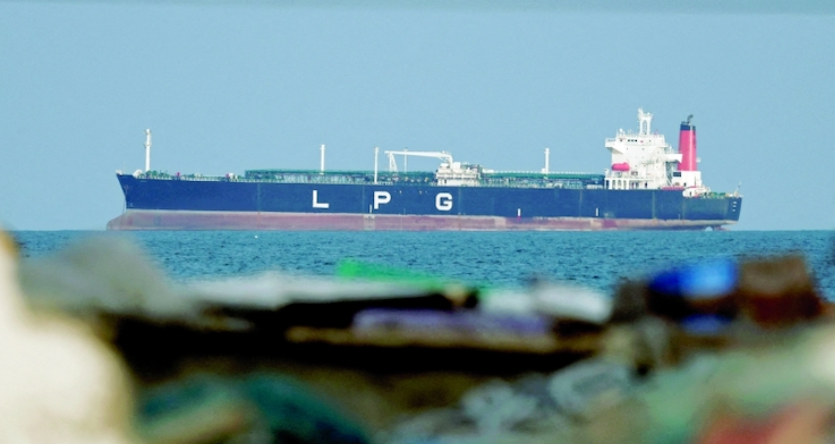
In keeping with its recent assurance of letting “non-hostile vessels” cross through Strait of Hormuz, Iran allowed two more Indian-flagged liquefied petroleum gas (LPG) tankers to pass through the critical waterway.
India’s shipping ministry confirmed on Sunday that the two vessels were expected to safely dock in the country later this week.
The carriers, BW TYR and BW ELM – in total carrying about 94,000 tonnes of LPG cargo – were sailing towards India’s coast, the ministry said in a statement.
BW TYR was proceeding towards Mumbai while BW ELM was heading to New Mangalore, the statement said, adding that the two vessels are expected to arrive in Mumbai on March 31 and New Mangalore on April 1 respectively.
Following recent US-Israel military strikes, Iran has all but halted maritime traffic in the Strait of Hormuz, a key route for global crude oil and liquefied petroleum gas.
However last week it said that it would allow “non-hostile vessels” to transit the waterway if they coordinate with Iranian authorities.
Four other Indian LPG tankers had earlier transited the strait — Shivalik, Nanda Devi, Pine Gas, and Jag Vasant. India’s Hindustan Times reported that Pine Gas and Jag Vasant both transited the Strait by following a route “determined by Tehran authorities for vessels authorised for passage.”
Indian newspaper The Hindu also reported that a Greek-owned crude oil carrier chartered by the Pakistan National Shipping Corporation was also allowed passage through the waterway.
Battling a shortage
Meanwhile, 18 Indian-flagged vessels with 485 Indian seafarers remain in the Gulf region. These include LPG carriers Jag Vikram, Green Asha and Green Sanvi, which still in the western Strait of Hormuz, Reuters reported, citing LSEG data.
India is the world’s fourth-largest buyer of LNG and second-largest buyer of LPG. Last year, the country consumed 33.15 million metric tons of LPG, with imports accounting for about 60% of demand, Reuters said. About 90% of those imports came from the Middle East, it added.
The war in Iran and the subsequent closure of passage through the Strait of Hormuz triggered oil and gas shortages throughout Asia. India, meanwhile, is battling its worst gas crisis in decades
Fearing a shortage of its gas supplies, New Delhi cut off supplies for industries to shield households from any shortage of cooking gas.
India is also loading LPG onto its empty vessels stranded in the Gulf.