Asia

Worsening development prospects for developing Asia
Asia

Worsening development prospects for developing Asia

In the years before the pandemic, the emerging economies of Asia were the world's economic success story. The economies of China, India, Indonesia, Malaysia, the Philippines, Thailand, and Vietnam expanded at a combined 6.1% CAGR from 2010 to 2019. This is in contrast to the 4.3% and 3.9% CAGRs seen in emerging markets globally and in emerging and developing nations, respectively. The growth of these Asian economies is largely a reflection of developments in China, which accounts for over 60% of total GDP. A CAGR of 6% was found regardless of whether or not China was included in the analysis. Long-lasting cyclical decline In recent years, growth in developing Asia slowed. However, in 2020–2022, the CAGR dropped to 3.9% as growth deviated from its 2010s pattern due to the avian flu e...
Asia

The steady opening up of China’s financial market has invigorated foreign investors seeking to expand their investment and business horizons in the country, financial experts said on the sidelines of the just-concluded 2023 Global Investor Conference in Shenzhen.

Global investors can now invest in China's capital market through more channels in a more convenient way, and are happy to see the further opening-up, Russell Jacobsen, head of China Access &Strategic Development, Equities Product at HSBC, told Xinhua. Since the Shanghai-Hong Kong and Shenzhen-Hong Kong stock connect schemes were officially launched, the accessibility of China's equity market has greatly improved, and the schemes have witnessed an expansion of eligible shares recently. On March 13, the number of stocks eligible under the Shanghai-Hong Kong Stock Connect increased by 598 to 1,192, taking up over 90 percent of the market capitalization. Meanwhile, 436 shares were added to the Shenzhen-Hong Kong Stock Connect, bringing the total number to 1,336, covering 86 percent...
Financial Institutions in the US and East Asia Hacked by North Korean Suspected Hackers
Asia

Financial Institutions in the US and East Asia Hacked by North Korean Suspected Hackers

There are fresh worries that North Korea's army of hackers is attacking financial institutions to support the Pyongyang dictatorship and perhaps finance its weapons development projects. According to a report released on Tuesday by the cybersecurity company Recorded Future, North Korean-aligned actors have been sending emails and documents that, if opened, could give the hackers access to crucial systems while impersonating well-known financial institutions in Japan, Vietnam, and the United States. According to the research from Recorded Future's Insikt Group, "the targeting of investment banking and venture capital businesses may disclose sensitive or secret information of these entities or their clients." It warned that doing so "[could] lead to legal or regulatory action, dama...
China at Shangri-La Dialogue, Same old Paradigm My Interest is More Important Than Yours
Asia, China, USA

China at Shangri-La Dialogue, Same old Paradigm My Interest is More Important Than Yours

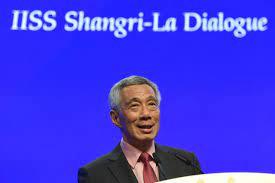
Chinese Defence Minister Li Shangfu told in the Shangri-La dialogue, Asia’s top security summit on June 4 that conflict with the United States would be an “unbearable disaster” and expressed China’s pretence of dialogue over confrontation. He also added that the world was big enough for China and the US to grow together. He asserted that the two sides should not hesitate from “seeking common ground and common interests to grow bilateral ties and deepen cooperation,” notwithstanding the fact that China and the US have different systems. Does it mean that China has changed its aggressive approach to realize its aspiration to be a global power and instead adopt a more peaceful and cooperative approach henceforth? It is hard to believe in the light of China’s recent militaristic posturing ...
<em><u>More Chinese cities pay salaries in digital yuan </u></em>
Asia

More Chinese cities pay salaries in digital yuan 

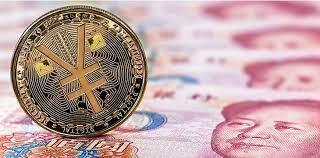
Changshu City in east China's Jiangsu Province will start paying salaries of all civil servants and state-owned units in digital RMB from May, Shanghai Securities News reported on Saturday, citing the local financial supervisory authority and financial bureau. Such attempts have already been made in multiple cities since last year. According to the public WeChat account "Taicang Finance", all employees in 59 municipal-level departments, eight district and town administrative institutions, and state-owned enterprises in Taicang City of Jiangsu Province have been paid in digital RMB since July 2022. Domestic media reports that in March 2022, 64 high-level talents in key industries in Xiangcheng District of Suzhou City, Jiangsu Province received talent subsidies totaling 235,000 yua...
<em>China’s central bank adds liquidity via reverse repos</em>
Asia

China’s central bank adds liquidity via reverse repos

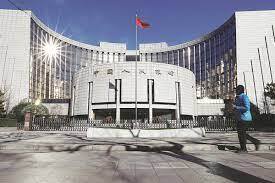
China's central bank injected funds into the financial system through open market operations Tuesday. The People's Bank of China said it has conducted 170 billion yuan (about 24.69 billion U.S. dollars) of seven-day reverse repos at an interest rate of 2 percent. The move aims to keep month-end liquidity in the banking system stable, according to the central bank. A reverse repo is a process in which the central bank purchases securities from commercial banks through bidding, with an agreement to sell them back in the future.
Asia

China’s overnight Shibor interbank rate increases Tuesday

The overnight Shanghai Interbank Offered Rate (Shibor), which measures the borrowing cost of China's interbank market, increased 8.4 basis points to 1.683 percent Tuesday. The seven-day rate dropped 9.5 basis points to 2.022 percent, the one-month rate went up 1 basis point to 2.312 percent, and the one-year rate rose 1 basis point to 2.649 percent. Shibor is a simple, no-guarantee, wholesale interest rate calculated by arithmetically averaging all the interbank RMB lending rates offered by the price quotation group of 18 commercial banks with a high credit rating, with the four highest and four lowest quotations excluded.
<em><u>Oil prices ease as investors weigh China demand, rate hikes</u></em>
Asia

Oil prices ease as investors weigh China demand, rate hikes

Oil prices slipped in early trade on Tuesday, paring gains from the previous session, as investors weighed strong holiday travel in China that could boost fuel demand with the prospect of rising interest rates elsewhere slowing economic growth. Brent crude fell 7 cents to $82.66 a barrel at 0013 GMT, while U.S. West Texas Intermediate crude eased 6 cents to $78.70 a barrel. Oil futures rose more than 1 per cent on Monday on optimism that holiday travel in China would increase demand in the world's largest oil importer. Bookings in China for trips abroad during the upcoming May Day holiday point to a continued recovery in travel to Asian countries. Still, the numbers remain far off pre-COVID-19 levels with long-haul airfares soaring and not enough flights available. However, inves...
<em><u>Chinese banks to cut saving rates</u></em>
Asia

Chinese banks to cut saving rates

Mainland banks have been told by authorities to lower saving rates in wake of "huge inflows" into savings and deposits accounts. Members of China's "interest rate self-regulatory mechanism," mostly banks, met this month and were urged to lower deposit rates, according to two attendees and two other bank sources who were closely briefed on the meeting. The guidance comes as banks and the economy groan under the weight of the huge inflows and businesses grapple with debt risks, structural woes and a slowing global economy.  One of the country's "big four" state lenders plans to start cutting certain personal and corporate rates from next week, another person briefed on the plans said. Products to be affected include "call deposits" and "agreement deposits". Other people fam...
<em><u>Investor confidence in China’s yuan and financial markets hangs on stability</u></em>
Asia

Investor confidence in China’s yuan and financial markets hangs on stability

China has made great progress opening up its financial markets to the world but still needs to speed up the process. Beijing wants broader acceptance of the renminbi as an international medium of exchange and for it to become a more popular reserve currency, but its share of the global official reserves market still only stands at a meagre 2.7 per cent. The challenge is how to break into the big time and take on the euro’s share at 20 per cent of the market, let alone challenge the US dollar’s dominance with a 58 per cent market share. Beijing still has some way to go to fully internationalise its currency, opening up its markets to all-comers and building global confidence in China as a safe enclave for investors. The dilemma is opening up China’s financial mark...