Asia

Pakistan faces a severe dollar liquidity crunch
Asia

Pakistan faces a severe dollar liquidity crunch

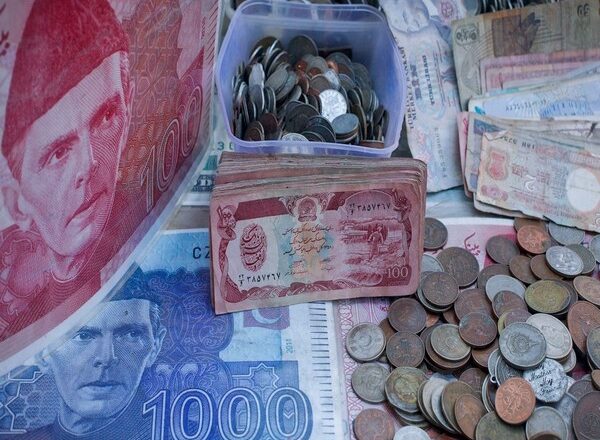
It is estimated that losses caused by the severe floods in Pakistan have accumulated to US$ 18 billion. This natural disaster has aggravated Pakistan’s macro-economic fundamentals despite resumption of the IMF Programme. Over and above these challenges, Pakistan faces a severe dollar liquidity crunch. One of the consequences of the floods and other economic disasters faced by Pakistan is that the demand for imports has gone up manifold but the country does not have enough dollars. In totality the exchange rate has gone under immense pressure whereby the rupee nosedived 9 per cent against the US dollar. The worst performance of the agriculture sector will put pressure on increased demand for commodities imports and if Pakistan fails to generate desired levels of dollar inflows it might cre...
The End of China’s High Paced Growth Era : Oxford Economics Report
Asia

The End of China’s High Paced Growth Era : Oxford Economics Report

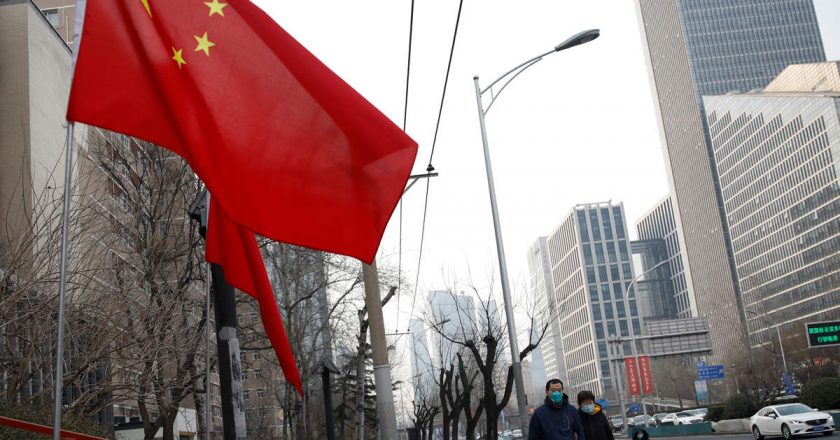
China’s economy is cooling partly due to new constraints and partly change of development strategy. The Covid-19 pandemic, Ukraine war and trade disputes with advanced nations including the US have imposed severe limitations to China’s growth journey. According to a new forecast by Oxford Economics, China’s gross domestic product (GDP) will grow an average 4.5% over this decade. The Chinese zero-COVID policy led to a prolonged lockdown in Shanghai that paralyzed the world's second-largest economy and hit global supply chains. This will force Chinese economy to take longer time than other Asian economies such as South Korea and Taiwan to catch up with living standards in the developed world. China's key financial hubs imposed a two-month lockdown from the end of March as authorities ...
ZAMBIA IS MOVING AWAY FROM CHINESE INVESTMENTS
Asia

ZAMBIA IS MOVING AWAY FROM CHINESE INVESTMENTS

Zambia's finance minister, Situmbeko Musokotwane, has been extremely busy duringthe past two months. Finally, he was able to receive a $1.3 billion loan from the IMFwith a grace period of five and a half years and a final maturity of ten years. The loanwas supported by a number of earlier negotiations with Zambia's creditors, which forthe first time included China, which is responsible for almost 30% of Zambia's debtand is comparable to (non-Chinese) private creditors.This is a great offer. Additionally, what does the IMF agreement mean for the otherlow- and middle-income nations that are categorized as being in "debt distress,"including those that receive funding from China?There are two crucial elements of Zambia's agreement with the IMF to comprehendwhen taking a close look at the spec...
Pakistan’s indifference holding back the trade growth with Afghanistan
Asia

Pakistan’s indifference holding back the trade growth with Afghanistan

Despite years of bilateral discussions involving political leaders, trade & custom officials and business bodies, the volume of Pak-Afghan trade have failed to match up to its potential. More than the efficacy of various mechanisms, it is the intent of implementing agencies from the concerned countries which leads to meaningful results in trade relations. On this count, the Pakistan government and its various departments score much lower than their Afghan counterparts. In order to enhance the bilateral trade, a Pakistani delegation led by Commerce Secretary Sualeh Ahmed Farooqi concluded a three-day visit (July 18-20) to Kabul. As in the previous such meetings, the two sides apparently agreed on many things including extension of Afghanistan-Pakistan Transit Trade Agreement (APTTA)...
Alibaba looking ahead for single’s day
Asia

Alibaba looking ahead for single’s day

Alibaba Group Holding will again kick-start its annual Singles’ Day promotion via a lengthy presales campaign in late October, weeks ahead of the November 11 event, as the e-commerce giant contends with China’s flagging economy and disruptions from Covid-19 control measures across the country. The Hangzhou-based company will commence presales activity from 8pm on October 24, according to multiple Chinese media reports. Alibaba, owner of the South China Morning Post, confirmed the published information on Thursday. During presales, consumers are expected to initially pay a deposit for goods to secure a low price. Payments are to be completed during the two-part checkout period from 8pm on October 31 and on November 10 at the same time. Singles’ Day, known as the world’s largest on...
Rs7 price hike in flour price; another bad news for Millers
Asia

Rs7 price hike in flour price; another bad news for Millers

KARACHI: While showing no mercy for the inflation-hit consumers, the millers have further jacked up per kg prices by Rs7 in flour no.2.5 and Rs10 in fine and super fine flour (maida). The new rate of flour no.2.5 has been fixed at Rs106 per kg while fine and super fine flour rates are now Rs114 per kg, a miller said, adding that the new rate of 10kg flour bag has been increased to Rs1,065 from Rs995. Karachi Wholesalers Grocers Group (KWGA) Rauf Ibrahim said the wheat rate in the open market has swelled to Rs9,200 per 100 kg bag from Rs8,500 two days back. He said the arrival of wheat in Karachi from interior Sindh has been confined to only 6,600 tonnes a day from 10,000-12,000 tonnes owing to flash floods that have destroyed road network as well as wheat stocks. Super fine va...
Belt and Road Initiative: A global alert for debt trap
Asia

Belt and Road Initiative: A global alert for debt trap

Beijing, China:   The recent warning by Bangladesh finance minister AHM Mustafa Kamal or a recent cancellation of a key Chinese-financed project by Zambia are sharp pointers, an America-based publication reported. Zambia, working to prevent China’s debt-diplomacy, recently cancelled USD 1.6 billion Chinese loans. The Bangladesh finance minister had warned the developing countries that they “must think twice” about taking more loans through BRI as global inflation and slowing growth added to the strains on indebted emerging markets. In an interview with Financial Times, Kamal also said China needed to be “more rigorous in evaluating its loans amid concerns that poor lending decisions risked pushing countries into debt distress.” The deep economic stress Pakistan is curr...
EU not to buy products manufacture by forced labour in Xinjiang
Asia

EU not to buy products manufacture by forced labour in Xinjiang

The move of European Union banning products by forced labour was prompted by pressure from EU lawmakers who raised profound concerns over systematic human rights violations and their widespread effect on individuals and minorities in China's Xinjiang Uyghur Autonomous Region. "Such prohibition should apply to products for which forced labour has been used at any stage of their production, manufacture, harvest and extraction, including working or processing related to the products," the document said. However, the European Commission's draft rules are less far-reaching than what EU lawmakers have proposed due in part to legal constraints. The EU executive will need to discuss details with them and EU countries before the rules become law, reported Business Recorder. "The prohibiti...
THE INSTITUTIONAL PRICE CHINA PAID FOR ITS ECONOMIC SUCCESS
Asia

THE INSTITUTIONAL PRICE CHINA PAID FOR ITS ECONOMIC SUCCESS

China became an economic giant of the world thanks to an extraordinary transition in the last four decades, but it is only now there is new light on the price it has had to pay for its success. In 2018, China celebrated the 40th anniversary of transition from a planned economy to a market economy. And it was an astounding success. In 1978, the country was a closed suspended to the world. It was a poor country, if not among the world’s poorest. Its per capita was less than a third of even sub-Saharan African nations. Over 80 per cent of its people lived in the rural areas, as many were living below the international poverty line and China had a closed economy where trade made less than 10 per cent of its GDP. The reasons for Chihna’s success and the cost of the stupendous growth are ...
Private company China’s top innovator despite curbs
Asia

Private company China’s top innovator despite curbs

China’s private-sector enterprises increased their R&D expenditures last year despite muted growth amid a souring economy and geopolitical headwinds, according to the latest Top 500 China Private Enterprise ranking. Although Huawei Technologies remained the country’s largest private-sector R&D spender, with a budget of 142.7 billion yuan (US$20.5 billion), it lost the No. 1 spot in revenue terms after a six-year reign amid US trade sanctions and a depressed market due to a lack of consumer appetite for always upgrading to the latest smartphone. E-commerce giant JD.com topped the list for the first time with 951.6 billion yuan in revenue, followed by this newspaper’s owner Alibaba Group Holding, and textile maker Hengli Group. “The overall size of the Chinese top 500 priva...