
China

Trade tensions erode momentum as China says G20 global economic growth is “insufficient.”
Asia, China

Trade tensions erode momentum as China says G20 global economic growth is “insufficient.”

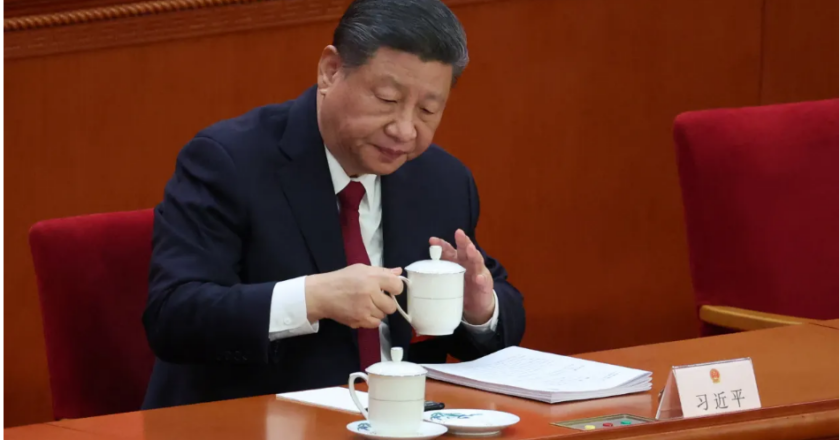
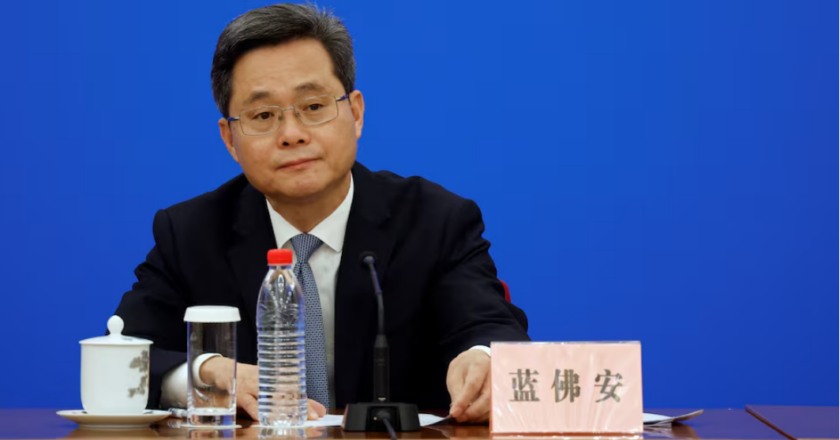
China warned a G20 meeting that world economic growth was "insufficient" as tariff and trade wars exacerbated economic and financial instability and sapped growth momentum, its finance ministry and central bank said.Speaking at the group's meeting in Washington, Finance Minister Lan Foan called on all parties to strengthen multilateral cooperation, saying that China supported dialogue and consultation "on equal footing" to settle trade and tariff disputes.Meanwhile, People's Bank of China Governor Pan Gongsheng said that economic fragmentation and trade tensions had disrupted supply chains, weakening the momentum of global economic growth, the central bank said in a separate readout on Friday.Pan also told the meeting, which took place on Wednesday and Thursday, that the world's major eco...

As the US-China trade conflict intensifies, India will become the next source for iPhones.
Asia, China

As the US-China trade conflict intensifies, India will become the next source for iPhones.

Apple plans to relocate its US-sold iPhones’ source from China to India, and they are planning this as early as next year, as reported in the Financial Times. This decision comes amid the escalation of trade tension between China and the USA due to the tariffs laid down by US President Donald Trump on Chinese goods. Apple assembles approximately 90% of its iPhones in China, and thus the company wants to diversify its sourcing and production. China has played a very crucial role in Apple’s manufacturing journey, as it accounts for around 80% of the company’s production along with 40% of its suppliers based there. Whereas in India, Apple has produced iPhones worth $22 billion in FY25, a 60% hike from last year. The Foxconn’s factories set up in Tamil Nadu and Karnataka have made it possi...
As the U.S. trade battle rages, China promises to provide targeted support for companies.
Asia, China

As the U.S. trade battle rages, China promises to provide targeted support for companies.

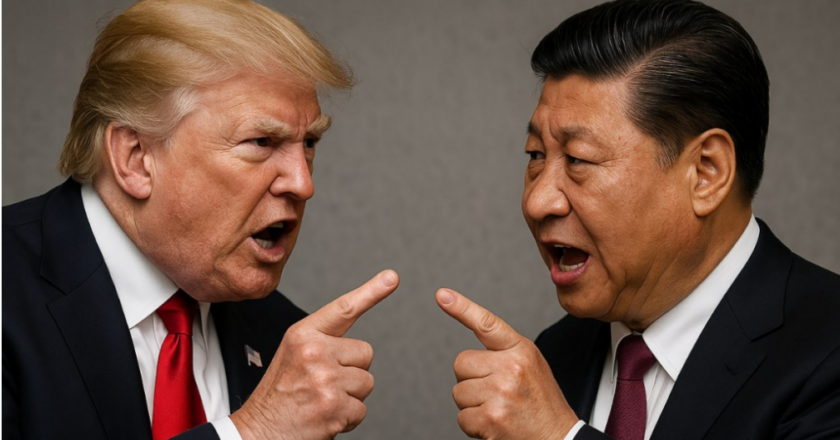
China plans to help struggling businesses with targeted measures in the face of “increased external shocks,” according to a readout of a meeting chaired Friday by President Xi Jinping. The meeting of the Politburo, the second most powerful political body in China, comes as tensions between Washington and Beijing have escalated this month with new tit-for-tat tariffs of more than 100%. Major Wall Street banks have cut their China GDP forecasts for the year as a result, while the country still strives to achieve its lofty goal of “around 5%” growth set in March. Authorities called for “multiple measures to help businesses in difficulty,” such as financial support, according to the Chinese-language readout, translated by CNBC. The Politburo also called for “timely reduction” of inte...
China is considering removing retaliatory tariffs on a few US products.
Asia, China

China is considering removing retaliatory tariffs on a few US products.

In a significant move in the ongoing trade war with the United States, China is considering exempting some American imports from its steep 125% retaliatory tariffs. The Ministry of Commerce has formed a task force to collect information from businesses and identify goods that could be eligible for exemptions, according to a source familiar with the discussions. The move, first reported by Bloomberg, suggests that Beijing may be softening its hardline stance as fears of economic slowdown intensify. Financial magazine Caijing cited sources claiming that eight semiconductor-related items—though notably excluding memory chips—are being considered for exemption. Meanwhile, a widely circulated list of 131 product categories, including vaccines, chemicals, and jet engines, has sparked specula...
<strong>China’s Credit Crunch: Fitch Downgrade Unveils Growing Economic Strain</strong>
Asia, China

China’s Credit Crunch: Fitch Downgrade Unveils Growing Economic Strain

The downgrading of Fitch Ratings for China, from China’s long-term foreign-currency issuer default rating (IDR) from ‘A+’ to ‘A,’ clearly confirms that China’s economic problems are becoming more fully recognized by the day. It signals the weakening of China’s public finances and the rising trajectory of public debt. The downgrade also highlights China’s long-running debt crisis in the property sector and persistently low consumption. However, it will be extremely difficult for the Xi government to deny that economic policies are flawed. The downgrade has dealt a significant blow to China’s global reputation and standing amid a rapidly shifting global geo-economic situation. Embarrassed by the rating’s forecast, China's Finance Ministry criticized the downgrade. A ministry spoke...
<strong>China’s birth rate stays low as many reject parenthood under authoritarian rule</strong>
China

China’s birth rate stays low as many reject parenthood under authoritarian rule

China is grappling with a worsening population crisis, as rapid aging and declining birth rates threaten long-term demographic stability. Younger generations are increasingly rejecting marriage and parenthood, prompting the Chinese Communist Party to implement aggressive pro-birth policies. A nationwide campaign aims to boost fertility, introducing incentives such as childcare subsidies. At ‘Two Sessions’, Premier Chang outlined government plans to reverse the trend through financial and structural support for families. Simultaneously, the National Health Commission launched the 2025 Population High-Quality Development Initiative, mandating local health commissions to devise comprehensive fertility measures. Running from March to October, this effort seeks long-term solutions to sl...
According to a UN research, climate shocks might cost the Asia-Pacific region 6% of its GDP.
Asia, China

According to a UN research, climate shocks might cost the Asia-Pacific region 6% of its GDP.

A new United Nations report warns that climate shocks could lead to annual economic losses (AAL) of at least 6 per cent in one-third of countries in the Asia-Pacific region, underscoring the region's significant vulnerability to climate change. The report, titled Economic and Social Survey of Asia and the Pacific 2025: Understanding the Macroeconomic Implications of Climate Change, published by the UN Economic and Social Commission for Asia and the Pacific (ESCAP) on Tuesday, highlights how many developing economies in the region are struggling to manage the macroeconomic repercussions of climate change and the transition to a green economy. While the Asia-Pacific region contributed 60 per cent of global economic growth in 2024, many of its countries are poorly prepared for climate ...
Trump tariffs cause the largest decline in Asian stocks in decades.
Asia, China

Trump tariffs cause the largest decline in Asian stocks in decades.

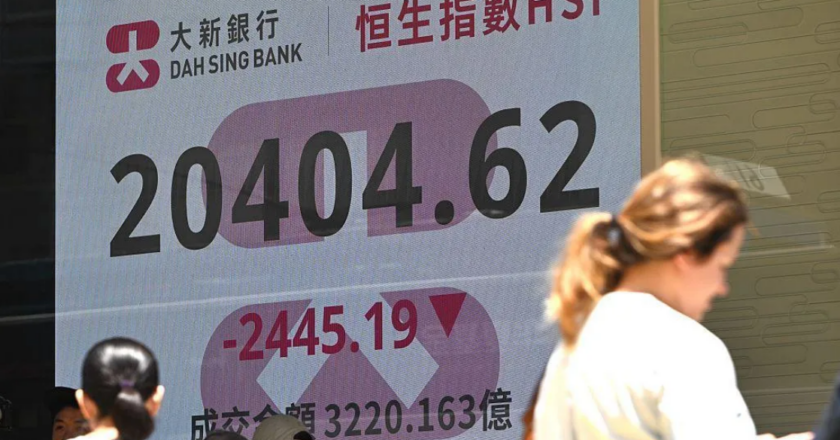
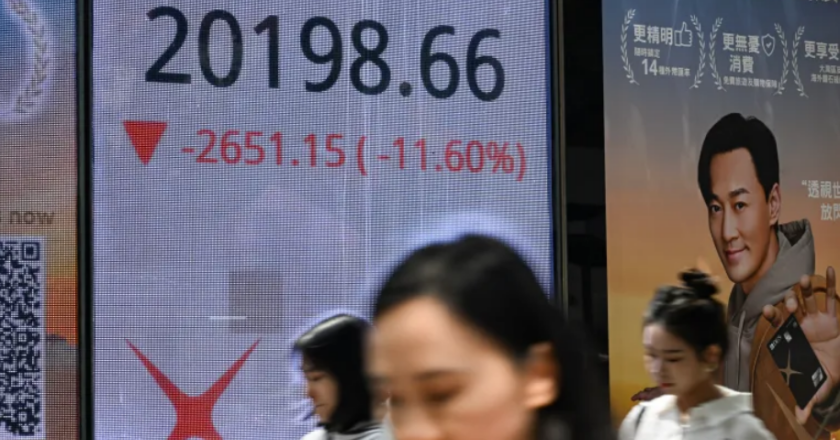
Asia-Pacific stocks from Shanghai to Tokyo and Sydney to Hong Kong plunged on Monday by levels not seen in decades, as global markets continue to reel from US President Donald Trump's tariffs. The Shanghai Composite was down more than 8% at one point, Hong Kong's Hang Seng dropped more than 13% and Japan's Nikkei 225 closed down by 7.8% - moves that one analyst described to the BBC as a "bloodbath". European markets too fell in early trading, with banks and defence firms seeing the biggest drops. This follows global slumps last week after Trump announced new tariffs between 10% and 46% on most countries. This is a blow for Asia's manufacturing hubs that count the US as a key market for exports ranging from clothes to cars. These include wealthy allies like Japan and South Kore...
Fear of tariffs causes the Hong Kong stock market to plummet the most since the 1997 crisis.
Asia, China

Fear of tariffs causes the Hong Kong stock market to plummet the most since the 1997 crisis.

Hong Kong’s stock market has suffered its steepest single-day decline in nearly three decades amid a wave of panic selling brought on by United States President Donald Trump’s tariff announcements. The financial hub’s benchmark Hang Seng Index closed down 13.22 percent on Monday, after plunging as much as 13.74 percent during the day.It was the sharpest plunge for Hong Kong stocks since the index tumbled 13.7 percent in a single day during the 1997 Asian financial crisis. On the worst day for Hong Kong stocks during the 2007-09 global financial crisis, the index fell 12.7 percent. The rout came after Trump doubled down on his sweeping tariffs overnight, likening the measures to “medicine”, and following China’s announcement last week that it would retaliate with a 34 percent tari...
<strong>China’s Financial Challenges: Capital Flight Concerns Persist</strong>
China

China’s Financial Challenges: Capital Flight Concerns Persist

China is likely to witness continued capital outflows in the near future, though the scale may be smaller compared to earlier periods of significant financial decline. Historical records indicate that during 2015-2016, the country faced an average annual capital account deficit of $300.6 billion, representing a particularly severe phase. Between 2020 and 2024, the deficit averaged $216.9 billion annually, reflecting a slight improvement but still posing challenges. Experts attribute these outflows to subdued consumer demand and uncertainties arising from global monetary policies. Furthermore, the increasing prominence of digital assets and cryptocurrencies has created new pathways for capital flight, urging the central bank to adopt robust regulatory frameworks. Alarmingly, 2024 witne...