
Asia

China Responds to Trump’s Tariff Wars with 10%–15% Duties
Asia

China Responds to Trump’s Tariff Wars with 10%–15% Duties

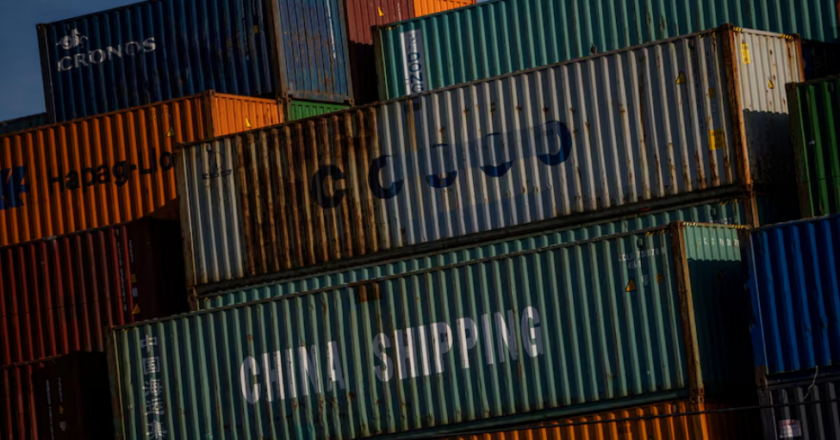
Major trade wars have begun with China – and Canada – hitting back on Tuesday against US tariffs imposed by President Donald Trump. Beijing, which is set to begin its annual parliamentary congress, retaliated immediately, announcing hikes of 10% to 15% on agricultural and food products from America, plus export and investment restrictions on 25 US firms. Hours before, President Trump gave the green light to an extra 10% levy on Chinese goods that began at 0501 GMT. That meant a cumulative tariff of 20% in response to China’s alleged inaction on stopping the flow of drugs used to make fentanyl, an opioid blamed for tens of thousands of deaths in the US. Trump also imposed 25% tariffs on Canada and Mexico, the US’s two top trading partners. Canada has said it has $107 billion in ta...
<strong>China’s FDI inflow hits a 3-year low in January in a sign of sagging investor confidence</strong>
Asia

China’s FDI inflow hits a 3-year low in January in a sign of sagging investor confidence

Foreign direct investment (FDI) has long played a crucial role in China's economic growth, providing capital, technology, and employment opportunities.  However, in January 2025, FDI into China dropped by 13.4% year-on-year, marking the weakest start to the year in three years.  Data from the Chinese Ministry of Commerce indicates a sharp decline in investor confidence, raising concerns about China's economic outlook, regulatory environment, and global positioning.  The 13.4% year-on-year decline in FDI is significant for multiple reasons.  First, it highlights a cooling investment climate amid ongoing global economic uncertainties.  Second, it reflects potential structural weaknesses in China’s economy, including concerns about regulatory p...
What Asia’s business executives are concerned about in 2025, according to the head of McKinsey China
Asia

What Asia’s business executives are concerned about in 2025, according to the head of McKinsey China

When I attended the World Economic Forum’s annual gathering in Davos last month, Asia’s business executives were buzzing about the forces transforming the region. It’s a busy time: A new U.S. administration is proposing to revise the international trading system, a little-known Chinese startup is puncturing narratives about AI, and several Asian countries just reported 2024 as their warmest year on record. The 21st century may indeed belong to Asia, and the rewards could be enormous—but only for those who are prepared. Here are a few of the major themes, born from deep discussions with my Asian executive peers, that will drive the region in the coming year. Asia is aging–and shrinkingAsia reached a historic milestone: The region’s middle and upper classes, defined as annual househol...
Despite being financially prepared, two-thirds are concerned about access to healthcare.
Asia

Despite being financially prepared, two-thirds are concerned about access to healthcare.

Insurers are challenged by increasing life expectancy and shrinking birth rates, with those in developed countries tend to underestimate their life spans, whilst those in developing nations overestimate them, according to the Geneva Association’s recent study. More than two-thirds worry about healthcare access, retirement savings, and public safety nets, but many rate their financial readiness higher than it likely is. The study, Insurance and the Longevity Economy: Navigating protection in the era of 100-year lives, draws from a survey of 15,000 individuals across 12 countries in Asia, Europe, and the Americas. Insurance ranks amongst the top three institutions—alongside family and government—seen as crucial in preparing for longer life spans. However, engaging younger genera...
Asia Stocks Are Affected by Trump’s Promise of Chip, Auto, and Pharmaceutical Tariffs
Asia

Asia Stocks Are Affected by Trump’s Promise of Chip, Auto, and Pharmaceutical Tariffs

Markets across Asia were on edge on Wednesday after US President Donald Trump said he was planning to impose tariffs “in the neighborhood of 25%” on imports of autos, chips and pharmaceuticals. Asian nations, ranging from Japan and India to South Korea and Taiwan, export products across all three of those industries to the United States, and have already been stumbling under the pressure of increasing tariff threats from Trump. Concern over levies on major Asian exports to the US left investors jittery, pulling MSCI’s broadest index of Asia-Pacific shares outside Japan down 0.12%. Japan’s Nikkei index also pared its early morning gains to end the day down by 0.3%. The muted performance of Asian stocks was a contrast to overnight moves of the S&P 500 and European shares, wi...
Experts assess how AI will affect Thailand’s financial services industry.
Asia

Experts assess how AI will affect Thailand’s financial services industry.

Embrace AI or be left behind, an expert said at the Asian Banking & Finance and Insurance Asia Summit today. Financial experts warned that fully banking on artificial intelligence (AI) won’t guarantee a positive return on investment but pinned that clean data, industry collaboration, and proper risk management are key to navigating volatility. During the Asian Banking & Finance and Insurance Asia Summit today, spokespersons from the industry discussed Thailand's challenging financial landscape. The event, which received over 220 attendees, was held at the Renaissance Bangkok Ratchaprasong Hotel. Warotai Kosolpisitkul, International Economic advisor, Fiscal Policy Office, Ministry of Finance, underscored the nation’s commitment to digital finance expansion. Highlighting...
Prompts for Xi Meet Change in the Mood of China Tech Stocks
Asia

Prompts for Xi Meet Change in the Mood of China Tech Stocks

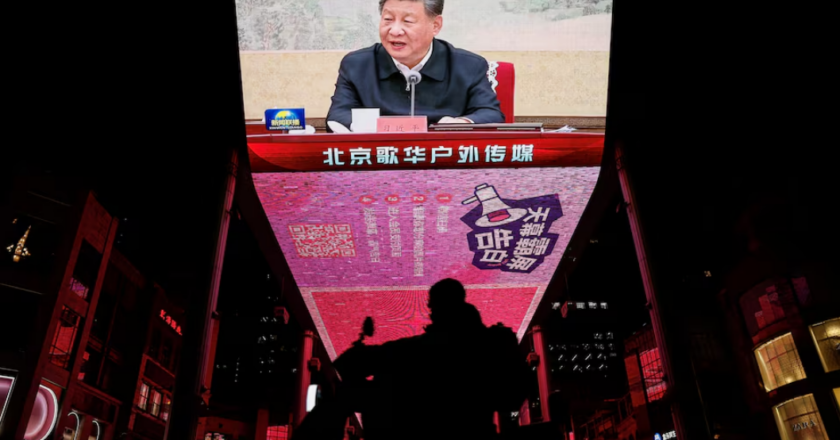
Chinese president Xi Jinping’s high-profile meeting with the country’s tech leaders combined with the breakthrough development of DeepSeek is changing sentiment on the country’s beaten-down stocks, investment banks say. Bankers say Chinese tech shares now have the potential to tempt back long-term investors — a shift that would imply a significant change in mindset and money flows. “(Last year) many investors we spoke to still regarded China as a ‘trading market’ – fast money comes and goes to play the trading bounces, whereas global long-term capital remains unconvinced and little involved,” China equity analysts from Bank of America Securities said in a February 17 note. That view, however, could be shifting to “investable”, BofA analysts said. “Encouragingly, we think the f...
Adapting financial plans to the changing economic landscape in Asia
Asia

Adapting financial plans to the changing economic landscape in Asia

Asia, by 2040, is anticipated to be contributing 42% of global GDP, showing how the region is on the cusp of a new era and is on its way to expanding its global influence, according to McKinsey & Company.The global management consulting firm's analysis found that Asia could be home to 60% of the Fortune Global 500 companies and have 55% of the world’s total workforce. As Asian economies boost domestic investments, organisations are posed with the challenge of rethinking and reimagining their financial strategies to align with the economic shift. McKinsey recommends four approaches business leaders can look into to optimise capital allocation toward high-return prospects, where growth outpaces risk. Move beyond FDI reliance. Take a proactive approach to capital deployment. Rat...
China’s Xi Meets with Leading Tech Leaders, Baidu Shares Decline Due to CEO Absence
Asia

China’s Xi Meets with Leading Tech Leaders, Baidu Shares Decline Due to CEO Absence

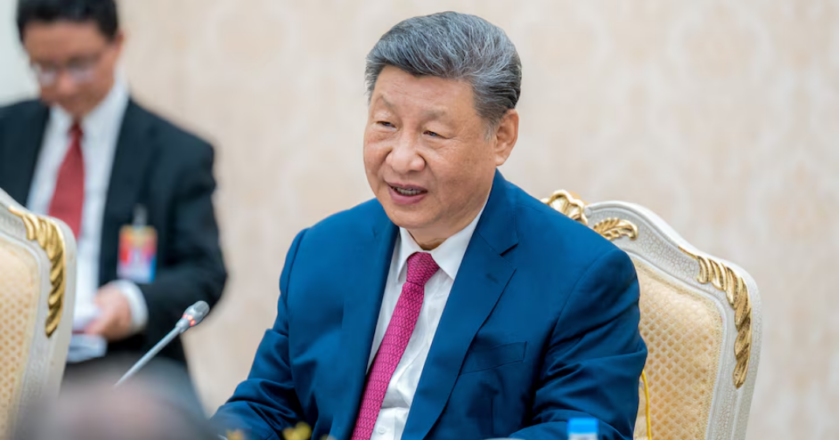
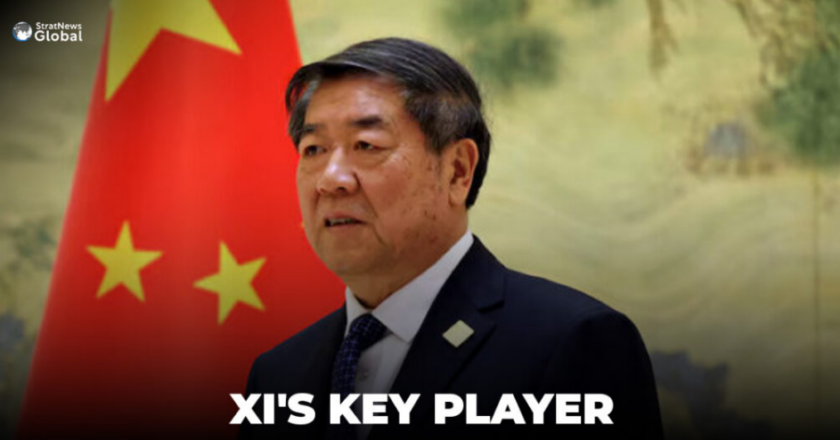
Chinese president Xi Jinping held a rare meeting with some of the countries biggest technology leaders on Monday in a sign of Beijing’s growing urgency to prop up the sector amid rivalry with the US. Xi urged attendees to “show their talent” and be confident in the power of China’s model and market in a symposium attended by key names such as Huawei’s Ren Zhengfei, BYD’s Wang Chuanfu, DeepSeek’s Liang Wenfeng and even Alibaba’s once-pariah founder, Jack Ma. Meanwhile, the absence of a key Chinese tech leader from the meet — Baidu founder Robin Li — triggered a sharp fall in shares of the company that was once touted as China’s closest rival to OpenAI. Concern over Li’s absence erased $2.4 billion off Baidu’s market value in hours as the company’s stock plunged as much as 8.8% in ...
HSBC increases its focus on Asia while reducing its operations in the West.
Asia

HSBC increases its focus on Asia while reducing its operations in the West.

HSBC is intensifying its commitment to Asia by scaling back its investment banking operations in Western markets, a move that aligns with its long-term strategy of prioritising growth in the region. According to Reuters, the bank announced plans to wind down its mergers and acquisitions (M&A) and equity capital markets (ECM) divisions in Europe and North America, reinforcing its emphasis on serving Asian corporate clients. HSBC focuses on AsiaEarlier this month, HSBC chairman Mark Tucker (pictured) led a British business delegation to Beijing, where he spoke at the UK-China Financial Services Summit. Addressing Chinese Vice Premier He Lifeng, Tucker highlighted the importance of continued economic collaboration. The visit came amid HSBC’s ongoing efforts to strengthen ties wi...