
Asia

Asia, China, Market, World

China’s economy is predicted by the World Bank to slow down in 2025.

According to World Bank estimates, China’s GDP growth rate next year will decrease to 4.3% compared to the projected 4.8% in 2024. This is stated in the institution’s new economic forecast for the Asian region. China’s economic slowdown in 2025 is expected amid continued weakness in the real estate market, low consumer and investor confidence, as well as structural challenges such as an ageing population and global tensions, it said. Expectations for 2024 rose by 0.3% compared to the bank’s April forecast. As CNBC notes, this reflects Beijing’s recent introduction of a series of stimulus measures that boosted investor confidence and sparked a stock market rally that has since stalled. Economies in the rest of East Asia and the Pacific region will grow from 4.7% in ...
Asia, China, Market

When stimulus news is disappointing, the China stock surge stalls.

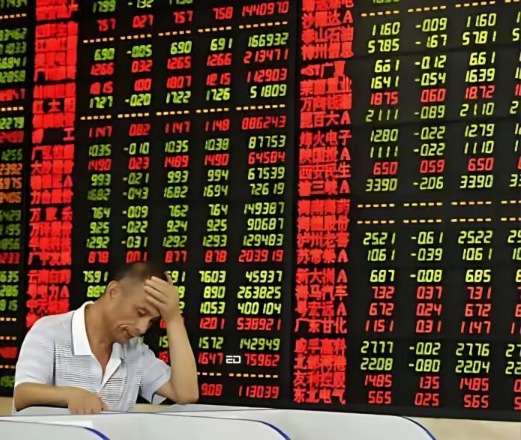
A stock market rally in China has fizzled out as a highly-anticipated announcement on plans to boost the country's ailing economy disappointed investors. Shares had jumped by over 10% as trading restarted after the Golden Week holiday but fell back after a news conference by the country's economic planners. After a volatile day of trading, the Shanghai Composite Index in mainland China closed 4.6% higher, while the Hang Seng in Hong Kong slumped by 9.4%. Investors had been hoping for more information about how the government plans to support economic growth but the announcement gave little in the way of details. The chairman of China's National Development and Reform Commission Zheng Shanjie said he is "fully confident" the country will achieve its full-year economic and socia...
Some indications that the Indian economy may be slowing down
Asia, Market

Some indications that the Indian economy may be slowing down

The Indian economy is showing signs of slowing down, with high-frequency data released last week suggesting GDP growth could again come below 7 per cent in the Jul-Sep quarter of 2024-25. In Apr-Jun, India’s GDP growth had fallen to a five-quarter low of 6.7 per cent. A series of weak numbers emerged on the last day of September, with the central government's finances showing its capital expenditure was down 30 per cent on-year in August and 19.5 per cent in Apr-Aug. Core sector data, also released on Sep 30, showed output contracted by 1.8 per cent on year in August, the worst performance in 42 months. The numbers have continued to trend downwards: the manufacturing and services Purchasing Managers’ Index for September, while still in expansionary territory, fell to eight and 10-mo...
The European Union decides to levy taxes on electric cars made in China.
Asia, China, Market, World

The European Union decides to levy taxes on electric cars made in China.

The European Union on Friday voted to adopt definitive tariffs on China-made battery electric vehicles (BEVs). “Today, the European Commission’s proposal to impose definitive countervailing duties on imports of battery electric vehicles (BEVs) from China has obtained the necessary support from EU Member States for the adoption of tariffs,” the EU said in a statement. The EU first announced that it would slap higher tariffs on Chinese electric vehicle imports in June, on the grounds that they benefited “heavily from unfair subsidies” and posed a “threat of economic injury” to electric vehicle producers in Europe. Duties were also disclosed for individual companies, depending on the extent of their cooperation with the probe. Provisional duties were put in place from early Jul...
Asia, China, Market

Can Xi improve China’s economy as it celebrates its 75th birthday?

As China prepared to celebrate its Golden Week holiday and mark the 75th anniversary of the People’s Republic, the ruling Communist Party rolled out a raft of measures aimed at boosting its ailing economy. The plans included help for the country's crisis-hit property industry, support for the stock market, cash handouts for the poor and more government spending. Shares in mainland China and Hong Kong chalked up record gains after the announcements. But economists warn the policies may not be enough to fix China's economic problems. Some of the measures announced by the People's Bank of China (PBOC) on 24 September took direct aim at the country's beaten-down stock market. The new tools included funding worth 800bn yuan ($114bn; £85.6bn) that can be borrowed by insurers, bro...
China’s Real Estate Market: An Analysis of the Boom and Bust
Asia, China, Market

China’s Real Estate Market: An Analysis of the Boom and Bust

China’s property sector is sinking. Once the economic backbone by which hundreds of million Chinese went from poverty to the middle class, the industry is now seeing slumps in the value of real estate that threaten not only household wealth and revenue for local governments, but also the overall growth of the Chinese economy, a key indicator of the Chinese Communist Party’s legitimacy and right to rule.  Behemoth property developers such as Evergrande and Country Garden have gone under. In an attempt to mitigate the fallout, Chinese authorities last week rolled out stimulus measures designed to stabilize the market and to prevent the downward spiral that has seen the value of new homes sold drop by over 23 percent through August 2024.   In the Unit...
What do Chinese people think of Xi Jinping’s concerns about the economy?
Asia, China, Market, World

What do Chinese people think of Xi Jinping’s concerns about the economy?

China’s sputtering economy has its worried leaders pulling out all the stops. They have unveiled stimulus measures, offered rare cash handouts, held a surprise meeting to kickstart growth and tried to shake up an ailing property market with a raft of decisions - they did all of this in the last week. On Monday, Xi himself spoke of "potential dangers" and being "well-prepared" to overcome grave challenges, which many believe was a reference to the economy. What is less clear is how the slowdown has affected ordinary Chinese people, whose expectations and frustrations are often heavily censored. But two new pieces of research offer some insight. The first, a survey of Chinese attitudes towards the economy, found that people were growing pessimistic and disillusioned about t...
China orders banks to begin lowering the interest rates on current mortgages.
Asia, China, Market

China orders banks to begin lowering the interest rates on current mortgages.

China's central bank has issued a directive for financial institutions to begin reducing interest rates on existing mortgages, marking a pivotal step in the country’s efforts to support its struggling economy. This announcement comes as part of broader measures aimed at stimulating growth amid ongoing economic challenges as detailed in a report by Reuters. The report further stated that, the decision to cut mortgage rates is expected to provide much-needed relief to millions of Chinese homeowners who have been grappling with rising living costs and a sluggish property market. The central bank's instruction is particularly timely, given that many families are facing financial strain due to the economic downturn worsened by the COVID-19 pandemic and subsequent lockdowns. According to ...
“Dreadful” ahead: EU businesses alert China of an impending regulatory conflict
Asia, China, Market

“Dreadful” ahead: EU businesses alert China of an impending regulatory conflict

Europe’s business leaders are warning that a raft of incoming EU legislation will put companies on a direct collision course with laws in China, which could lead to partial “decoupling” of some supply chains. One of the laws bans products made using forced labour and another requires big firms to conduct human rights and environmental audits of their overseas suppliers. Both have been adopted by the European Union but will take effect in 2027 after a three-year grace period. Businesses will be required to prove their suppliers are in line with EU environmental and social standards, and also that there is no forced labour in their supply chains. Companies fear the new rules will put them in the cross hairs of Chinese authorities. The EU Chamber of Commerce in China ...
Bangladesh’s rapidly diminishing water resources pose a danger to its economic progress.
Asia, Market

Bangladesh’s rapidly diminishing water resources pose a danger to its economic progress.

Groundwater in the climate-vulnerable country is depleting faster than ever before, according to new research from WaterAid, falling by as much as three meters per year in some places. Consumption is set to reach 55 billion cubic meters per year by 2040, a 37 per cent increase from 2020 levels. Despite the recent political upheaval, Bangladesh has great economic potential, said Jonathan Farr, director at WaterAid’s Resilient Water Accelerator. “It has a very skilled, highly educated population,” he said, but too much of the country’s growth is fueled by increasing demand for water, in particular for rice cultivation and industries such as textiles.  Climate change is an added risk. Bangladesh experiences flooding from a web of tributaries feeding into the Ganges river, saline intrusion...