
Asia

<strong>Indonesia’s MSMEs Collapse Under China’s Dumping Tactics</strong>
Asia, China

Indonesia’s MSMEs Collapse Under China’s Dumping Tactics

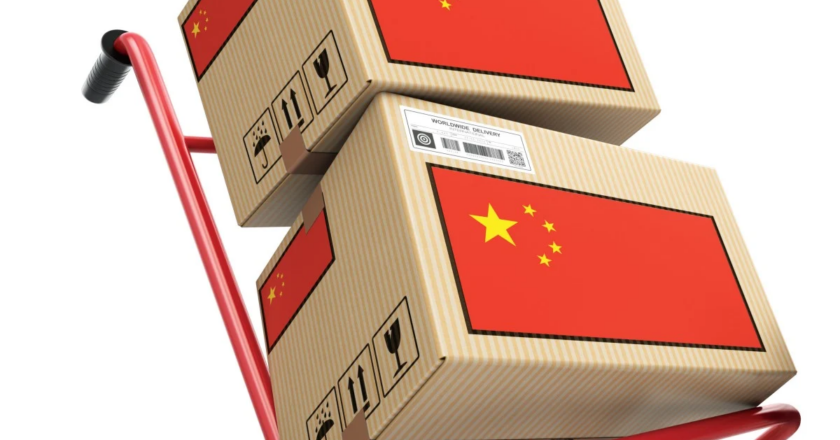
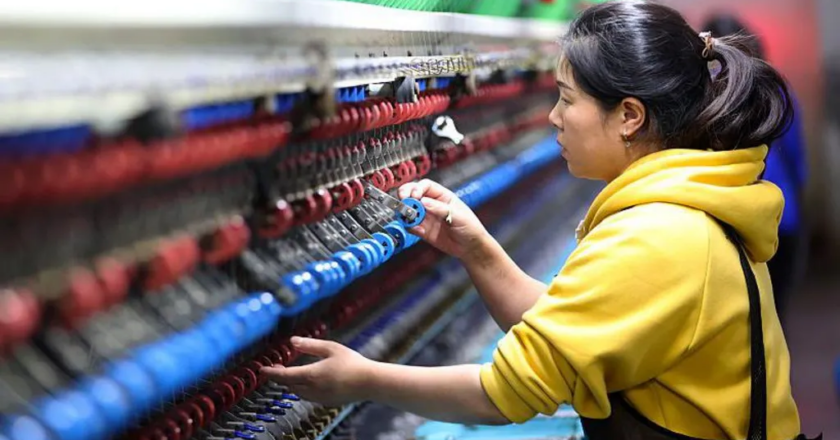
China’s relentless dumping of cheap goods into Indonesia is eroding the country’s MSMEs, dismantling local supply chains, and exposing deep vulnerabilities in Indonesia’s industrial ecosystem. Latest trade data shows China now accounts for more than one-third of Indonesia’s imports, underscoring the scale of this structural imbalance. Across Indonesia’s archipelago, from Surabaya’s bustling markets to Jakarta’s digital storefronts, a quiet but devastating transformation is underway. Micro, small, and medium-sized enterprises (MSMEs) which employ 90–95% of Indonesia’s workforceare abandoning production and shifting to reselling Chinese imports. This is not globalization in its benign form; it is a structural displacement driven by China’s industrial dominance and Indonesia’s inabili...
The Changing Nature of China’s Engagement in the Maldives
Asia, China

The Changing Nature of China’s Engagement in the Maldives

Debt restructuring, grants and donations, commercial contracts, and deepening trade and financial linkages are allowing China to enhance its presence in the Maldives and create economic dependencies. On 30 November, the Maldivian government accelerated the Rasmalé project, a large-scale land reclamation initiative that will subsequently receive Chinese support for infrastructure development. This move underscores a broader shift in China’s economic presence in the Maldives under the presidency of Mohamed Muizzu. China’s modus operandi in the Maldives can be categorised into four broader trends: prioritising debt restructuring over new loans; focus on grants and donations; securing commercial contracts; and deepening economic and financial linkages. These engagement...
How PM Modi is fast-tracking reforms to shield economy from US tariffs
Asia, World

How PM Modi is fast-tracking reforms to shield economy from US tariffs

PM Modi's push for far-reaching policy reforms comes as his government accelerates trade talks with several partners, including the European Union, to offset US President Donald Trump's 50% tariff blow. The winter session of the Parliament witnessed the Narendra Modi government passing a number of key bills – some of them meant for far-reaching policy reforms, making it one of its most active final parliamentary sessions in recent years. Ten new Bills were introduced in the Lok Sabha, of which eight were passed by both Houses and two sent for further scrutiny by a Standing Committee. The key bills included the Viksit Bharat – Guarantee for Rozgar and Ajeevika Mission (Gramin): Viksit Bharat – G RAM G Bill 2025, the Sustainable Harnessing and Advancement of Nuclear Energy for Tra...
China keeps benchmark lending rates steady for a seventh straight month despite weak economic data
Asia, China

China keeps benchmark lending rates steady for a seventh straight month despite weak economic data

China’s central bank kept its loan prime rates steady on Monday, even as the world’s second largest economy has seen weak economic data and an extended slump in its property sector. The People’s Bank of China kept its 1-year and 5-year loan prime rates unchanged at 3% and 3.5% respectively, holding them for a seventh straight meeting, in line with a Reuters survey. The 1-year rate acts as a benchmark for new loans, while the 5-year helps peg mortgage rates. The PBOC’s decision comes amid downbeat economic data from China in November, including lower-than-expected retail sales and industrial output. Retail sales rose 1.3% last month from a year earlier, sharply missing Reuters’ median forecast for a 2.8% growth, and slowing from 2.9% rise in the prior month. Industrial p...
Why China’s young are flocking to government jobs in record numbers
Asia, China

Why China’s young are flocking to government jobs in record numbers

ates seeking jobs at private enterprises is declining, dropping to 12.5% last year from 25.1% in 2020, the survey showed. Rising uncertainty in the jobs market, layoffs and slowing wage growth in the private sector have pushed many youngsters to seek the “security, predictable benefits and social prestige of public service,” said Mingjiang Li, associate professor at S. Rajaratnam School of International Studies in Singapore. China’s education ministry has sought to bolster employment at privately owned enterprises, offering tax rebates, social insurance reliefs and subsidies to encourage hiring young graduates. But the incentives have been low. The Shanghai municipal government, for instance, offers just 1,500 yuan in one-time subsidy per new hire. Government hiring slowsAppl...
Economists raise Singapore’s 2025 growth forecast to 4.1%: MAS survey
Asia, Singapore

Economists raise Singapore’s 2025 growth forecast to 4.1%: MAS survey

The projection is similar to the Ministry of Trade and Industry’s (MTI) economic growth forecast of about 4 per cent  for 2025, and slightly lower than the 4.4 per cent growth recorded last year. Private sector economists have raised their growth forecast for the Singapore economy this year to 4.1 per cent, significantly higher than their previous estimate of 2.4 per cent made in September. The projection, released by the Monetary Authority of Singapore (MAS) in its latest survey of professional forecasters on Wednesday (Dec 17), is similar to the Ministry of Trade and Industry’s (MTI) forecast of around 4 per cent, and slightly lower than the 4.4 per cent growth recorded last year. A total of 20 economists and analysts responded to the survey, MAS said. The Singapore econ...
Why connectivity, not just AI, will power Singapore’s next leap in competitiveness
Asia, Singapore

Why connectivity, not just AI, will power Singapore’s next leap in competitiveness

Beyond finance, resilient connectivity is a critical element of economic diplomacy and trade necessity. Singapore has championed AI as the next frontier of its economic growth ambitions for some years now, having recently announced a $1 billion investment into artificial intelligence (AI) over the next five years to bolster compute infrastructure, develop talent, and encourage industry partnerships. While such investments are decisive statements in and of themselves, the broader observation is that Singapore’s competitive advantage, particularly in high-value services, depends fundamentally on a reliable, high-performance network foundation. AI can only deliver on its promise if it is built upon a robust digital infrastructure, and right now, network reliability is emerging as a...
Malaysia’s Johor launches 7,300-acre innovation sandbox, part of new special economic zone with neighboring Singapore
Asia, Singapore

Malaysia’s Johor launches 7,300-acre innovation sandbox, part of new special economic zone with neighboring Singapore

The Malaysian state of Johor is debuting a sprawling new innovation sandbox, bolstering its plans to build a “regional champion” alongside the border with Singapore. The 7,300-acre development—named Ibrahim Technopolis (IBTEC)—is located within the Johor-Singapore Special Economic Zone, a new strategic partnership between Singapore and Malaysia meant to create over 20,000 jobs for people on both sides of the causeway. Designed to be Asia’s largest innovation sandbox, it will concentrate high-value industries like medtech, logistics, data centers and agritech. IBTEC, formally launched on Dec. 2, will make “production smarter, supply chains more resilient and operations more efficient,” said developer JLand Group, the real estate arm of Johor Corporation, in a press statement. ...
The Future of Banking in Asia
Asia

The Future of Banking in Asia

Decentralized finance (DeFi) is becoming a force to be reckoned with, especially in Asia. Among the leaders in this space is Mutuum Finance (MUTM), a protocol reshaping lending and borrowing as we know it. It's worth exploring how Mutuum Finance could disrupt traditional banking in Asia, with its promises of efficiency, transparency, and inclusivity. The Rise of Decentralized Finance As decentralized finance continues to rise, platforms like Mutuum Finance are quickly gaining recognition. These models utilize blockchain technology to cut out the middlemen, giving users the ability to lend, borrow, and earn interest on their crypto assets without intermediaries. This is especially crucial in Asia, where conventional banks often leave individuals and small businesses out in t...
What’s next for China’s economy in 2026 – and how it plans to tackle challenges
Asia, China

What’s next for China’s economy in 2026 – and how it plans to tackle challenges

Top investment banks forecast moderate growth next year amid trade, property and structural challenges After a turbulent year marked by the trade war and domestic headwinds, China will head into 2026 cautiously as it grapples with structural challenges to growth. Global investors are watching closely to see how Beijing works to shore up confidence, double down on strategic industries and mitigate overcapacity, all while navigating a fast-evolving geopolitical environment. In this explainer, the Post distils forecasts from major investment banks and economists on what to expect in 2026, also the first year of the next five-year plan – a socio-economic blueprint that typically sets the tone for policy direction. GDP outlook There is consensus among major financial in...