Asia

Asia, China, Market

China boosts its struggling economy with its most aggressive intervention in years.

China’s central bank has cut interest rates in an attempt to revive flagging economic growth and prevent scores of debt-laden property owners from going bust in its boldest intervention to boost the economy since the pandemic. Adopting a suite of measures to reduce borrowing costs, the People’s Bank of China cut interest rates on existing mortgages by 0.5 percentage points and supported new lending by reducing the level of reserves banks must set aside before making loans. The bank’s governor, Pan Gongsheng, said he would also ease restrictions on borrowing to invest in stocks and shares on Chinese exchanges, boosting the Shanghai composite index by more than 4% within hours of the announcement. Oil prices rose, with Brent crude up more than 1% at nearly $75 a barrel. The central...
Asia, Market, World

The geopolitics of the green transformation in Southeast Asia

As their green-transition efforts are increasingly caught up in the US–China rivalry, Southeast Asian states must find a way to convert potential short-term economic gains into long-lasting ones. With policymakers focused on global geopolitical flashpoints from the South China Sea to Myanmar and the Middle East, Southeast Asia’s growing emphasis on its green transition has generally been an under-appreciated agenda item. Following the latest Association of Southeast Asian Nations (ASEAN) Foreign Ministers’ Meeting in Vientiane in July 2024, however, the meeting’s 36-page Joint Communique highlighted the importance of ‘green growth’ in advancing sustainable development. Indeed, nine out of ten ASEAN members have pledged to achieve carbon neutrality or net-zero emissions by mid...
The Interpreter: Describe “economic statecraft.”
Asia, Market, World

The Interpreter: Describe “economic statecraft.”

What is “economic statecraft”? Economic statecraft refers to a state’s use of economic policy instruments to achieve foreign policy objectives. Australia uses various tools of economic statecraft – including development assistance, loans, work visas, investment incentives and travel restrictions – as foreign policy levers to achieve its aims. Another term that is frequently used interchangeably with economic statecraft is geoeconomics. Geoeconomics focuses on the broad strategic interplay between economics and geopolitics, encompassing a wide range of economic policies and global power dynamics. What does economic statecraft include? A useful way to think about economic statecraft is in terms of carrots and sticks or, more formally, incentives or inducem...
An economist claims that China’s economy is undergoing a “slow, painful, grinding adjustment.”
Asia, China, Market

An economist claims that China’s economy is undergoing a “slow, painful, grinding adjustment.”

SINGAPORE — Following a slew of data released over the weekend from China that painted a fairly bleak outlook for its economy, analysts have tapered their expectations for the country’s full year GDP growth. “There hasn’t been much good news in this latest round of data, and this has been the pattern for the last few months,” said Eswar Prasad, professor of international trade and economics at Cornell University, on CNBC’s “Street Signs Asia” on Monday. “Both the long term issues related to property prices and so on, and the short term issues related to domestic demand in particular, especially private investment and household consumption have not been doing well at all,” Prasad said. He warned that Beijing’s economic outlook for the second half of the year is now “flas...
Asia, Market

Financial Conditions in Emerging East Asia Improve with Moderate Inflation

MANILA, PHILIPPINES (16 September 2024) — Emerging East Asia’s financial conditions have improved, leading to declining bond yields amid moderating inflation and expected interest rate cuts, according to a new report by the Asian Development Bank (ADB). Emerging East Asia’s financial markets rebounded starting in July, when the United States (US) Federal Reserve hinted at a policy rate cut in September, according to the latest edition of Asia Bond Monitor, released today. Emerging East Asia’s currencies appreciated against the US dollar, and risk premiums narrowed. Meanwhile, regional equity markets gained except for in the People’s Republic of China (PRC) and Hong Kong, China, where weak economic performance weighed on equity performance. Emerging East Asia’s equity market record...
Expert: China has the funds to handle the real estate crisis without affecting the rest of the world.
Asia, China, Market, World

Expert: China has the funds to handle the real estate crisis without affecting the rest of the world.

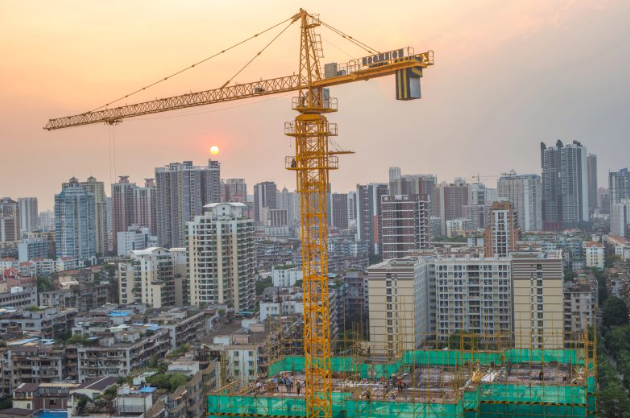
China’s property market remains the biggest downside risk to its economic growth target this year, with policymakers seemingly not in a hurry to make significant changes because its impact is mostly confined to the world’s second-largest economy, according to the chief economist for a global ratings agency. “China has the savings to deal with this. It’s not really spilling over too much to the rest of the world,” said Paul Gruenwald, global chief economist at S&P Global Ratings. “So they’re not going to be forced into dealing with the property excesses by any external or market pressure. They can do it at their own time, but we are not at the bottom yet.” In May, China unveiled wide-ranging measures to stabilise its property sector, which has been in contraction sin...
Bangladesh was driven by fast fashion, but its struggling economy now needs more
Asia, Market

Bangladesh was driven by fast fashion, but its struggling economy now needs more

Bangladesh is the beating heart of the global fast fashion business. The clothes its factories export stock the shelves at H&M, Gap and Zara. Over three decades, this has transformed the country from one of the world’s poorest to a lower-middle income nation. But its garment industry, worth $55bn (£42bn) a year, is now facing an unsettled future after weeks of protests toppled the government of Sheikh Hasina in August. Hundreds of people were killed in the unrest. At least four factories were set alight, while manufacturers struggled to operate under a nationwide internet blackout. Already, some big brands have looked elsewhere for next season’s clothes, three firms that help supply to companies such as Disney, US supermarket chain Walmart and other global apparel companies t...
Asia, China, Market

Xi is immobilized due to China’s economic chaos. The entire world will compensate.

Just about everyone has a view on China’s economic troubles. Its deepening property crisis, deflationary currents, and increasing protests are all Asia observers can talk about. Yet one very important voice is barely saying a word about the state of Asia’s biggest economy: President Xi Jinping. This is true both rhetorically and by way of policy actions. The deafening silence on the latter front is especially perplexing as virtually every Chinese growth engine—from investment to exports to household spending—sputters. Less quiet are commodity traders bidding down prices of oil, copper, and other commodities as China turns further inward. Hopes for smoke signals from Beijing that fresh stimulus might be coming are being dashed day after day. And keeping global marke...
Asia, Market

Quarterly economic overview for Southeast Asia: Holding up well

In the second quarter 2024, the economies of Southeast Asia remained steadfastly resilient and broadly delivered credible economic growth, backed by an improvement in domestic and global demand. Southeast Asia’s economies remained resilient and delivered credible economic performance in the second quarter 2024.1 GDP grew in all economies, with Malaysia, the Philippines, Thailand, and Vietnam recording the fastest rate of year-on-year (y-o-y) growth over the past four quarters. Indonesia experienced a growth plateau and Singapore grew 0.1 percent slower this quarter compared to the previous quarter (Exhibit 1). Growth drivers were nuanced in every Southeast Asian economy, across a combination of strong consumption, output expansion, and higher exports, following an improvement in global...
Asia, Market, USA, World

Global Economic Situation and Outlook Update for September 2024

After years of turbulence and significant volatility in economic output, the world economy is on a more stable trajectory. Global growth performance has held up surprisingly well in the face of recent shocks, including aggressive interest rate hikes by major central banks during 2022–2023 and an escalation of conflicts with international spillovers. Robust consumer spending in several large developed and developing economies – buoyed by high levels of employment, rising real wages, and relatively healthy household balance sheets – has sustained economic resilience. In a large number of economies, inflation has slowed considerably and is approaching central bank targets, providing room for monetary easing. In most cases, economies experienced disinflation without a significant deterioratio...