Asia

There is a local government issue with Xi’s property correction.
Asia

There is a local government issue with Xi’s property correction.

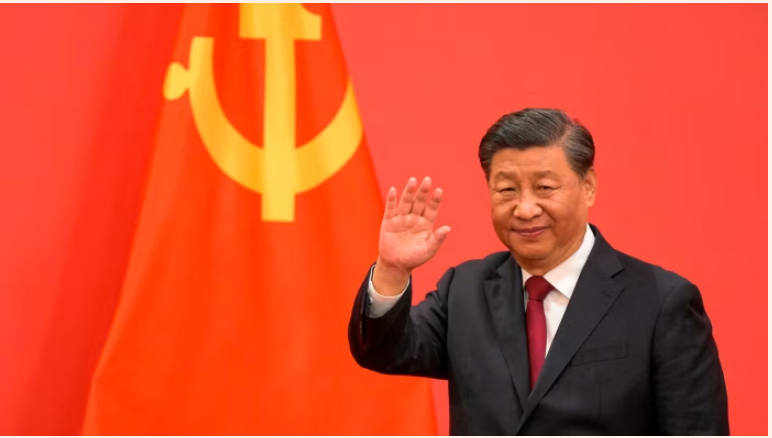
Xi Jinping’s most audacious attempt to revive China’s property crisis is running into an unexpected roadblock: local government leaders who seem not to have gotten the memo. Headlines surrounding the efforts announced four months ago focused on 300 billion yuan (US$42.5 billion) of central bank cash being deployed to buy up unsold homes. But the real thrust of the scheme was prodding local authorities to hoover up excess housing supply by far greater amounts around the nation. So far, though, fewer than 30 mainland cities out of the more than 200 Beijing hoped to incentivize have heeded the call. This raises a tantalizing question: Are municipal officials being delinquent, or is their inaction because they see a bigger picture that Xi’s team is missing?
How China got to be the market leader for electric vehicles and what the US can do to catch up
Asia, China, Market

How China got to be the market leader for electric vehicles and what the US can do to catch up

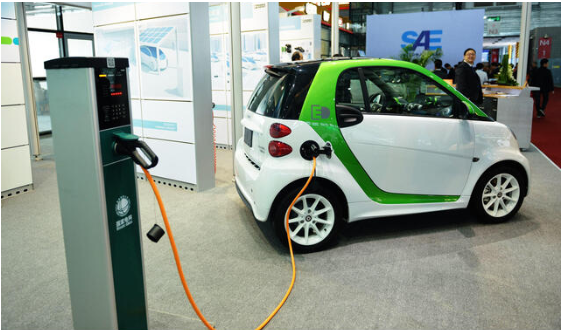
The U.S. blinked, and China built an electric vehicle empire. "They're taking over the world, except North America," said Lei Xing, a Chinese auto industry expert. "The U.S. will be the last frontier." In the last 15 years, China has rolled out a public charging network over 10 million strong, convinced billions of drivers to go electric by dangling subsidies and other incentives, and introduced over 100 EV brands with a bevy of pricing options. The push exemplifies "China Speed," a term Xing used to describe the country's hypersonic development. The speed and scale of the shift has slingshotted China past the U.S. and every other nation in the transition to electric vehicles, while also positioning Chinese automakers near the front of the pack to dominat...
China Is Not Rich, But It Has Become Powerful
Asia, China

China Is Not Rich, But It Has Become Powerful

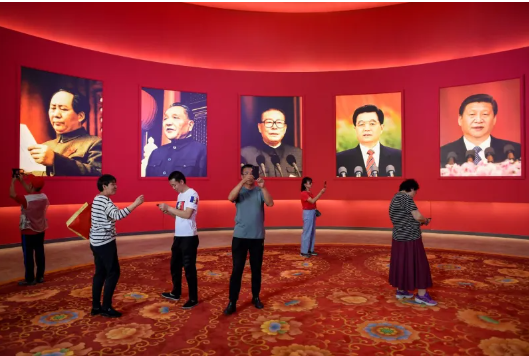
On Aug. 22, China commemorated the 120th anniversary of the birth of former Chinese leader Deng Xiaoping, whose market reforms catapulted China from famine-stricken communist backwater to global economic power. Xi praised Deng for his contribution to the party and the nation. Despite the two leaders’ common goal of a powerful China, however, Xi’s strategy for achieving it markedly differs from Deng’s. By extending his reign as China’s paramount leader beyond the two-term limit favored by Deng and making no preparations for a transition of power during his lifetime, Xi has discarded one of Deng’s main ideas for ensuring long-term political stability. Whereas Deng emphasized market reforms, Xi is reasserting centralized control by the party-state. But the most remarkable change ha...
Asia, Market, World

Rate increases will persist even when the Bank of Japan fires in September.

What’s happened? The Bank of Japan (BOJ, the central bank) decided to keep its policy rate unchanged at 0.25% at its policy board meeting on September 20th, pausing after a 15-basis-point increase in July. On the same day, official data showed that headline consumer price inflation accelerated to a 10-month high of 3% in August, from 2.8% in July, following strong growth in prices for food and utilities. Why does it matter? The BOJ is determined to pursue monetary normalisation by raising interest rates and winding down its asset-purchase programmes. However, the pace of the policy shift and the terminal policy rate will depend on Japan’s economic fundamentals, notably the strength of private demand and inflation expectations. The pause in September was factored into EIU’s foreca...
Asia, China, Market

China boosts its struggling economy with its most aggressive intervention in years.

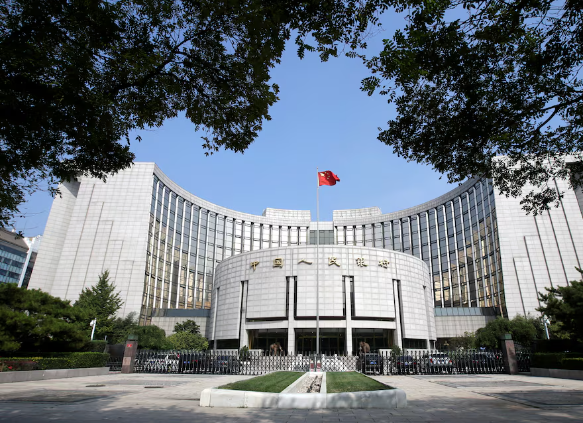
China’s central bank has cut interest rates in an attempt to revive flagging economic growth and prevent scores of debt-laden property owners from going bust in its boldest intervention to boost the economy since the pandemic. Adopting a suite of measures to reduce borrowing costs, the People’s Bank of China cut interest rates on existing mortgages by 0.5 percentage points and supported new lending by reducing the level of reserves banks must set aside before making loans. The bank’s governor, Pan Gongsheng, said he would also ease restrictions on borrowing to invest in stocks and shares on Chinese exchanges, boosting the Shanghai composite index by more than 4% within hours of the announcement. Oil prices rose, with Brent crude up more than 1% at nearly $75 a barrel. The central...
Asia, Market, World

The geopolitics of the green transformation in Southeast Asia

As their green-transition efforts are increasingly caught up in the US–China rivalry, Southeast Asian states must find a way to convert potential short-term economic gains into long-lasting ones. With policymakers focused on global geopolitical flashpoints from the South China Sea to Myanmar and the Middle East, Southeast Asia’s growing emphasis on its green transition has generally been an under-appreciated agenda item. Following the latest Association of Southeast Asian Nations (ASEAN) Foreign Ministers’ Meeting in Vientiane in July 2024, however, the meeting’s 36-page Joint Communique highlighted the importance of ‘green growth’ in advancing sustainable development. Indeed, nine out of ten ASEAN members have pledged to achieve carbon neutrality or net-zero emissions by mid...
The Interpreter: Describe “economic statecraft.”
Asia, Market, World

The Interpreter: Describe “economic statecraft.”

What is “economic statecraft”? Economic statecraft refers to a state’s use of economic policy instruments to achieve foreign policy objectives. Australia uses various tools of economic statecraft – including development assistance, loans, work visas, investment incentives and travel restrictions – as foreign policy levers to achieve its aims. Another term that is frequently used interchangeably with economic statecraft is geoeconomics. Geoeconomics focuses on the broad strategic interplay between economics and geopolitics, encompassing a wide range of economic policies and global power dynamics. What does economic statecraft include? A useful way to think about economic statecraft is in terms of carrots and sticks or, more formally, incentives or inducem...
An economist claims that China’s economy is undergoing a “slow, painful, grinding adjustment.”
Asia, China, Market

An economist claims that China’s economy is undergoing a “slow, painful, grinding adjustment.”

SINGAPORE — Following a slew of data released over the weekend from China that painted a fairly bleak outlook for its economy, analysts have tapered their expectations for the country’s full year GDP growth. “There hasn’t been much good news in this latest round of data, and this has been the pattern for the last few months,” said Eswar Prasad, professor of international trade and economics at Cornell University, on CNBC’s “Street Signs Asia” on Monday. “Both the long term issues related to property prices and so on, and the short term issues related to domestic demand in particular, especially private investment and household consumption have not been doing well at all,” Prasad said. He warned that Beijing’s economic outlook for the second half of the year is now “flas...
Asia, Market

Financial Conditions in Emerging East Asia Improve with Moderate Inflation

MANILA, PHILIPPINES (16 September 2024) — Emerging East Asia’s financial conditions have improved, leading to declining bond yields amid moderating inflation and expected interest rate cuts, according to a new report by the Asian Development Bank (ADB). Emerging East Asia’s financial markets rebounded starting in July, when the United States (US) Federal Reserve hinted at a policy rate cut in September, according to the latest edition of Asia Bond Monitor, released today. Emerging East Asia’s currencies appreciated against the US dollar, and risk premiums narrowed. Meanwhile, regional equity markets gained except for in the People’s Republic of China (PRC) and Hong Kong, China, where weak economic performance weighed on equity performance. Emerging East Asia’s equity market record...
Expert: China has the funds to handle the real estate crisis without affecting the rest of the world.
Asia, China, Market, World

Expert: China has the funds to handle the real estate crisis without affecting the rest of the world.

China’s property market remains the biggest downside risk to its economic growth target this year, with policymakers seemingly not in a hurry to make significant changes because its impact is mostly confined to the world’s second-largest economy, according to the chief economist for a global ratings agency. “China has the savings to deal with this. It’s not really spilling over too much to the rest of the world,” said Paul Gruenwald, global chief economist at S&P Global Ratings. “So they’re not going to be forced into dealing with the property excesses by any external or market pressure. They can do it at their own time, but we are not at the bottom yet.” In May, China unveiled wide-ranging measures to stabilise its property sector, which has been in contraction sin...