Asia

China Tightens Up on Bankers’ Wages
Asia, China

China Tightens Up on Bankers’ Wages

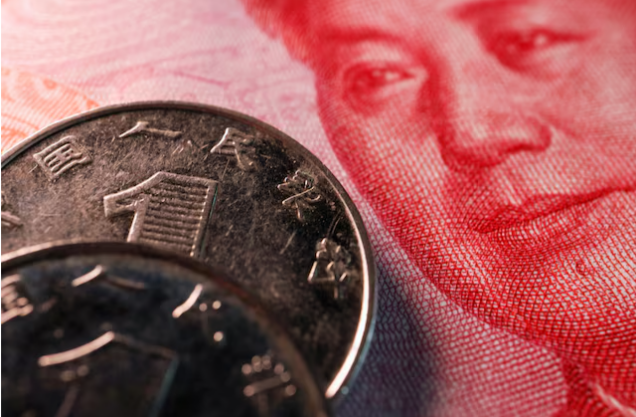
Welcome to Foreign Policy’s China Brief. The highlights this week: Executives at Chinese state banks face new pay limits, Hungarian Prime Minister Viktor Orban visits Beijing, and China’s trucking industry becomes embroiled in a cooking oil scandal. New Pay Limits Expected in Financial Sector China is planning an annual pay cap of 3 million yuan (about $413,000) for executives in the state-owned financial sector, which dominates banking in the country. Financiers’ pay has already fallen since the COVID-19 pandemic amid a general economic slowdown and a calamitous stock market. Rolling corruption investigations, meanwhile, have snatched up many staff, with more than 30 senior regulators or bankers arrested so far this year. So...
Analyzing Pakistan’s current economic strategy in light of the CPEC
Asia, China

Analyzing Pakistan’s current economic strategy in light of the CPEC

Pakistan’s newly elected Prime Minister, Shahbaz Sharif, made his first official visit to China from June 4-8, 2024. As Pakistan is struggling with a dire economic crisis and is in urgent need of a new IMF package, the visit was not just ceremonial. The Pakistani PM hopes to leverage his country’s “higher-than-Himalayas and deeper-than-the-ocean” friendship with China for an even stronger relationship. His delegation included key cabinet ministers like finance and foreign affairs. More than 100 Pakistani business leaders joined PM Sharif on the trip, which featured a convention with Chinese enterprises. Army Chief General Asim Munir was also part of the delegation, which was justified by his position on the Special Investment Facilitation Council (SIFC), a group tasked with luring interna...
<strong>Potential tariffs on Chinese EVs spark retaliation concerns and trade tensions in Canada</strong>
Asia, China, World

Potential tariffs on Chinese EVs spark retaliation concerns and trade tensions in Canada

Canada has begun evaluating the impact of China’s alleged unfair trade practices on its electric vehicle (EV) market, leaving China unhappy and perturbed. This decision follows actions by the US and the European Commission, Canada’s international partners, which have recently responded to unfair competition in their EV industries. The purpose of the consultation, which will continue until August 1, is to assess the risk of Canada’s EV market being inundated with cheaper Chinese plug-ins. Experts have not ruled out the possibility of retaliation from China. If Canada imposes tariffs on Chinese electric vehicles, two trade experts predict that the world’s second-largest economy will forcefully retaliate. Rachel Ziemba, an adjunct senior fellow at the Center for a New American Security, s...
Asia, China, Market, World

In charts: the changing picture of China’s outbound study

Disruption to the upward trend From 2010 to 2019 the number of outbound Chinese students grew at an average annual rate of 9.5%, making the country the biggest source of international students globally. However, this rapid growth was disrupted by the pandemic that emerged in 2020. The virus (and China’s subsequent restrictive policy) caused profound damage to the country’s student mobility. The number of outbound students plummeted by 36% year on year in 2020, according to a report by the Centre for China and Globalisation (CCG), a think‑tank.  Although the number of outbound students has been climbing after the initial hit from the pandemic, it remains well below the potential trend that would have manifested had the pandemic not occurred. In the meantime, the picture of...
Pakistan’s financial issue is fueled by increased IMF loans.
Asia

Pakistan’s financial issue is fueled by increased IMF loans.

The IMF has opened discussions with Pakistan on a new loan as its current $3 billion programme draws to a close. In March, the Fund approved the “immediate disbursement” of the last $1.1 billion tranche, urging the government to implement further fiscal consolidation reforms, such as removing subsidies to export sectors and reducing import duties in the upcoming budget with potential negative implications on the local market. The government is seeking another long-term loan from the IMF in an attempt to escape default, as the country is still reeling from a severe economic crisis after the devastating floods that impacted 33 million people more than two years ago (see Observer Autumn 2022, Winter 2021). With reserves ...
<strong>Poor performance of Chinese stock exchanges reflects uncertainty and a lack of confidence</strong>
Asia, China, Market

Poor performance of Chinese stock exchanges reflects uncertainty and a lack of confidence

Shanghai Stock Exchange and Hang Seng index have been struggling to perform for the past few years despite intervention by the Chinese government, which has led to frustration among investors. These Chinese stock exchange indices have experienced sharp declines thanks to brutal selloffs amid uncertainty and a lack of confidence in the market. Investors have blamed the Beijing government for failing to take necessary steps to stabilize the market.[1] The growing disinterest can be gauged from recent developments at the Hang Seng exchange. The decline in fundraising from the new listing has been lowest in the past two decades. A total of 26 companies raised USD 1.5 billion through Initial Public Offering (IPO) in the first half of 2024, which is 35 percent less compared to the correspond...
Asia’s manufacturing activity grows in June on the strong momentum in the global economy.
Asia

Asia’s manufacturing activity grows in June on the strong momentum in the global economy.

Asia's factory activity expanded in June on solid momentum in the global economy and brightening prospects for semiconductor output, surveys showed on Monday, offering policymakers some hope the region can weather the hit from soft Chinese demand. But cost pressures weighed on manufacturers in countries like Japan, where the weak yen is boosting the price companies pay for fuel and raw material imports. China's Caixin/S&P Global manufacturing purchasing managers' index (PMI) rose to 51.8 in June from 51.7 in May, a private survey showed on Monday, remaining above the break-even line of 50.0 that separates growth from contraction. It marked the fastest clip in more than three years and exceeded market forecasts of 51.2. The private-sector reading followed official PMI data releas...
Asia, Market

Air India to set up South Asia’s largest Flying Training Organisation (FTO) at Amravati

MUMBAI: Tata Group-run Air India said on Monday that it is setting up South Asia’s largest Flying Training Organisation (FTO) at Amravati in Maharashtra as part of an initiative by the Maharashtra Airport Development Company (MADC). The DGCA-licensed FTO at Amravati’s Belora airport will be operational by Q1 FY26 and will target to graduate 180 commercial pilots every year, the airline said.  The Air India FTO will have 31 single-engine aircraft and 3 twin-engine aircraft for training. Air India has been awarded a tender by the MADC to establish and operate the FTO for a period of 30 years.  Campbell Wilson, MD & CEO, Air India, said, “The FTO at Amravati will be a significant step towards making Indian aviation more self-reliant and offering more opportunities to t...
Asia, China, Market, Singapore, USA, World

Review of climate-related financial disclosure regimes around the world

1. Australia On 27 March 2024, the Australian Government released the Treasury Laws Amendment (Financial Market Infrastructure and Other Measures) Bill 2024 (Cth) (Bill) outlining the implementation of the country’s proposed mandatory CRFD regime. The Bill contained only minor amendments to the original exposure draft developed by the Treasury at the start of 2023. The Bill is currently before Parliament, where it has passed the Lower House without amendment and is expected to pass the Upper House by the end of June or early July 2024. It is proposed that the reporting requirements will be phased in over the next few years across three groups of corporations. These groups will be determined based on whether companies meet at least two of the three criteria pertaining to re...
Asia, Market, World

Global economic outlook: Charting different courses

The pandemic was a common, global shock for all economies that led to very synchronized outcomes. Nearly all economies experienced deep recessions and subsequent strong recoveries because of pent-up demand and policy stimulus. Associated with that, nearly all economies had unexpected surges in inflation, which resulted in aggressive rate hiking cycles. As the world shifts further away from the pandemic shock, there starts to be a desynchronization and more variation in economic growth, inflation and monetary policy, said Rob Subbaraman, Nomura’s Head of Global Macro Research. There are many megatrends that are unfolding, such as artificial intelligence, geopolitical rifts, climate change, demographic change, elections in major economies and high and still-rising public debt, so it is i...