
Asia

Busting Myths About “Peak China”
Asia, World

Busting Myths About “Peak China”

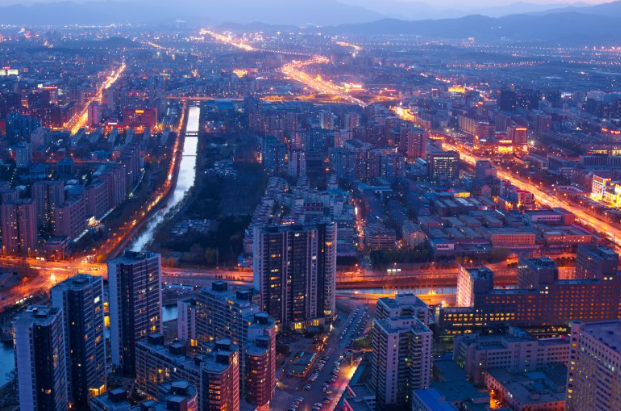
A more nuanced look at China’s economic indicators is necessary to understand current trends. In recent years, there has been a notable shift among certain Western politicians, media outlets and think tanks regarding their perspective on China’s developmental trajectory. The once-popular theory of an imminent Chinese collapse, famously asserted by Gordon G. Chang over two decades ago, has finally begun to lose traction. But there is still a lingering reluctance to acknowledge China’s sustained ascent, prompting the emergence of a new buzzword: “Peak China.” As the second-largest GDP globally for 15 consecutive years, China’s economic landscape has naturally witnessed expansion alongside moderated growth rates, a phenomenon well-recognized in economic theory. In the context of China’...
Asia

Growing political and economic obstacles pose a danger to the region’s growth prospects in the next years.

Not since the Asian financial crisis has Southeast Asia had to contend with the combination of political and economic challenges that it now faces. Uncertainty in the major western markets and China are leading to currency weakness, anemic export growth and plunging commodity prices are hitting the region’s economies almost simultaneously, reducing growth expectations measurably for the next few years. In the meantime, politics is complicating the region’s ability – whether at the country or multilateral level – to respond quickly and cohesively to these emergent economic problems. Governments in Bangkok and Kuala Lumpur are distracted by domestic controversies that could turn into potential instability; a possibly disruptive political transition will take place in Manila next year; an...
Asia, World

“This is not the Asian financial crisis.”

KUALA LUMPUR: The weakening of the ringgit is not a true reflection of the state of the national economy and other macroeconomic conditions, says the Prime Minister. Datuk Seri Anwar Ibrahim said the current situation must be looked at comprehensively and based on the big picture, including the country’s capacity to grow and the reassuring investment figures. He said the national economy was in a much better position compared with during the Asian financial crisis in 1998. “Why should we look only in terms of the ringgit and compare it with 1998? In 1998, the ringgit fell, investments fell, inflation rose. “It is concerning but is not the same now. The latest (investment) figures announced by the National Investment Council meeting are the highest recorded. “Inflation conti...
February, India’s economy continues to grow rapidly
Asia, World

February, India’s economy continues to grow rapidly

The Indian economy, which expanded at a four-month high in January, continued to strengthen in February, seeing accelerations in both manufacturing and services sectors during the month. While services sector output climbed to a seven-month high in February, manufacturing sector output reached a five-month high, firming India’s position as one of the fastest-growing major economies. The HSBC Flash India Composite Purchasing Managers’ Index (PMI), compiled by S&P Global, climbed to 61.5 in February from a revised reading of 61.2 for January—well above the 50-point threshold that differentiates expansion from contraction. The seasonally adjusted index measures month-on-month change in the combined output of India’s manufacturing and service sectors. “Growth improved in both ...
The economic decline in Bangladesh and the Rohingya crisis
Asia, World

The economic decline in Bangladesh and the Rohingya crisis

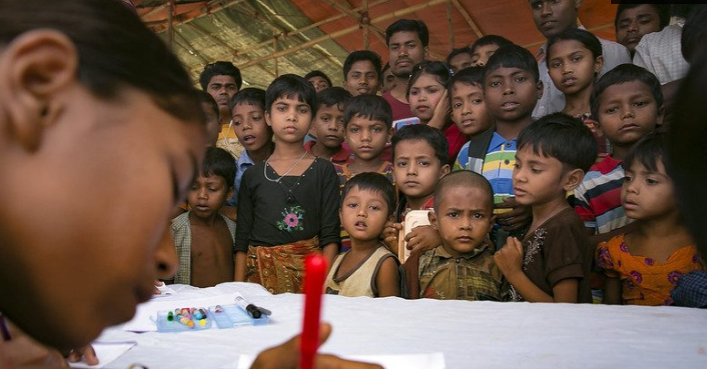
In August 2017, a deadly ethnic clearance operation, backed by the Myanmar military against the minority Rohingya (Muslim) population in Rakhine state, began the displacement of thousands of Rohingyas. By the end of 2017, around 745,000 people had fled to Cox’s Bazar, a district in southeast Bangladesh. Bangladesh, though not a signatory to the 1951 refugee convention, and despite being a country with a high population density, sheltered and welcomed these forcibly displaced Myanmar nationals on an ad hoc basis. By April 2019, more than 900,000 Rohingyas were living in coastal Bangladesh, and today about 90% of the Rohingya population lives in Bangladesh. With limited financial resources, Bangladesh, in collaboration with donor and global aid bodies, has worked hard to provide shelt...
Talks on an economic and trade cooperation agreement between India and Sri Lanka move further.
Asia, World

Talks on an economic and trade cooperation agreement between India and Sri Lanka move further.

New Delhi, Feb 21 (KNN) India and Sri Lanka are poised to advance discussions on the Economic and Trade Cooperation Agreement (ETCA), with upcoming bilateral talks set for later this month and in March. This development marks significant progress for both nations, as previous attempts to finalise the pact faced obstacles, including opposition from certain worker unions and nationalist politicians in Sri Lanka. The ETCA negotiations, which were initiated during the Maithripala Sirisena-Ranil Wickremesinghe administration, saw 11 rounds of discussions between 2016 and 2019 but failed to reach fruition due to protests in Sri Lanka. However, under President Wickremesinghe's leadership, discussions resumed last year, signalling a renewed commitment to bolstering economic ties between ...
India-Bangla trade ties
Asia, World

India-Bangla trade ties

Connectivity, industrial development and trade were the key themes in discussions over economic cooperation between Bangladesh and India. The Planning Commissions of both countries were at the forefront of negotiations to envision a new economic and industrial future. After 1971, Bangladesh set up a newly minted planning commission with economists trained from Cambridge and Harvard. The new commission sought to adapt best practices from both India and Pakistan. The Indian model was a research-centric commission, whereas the Pakistani model was a centralized commission overseen by the head of state. Diversifying exports The trade deficit with India was one of the areas identified by the Bangladesh Planning Commission for redressal. Professor Rehman Sobhan, who served in the first ...
Asia

Tracker for Central Bank Currency Swaps

Since the financial crisis of 2007, central banks around the world have entered into a multitude of bilateral currency swap agreements with one another. These agreements allow a central bank in one country to exchange currency, usually its domestic currency, for a certain amount of foreign currency. The recipient central bank can then lend this foreign currency on to its domestic banks, on its own terms and at its own risk. Swaps involving the U.S. Federal Reserve were the most important of all the cross-border policy responses to the financial crisis, helping to alleviate potentially devastating dollar funding problems among non-U.S. banks. Fed swaps again helped to prevent global dollar shortages in early 2020, when the spread of the COVID-19 pandemic plunged the world into deep recessi...
Sri Lanka is mired in unstable political and economic conditions.
Asia, World

Sri Lanka is mired in unstable political and economic conditions.

In 2023, Sri Lanka faced a complex interplay of economic and political challenges. Although fuel and food queues have disappeared, the dire impact of the economic crisis was inescapable. Sri Lanka’s economic outlook was initially grim, with a 3.1 per cent GDP contraction in the second quarter of 2023 and a projected 2 per cent shrinkage for the year. The first quarter saw an alarming 11.5 per cent contraction, highlighting the severity of the crisis. Despite a peak inflation rate of 70 per cent in September, it dropped to 3.4 per cent in November due to subdued demand, offering temporary relief for poorer households The World Bank later revised its forecasts, noting Sri Lanka’s progress in reducing inflation and benefits accruing from tourism revenue and currency appreciation. The B...
Pakistan’s crucial textile continues to suffer losses
Asia

Pakistan’s crucial textile continues to suffer losses

The textile sector which is an important pillar of Pakistan's economy saw continued losses in 2023 and the future too does not seem promising thanks to the decline in cotton production this year. Unprecedented inflation, power crisis, and political and economic instability have led to the downturn. This is going to add to the problem of distressed livelihoods and hurt the country's overall economy as the textile sector provides critical income to rural households and contributes to over 60 percent of export receipts.[1][2]  The unprecedented floods of 2022 still have had negative impacts on the cotton output this year as well. The domestic demand for cotton lint is around 15 million bales but the production is not going to be over 9.5 million.[3][4] The shortage of cotton has led ...