Asia

Israel-Iran conflict raises Asia’s energy security fears over Strait of Hormuz risks
Asia

Israel-Iran conflict raises Asia’s energy security fears over Strait of Hormuz risks

Any closure of the strait could choke oil flows vital to Asian economies, analysts warn Escalating conflict between Israel and Iran is raising fresh concerns over Asia’s energy security, analysts said on Tuesday, with any disruption to oil flows through the Strait of Hormuz threatening to destabilise global markets.Roughly 70 per cent of Asia’s crude oil and refined product imports pass through the narrow waterway, which lies adjacent to Iran and connects the Persian Gulf to the Gulf of Oman. The strait remains one of the world’s most critical maritime choke points, particularly for heavily import-dependent Asian economies.The renewed anxiety came after US President Donald Trump left the Group of Seven (G7) summit in Canada a day early on Monday after calling for the evacuation of ...
Green and digital sectors to drive deeper China-Central Asia economic ties
Asia

Green and digital sectors to drive deeper China-Central Asia economic ties

In recent years, economic and trade cooperation between China and Central Asian countries has achieved significant success, becoming one of the key drivers of the region's development. China's imports and exports with the five Central Asian countries have expanded from 312.04 billion yuan ($43.47 billion) in 2013 to 674.15 billion yuan in 2024, an increase of 116 percent, according to Chinese customs data, the Xinhua News Agency reported. Thus, China has strengthened its position as one of Central Asia's largest trading and investment partners. China and the Central Asian countries have made significant progress in expanding their cooperation under the Belt and Road Initiative (BRI), achieving tangible results primarily in trade, investment, infrastructure development, and energy. ...
Asia

USS Nimitz Leaves South China Sea As Middle East Crisis Intensifies

On Monday morning, U.S. aircraft carrier USS Nimitz exited the South China Sea heading west, according to ship tracking data from Marine Traffic. The move follows the cancellation of a scheduled port visit in central Vietnam. The carrier had planned to visit Danang City later this week, but two sources, including one diplomat, said a formal reception slated for June 20 had been called off. One of the sources said the U.S. Embassy in Hanoi had informed him about the cancellation, due to “an emergent operational requirement”. The embassy didn’t immediately respond to a Reuters request for comment. The Nimitz Carrier Strike Group conducted maritime security operations in the South China Sea last week, as “part of the U.S. Navy’s routine presence in the Indo-Pacific,” accordin...
What works for Central Asia’s economic resilience?
Asia

What works for Central Asia’s economic resilience?

The U.S. tariffs war has infringed upon the legitimate rights and interests of more than 180 countries and disrupted the established international trade order, while five Central Asian countries in general have a relatively single trade structure. How can they promote external trade and diversify trade structure to achieve economic resilience amid the lingering trade turbulence? Expanding cooperation with China on cross-border e-commerce and manufacturing China and its five Central Asian neighbors enjoy a high degree of complementarity in bilateral trade. China's manufacturing industry is in a leading position globally. In contrast, five Central Asian countries' trade structure is dominated by resource intensive products such as coal, crude oil, natural gas, agricultural and han...
<strong>China Moves in: Indonesia’s EV Strategy Shakes Up Global Battery Politics</strong>
Asia, China

China Moves in: Indonesia’s EV Strategy Shakes Up Global Battery Politics

Indonesia’s flagship electric vehicle (EV) battery consortium has come under the spotlight of the global community following the removal of South Korea’s LG Energy Solution and the potential entry of Beijing-backed Zhejiang Huayou Cobalt. The development has intensified geopolitical and economic concerns about Beijing’s growing dominance in the global EV supply chain. In fact, Huayou had already expressed its interest in the Titan project as early as last year, and it already had “the technology.” The intention was clear: China has been increasing its influence in neighbouring Indonesia’s burgeoning EV supply chain. The $9.8 billion electric vehicle (EV) battery project, also known as the Titan Project, is part of Indonesia’s plan to climb the value chain in battery manufacturing. ...
<strong>Global Trade Shift: China Seeks Allies amid U.S. Tariffs</strong>
Asia, China, USA

Global Trade Shift: China Seeks Allies amid U.S. Tariffs

Chinese President Xi Jinping's diplomatic visit to Vietnam has drawn global attention, particularly in light of the 145% tariff imposed by the United States on Chinese exports. This move has intensified trade tensions between the two economic giants, prompting China to seek stronger alliances with Southeast Asian nations. During his visit, Xi urged Vietnam to stand against unilateral trade restrictions, emphasizing the need for stable global supply chains and economic cooperation. China has been actively working to expand its trade partnerships with countries like Vietnam, Malaysia, and Cambodia, aiming to mitigate the impact of U.S. tariffs. However, despite these efforts, no single country can fully replace the trade volume China previously had with the U.S., which played a cruci...
<strong>China’s EV Expansion Faces Roadblocks in Brazil amid Tariff Calls on BYD</strong>
Asia, China

China’s EV Expansion Faces Roadblocks in Brazil amid Tariff Calls on BYD

China’s EV expansion in Brazil is facing mounting challenges as domestic automakers push for higher tariffs to counter the influx of low-cost Chinese vehicles. BYD, which has captured 47% of Brazil’s EV market, has stockpiled over 70,000 unsold vehicles in ports, anticipating tariff hikes. Brazil reinstated import duties in January 2024, starting at 10% and rising to 35% by mid-2026. Despite BYD’s dominance, local manufacturers, including Volkswagen and Toyota, are ramping up EV production. With Chinese automakers controlling 90% of Brazil’s EV market, policymakers face pressure to accelerate tariff increases. The outcome could reshape global trade policies. BYD has rapidly expanded its presence in Brazil since entering the market in 2021, leveraging aggressive pricing strategies t...
<strong>Central Bank Struggles to Contain China’s Banking Crisis</strong>
Asia, China

Central Bank Struggles to Contain China’s Banking Crisis

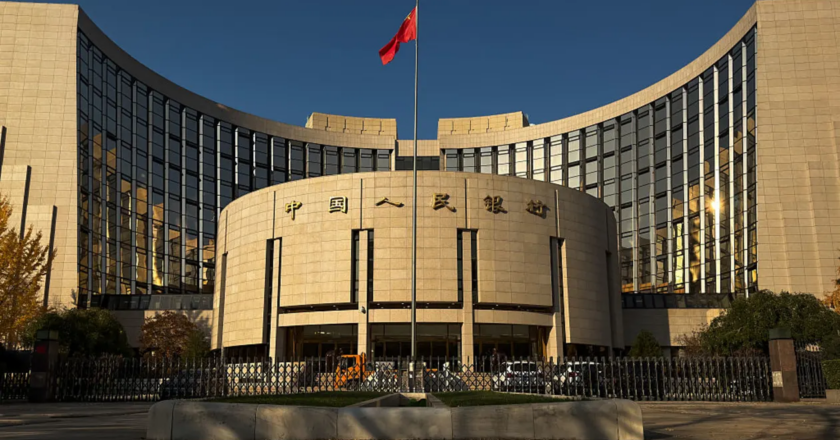
China’s economic landscape is facing unprecedented turbulence, as revealed by the latest report from the People’s Bank of China. While Beijing has long projected an image of strength and stability, the central bank’s findings expose eight interwoven crises that threaten to unravel the nation’s economic and social fabric. These crises—spanning deflation, real estate collapse, local government debt, weak consumption, financial system risks, export declines, unemployment surges, and capital flight—are not isolated issues but rather a self-reinforcing cycle of decline. China’s consumer price index (CPI) fell 0.1% year-on-year, while the producer price index (PPI) dropped 2.3%, signalling sustained deflation. The central bank acknowledges weak demand and calls for price recovery—an unus...
Asia

The India-Pakistan Crisis of 2025

The recent India and Pakistan crisis was the most significant between the two nuclear-armed adversaries in several decades. It saw military action unfold that crossed previous thresholds in geographic reach, systems employed, and impacts produced, and concluded with significant diplomatic engagement, primarily by the United States. It also generated unprecedented levels of mis- and disinformation that continue to cloud understandings of what actually transpired between May 7-10. This working paper reviews and assesses the available evidence in order to distill an initial understanding of the conflict’s trajectory—albeit one that will no-doubt evolve as additional information becomes available. Given the unprecedented nature of the military action and the likelihood that this crisis wi...
Hong Kong Dollar Amid ‘Asian Financial Crisis In Reverse’
Asia, China

Hong Kong Dollar Amid ‘Asian Financial Crisis In Reverse’

The recent weakness in USD triggered the so-called “Asian Financial Crisis in reverse.” Taiwan dollar notably surged 10% against the USD amid worries that the Taiwanese government might have to agree to currency depreciation as part of trade negotiations with the US. The sudden shift in capital allocation also flooded the Hong Kong financial system, prompting the Hong Kong Monetary Authority (HKMA) to intervene in the foreign exchange market. The de facto central bank had to sell HKD to maintain its linked exchange rate system with the USD. How Linked Exchange Rate System works? HKMA has to acquire USD from the market whenever the HKD exchange rate is “too strong” - i.e., when it is stronger than HKMA’s trading limit of HKD 7.75 per USD - under its linked exchange rate. ...