
China

Boao Forum for Asia: SABIC’s CEO: We are part of the China economy
Asia, China

Boao Forum for Asia: SABIC’s CEO: We are part of the China economy

The Boao Forum for Asia has wrapped up its regional meeting in Saudi Arabia. It is Riyadh's second consecutive year to host the meeting. CGTN's Adel EL Mahrouky talked to the CEO of Saudi petrochemical giant SABIC, who praised the forum's role in strengthening cooperation with China. ADEL EL MAHROUKY, Riyadh, Saudi Arabia "So how is it significant for Saudi Arabia to host it for the second consecutive year?" ABDULRAHMAN AL-FAGEEH, CEO and BFA Board Member, SABIC "Yeah. First of all, I think it's an opportunity for our Asian partners to come and to see what is in Saudi Arabia. There's a lot of opportunity that it will attract. It is one of the largest growth in terms of GDP, in addition to the opportunities that so many opportunities in all aspects: in building and constructions,...
China services activity hits 3-year low while factory slump persists
China

China services activity hits 3-year low while factory slump persists

China’s factory activity fell for an eighth straight month in November while activity in services hit a three-year low, showing how persistent weak demand is affecting the country’s economic outlook despite a trade truce with the US. The manufacturing purchasing managers’ index rose marginally to 49.2 this month, according to official data released on Sunday. A reading below 50 shows a contraction in activity. Another index tracking non-manufacturing business sectors, including services and construction, fell to 49.5, down from 50.1 last month. It is the first reading below 50 in nearly three years. The results were driven by seasonal factors and the fading effect of a boost in consumption during a week-long public holiday in October, said Huo Lihui, chief statistician of the...
China’s economic crisis hits Indian aluminium hard: Price deflated & trade relations dampened
China

China’s economic crisis hits Indian aluminium hard: Price deflated & trade relations dampened

Indian aluminium market witnesses a 0.64 per cent price drop to INR 270.45 per kilogram, owing to the declining demand from China, which is otherwise the world’s largest aluminium producer cum consumer. Along with deflating pricing in the Chinese market, the SHFE inventory rise of 7.67 per cent has also pressurised the market sentiment. To cushion the aluminium price’s free-fall, the US federal rate cut has weighed in, supporting broader commodity sentiment. China is experiencing a structural and cyclical economic slowdown. This is not a typical, short-term dip but a complex deceleration from its previous high-growth phase. Both the country’s overall manufacturing output and retail business have faced their weakest month in October 2025 when compared with the previous 12 months. Th...
China’s iron ore lump premium falls to over 1.5-year low
China

China’s iron ore lump premium falls to over 1.5-year low

Premiums of China's seaborne iron ore lump against 62% Fe fines, which have tracked downward since mid-September, have now hit a 1.5-year low. Behind the weak lump premiums has been waning demand for lump ores from loss-suffering steelmakers, Mysteel Global noted. As of November 25, Mysteel SEADEX 62.5% Fe Australian iron ore lump premium against 62% Fe Australian fines had dropped to $0.0925/dmtu, plunging by 42.2% from two months ago and hitting the lowest level since late May 2024. Iron ore lump is considered a premium product over fines as it can be charged directly into blast furnaces, saving sintering costs and reducing pollution. However, since mid-September, market sources have observed a notable decline in steel mills' appetite for lump ores, alongside a growing prefere...
China’s Economy is Forecast to Grow Faster Than Expected in 2026
Asia, China, World

China’s Economy is Forecast to Grow Faster Than Expected in 2026

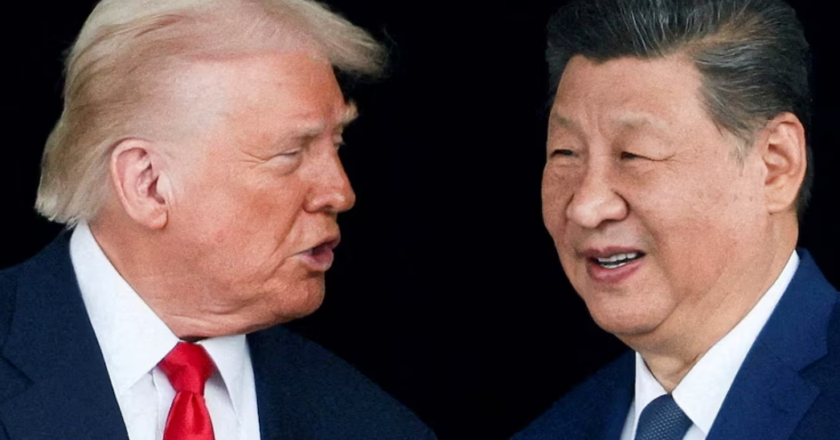
China’s surprising strength in exports and its commitment to more advanced manufacturing in a new Five-Year Plan boost are raising expectations for GDP growth. Goldman Sachs Research sees 5-6% annual growth in China’s exports and raised its real GDP forecasts for 2026 and 2027 to well above consensus. The approval of the new Five-Year Plan proposal highlights the government’s determination and capability to keep advancing its manufacturing and boost its export market share. A meeting between Donald Trump and Xi Jinping in South Korea, signaling a truce on trade, has also improved the growth outlook, even while showing China’s leverage over rare earth minerals to push back on trade restrictions. The drag on economic growth caused by China’s property downturn is beginning t...
China’s October net gold imports via Hong Kong fall about 64% from September
Asia, China

China’s October net gold imports via Hong Kong fall about 64% from September

China’s net gold imports via Hong Kong in October fell about 64% from September, Hong Kong Census and Statistics Department data showed on Tuesday. As the world’s leading gold consumer, China’s purchasing activities can significantly influence global gold markets. The Hong Kong data may not provide a complete picture of Chinese purchases, as gold is also imported via Shanghai and Beijing. Net imports via Hong Kong to China for October stood at 8.02 metric tons, compared with 22.047 tons in September. China’s total gold imports via Hong Kong reached 30.08 tons in October, down 17% from 36.275 tons in September. “What we’re really seeing here is a weakness in the Chinese demand while they have been firmly strong earlier in the year,” said Ross Norman, an independent analy...
China’s economy in masterful upgrading
China

China’s economy in masterful upgrading

In the first three quarters of 2025, China's economy maintained steady performance despite a complex external environment and domestic structural adjustment pressures. According to data released by the National Bureau of Statistics, China's gross domestic product grew by 5.2 percent year-on-year. This rate not only surpasses most major economies, but also demonstrates the strong resilience of the Chinese economy. The World Bank's Global Economic Prospects report released in June forecasted global economic growth at 2.3 percent in 2025. In this challenging global environment, China's remarkable performance stems fundamentally from a profound process of "power transformation" and "system upgrading". This is not a simple repetition of past models, but rather a comprehensive evolution ...
Can the Chinese economy match Aruba’s?
China

Can the Chinese economy match Aruba’s?

Xi Jinping has lofty goals for 2035. But China faces a real problem he island of Aruba, off the coast of Venezuela, has a population of just 108,000. Its economy, once dependent on breeding horses, pivoted into sifting gold then refining oil. Now it relies on attracting tourists to its white beaches, 24-hour casinos and daily games of bingo. An island just 32km long would not seem to have many bragging rights over the world’s second-biggest economy. But tiny Aruba has achieved something China’s leaders would dearly love to emulate. It more than doubled its GDP per person in less than 15 years. And it accomplished that feat even after reaching the income per person that China has recently attained.
China has lent more to US than any other country since 2000, report finds
China

China has lent more to US than any other country since 2000, report finds

China’s lending since the turn of the century has been “vastly” larger than previously understood, with loans and grants increasingly going to developed countries including the United States – the largest recipient – according to a new report by an American university research team. Of the US$2.2 trillion disbursed by China’s “official sector” between 2000 and 2023, nearly US$202 billion went to projects in the US, the AidData research lab at Virginia-based university William & Mary found. “Our data demonstrate that the US – a high-income country – is the single largest recipient of official sector credit from China. This finding is both unexpected and counterintuitive,” wrote researchers of the study released on Tuesday. “This is an extraordinary discovery, given that th...
<strong>China’s new 5-year plan: A high-stakes bet on self-reliance that won’t fix an unbalanced economy</strong>
Asia, China

China’s new 5-year plan: A high-stakes bet on self-reliance that won’t fix an unbalanced economy

Every few years since 1953, the Chinese government has unveiled a new master strategy for its economy: the all-important five-year plan. For the most part, these blueprints have been geared at spurring growth and unity as the nation transformed from a rural, agrarian economy to an urbanized, developed powerhouse. The task that faced China’s leaders as they met in early October 2025 to map out their 15th such plan was, however, complicated by two main factors: sluggish domestic growth and intensifying geopolitical rivalry. Their solution? More of the same. In pledging to deliver “high-quality development” through technological self-reliance, industrial modernization and expanded domestic demand, Beijing is doubling down on a state-led model that has powered its rise in recent ...