
China

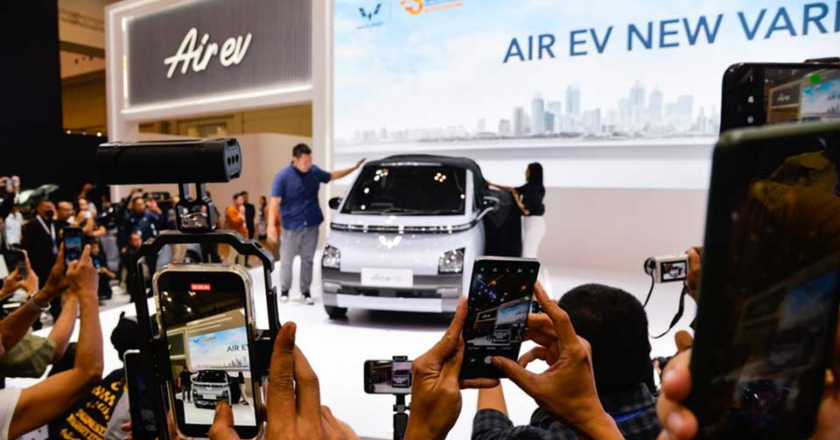
A rare earth magnet issue puts EV production at danger, so an Indian auto team travels to China.
China

A rare earth magnet issue puts EV production at danger, so an Indian auto team travels to China.

In April, China implemented export restrictions on seven rare earth elements and finished magnets, requiring exporters to obtain licenses. However, requests for imports are still awaiting approval from Chinese authorities, and shipments have yet to arrive. A delegation of auto industry representatives is preparing for a visit to China, aiming to speed up the import of rare earth magnets for Indian companies, according to industry sources. Roughly 40 to 50 executives have received visa approvals but are still waiting for the green light from the Chinese commerce ministry to hold discussions on the matter. The domestic auto industry is compelled to take action as the Chinese government imposed restrictions on the export of rare earth elements and related magnets starting April 4. Chi...

BYD’s $21.5b loss signals crisis in China’s EV price war
China

BYD’s $21.5b loss signals crisis in China’s EV price war

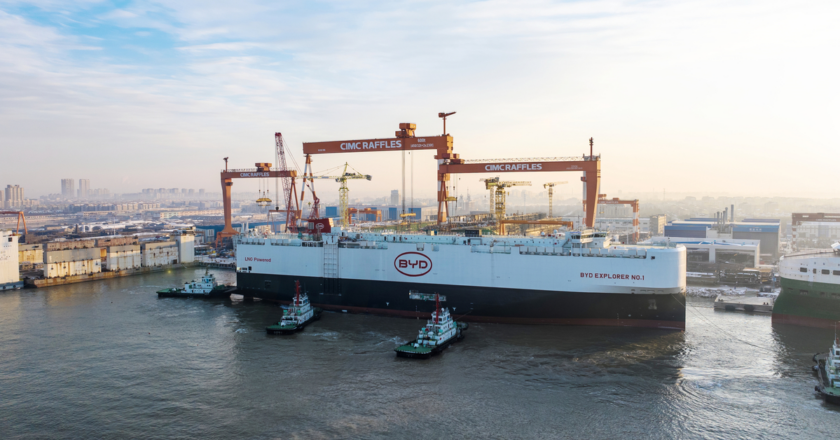
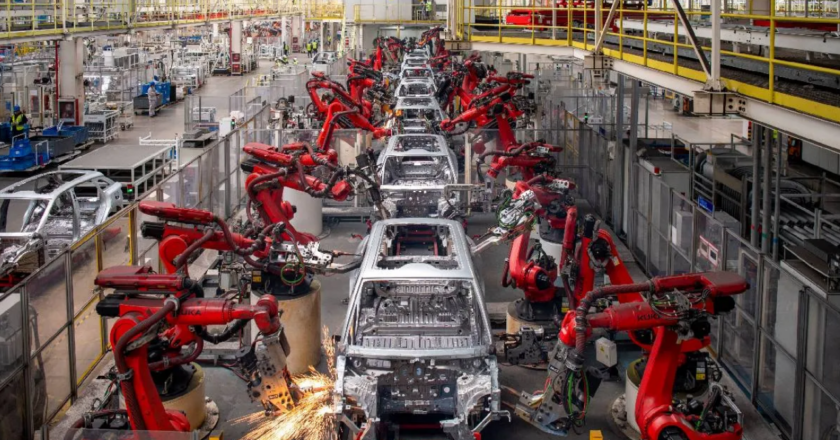
China’s electric vehicle (EV) sector is experiencing a price war that is affecting share prices and prompting government intervention. Analysts attribute these challenges to weaker demand and overcapacity, which may reduce profits and drive some companies out of the market. BYD, the market leader, has lost US$21.5 billion in market value since May 2024 due to aggressive pricing strategies. The average production capacity use rate in the industry was 49.5% in 2024, according to Gasgoo Automotive Research Institute. Overcapacity remains a major concern, leading some automakers to reduce operations or seek additional funding. 1️⃣ China’s EV industry is transitioning from subsidy-driven growth to market-driven consolidation The current price war represents a predictable ...
<strong>China Moves in: Indonesia’s EV Strategy Shakes Up Global Battery Politics</strong>
Asia, China

China Moves in: Indonesia’s EV Strategy Shakes Up Global Battery Politics

Indonesia’s flagship electric vehicle (EV) battery consortium has come under the spotlight of the global community following the removal of South Korea’s LG Energy Solution and the potential entry of Beijing-backed Zhejiang Huayou Cobalt. The development has intensified geopolitical and economic concerns about Beijing’s growing dominance in the global EV supply chain. In fact, Huayou had already expressed its interest in the Titan project as early as last year, and it already had “the technology.” The intention was clear: China has been increasing its influence in neighbouring Indonesia’s burgeoning EV supply chain. The $9.8 billion electric vehicle (EV) battery project, also known as the Titan Project, is part of Indonesia’s plan to climb the value chain in battery manufacturing. ...
<strong>Global Trade Shift: China Seeks Allies amid U.S. Tariffs</strong>
Asia, China, USA

Global Trade Shift: China Seeks Allies amid U.S. Tariffs

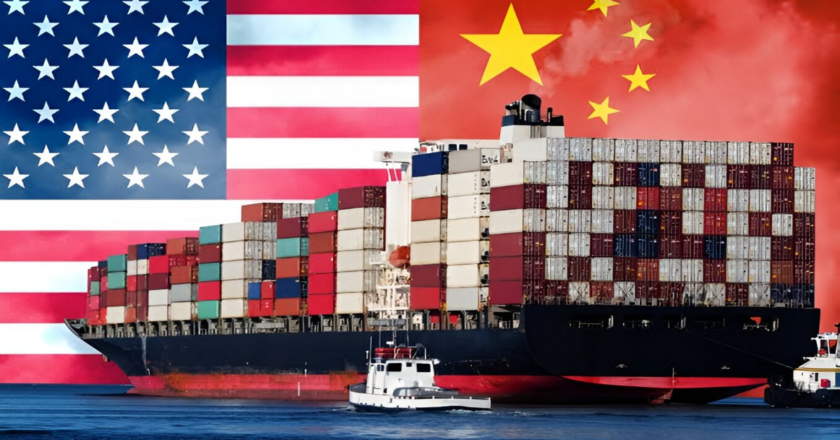
Chinese President Xi Jinping's diplomatic visit to Vietnam has drawn global attention, particularly in light of the 145% tariff imposed by the United States on Chinese exports. This move has intensified trade tensions between the two economic giants, prompting China to seek stronger alliances with Southeast Asian nations. During his visit, Xi urged Vietnam to stand against unilateral trade restrictions, emphasizing the need for stable global supply chains and economic cooperation. China has been actively working to expand its trade partnerships with countries like Vietnam, Malaysia, and Cambodia, aiming to mitigate the impact of U.S. tariffs. However, despite these efforts, no single country can fully replace the trade volume China previously had with the U.S., which played a cruci...
<strong>China’s EV Expansion Faces Roadblocks in Brazil amid Tariff Calls on BYD</strong>
Asia, China

China’s EV Expansion Faces Roadblocks in Brazil amid Tariff Calls on BYD

China’s EV expansion in Brazil is facing mounting challenges as domestic automakers push for higher tariffs to counter the influx of low-cost Chinese vehicles. BYD, which has captured 47% of Brazil’s EV market, has stockpiled over 70,000 unsold vehicles in ports, anticipating tariff hikes. Brazil reinstated import duties in January 2024, starting at 10% and rising to 35% by mid-2026. Despite BYD’s dominance, local manufacturers, including Volkswagen and Toyota, are ramping up EV production. With Chinese automakers controlling 90% of Brazil’s EV market, policymakers face pressure to accelerate tariff increases. The outcome could reshape global trade policies. BYD has rapidly expanded its presence in Brazil since entering the market in 2021, leveraging aggressive pricing strategies t...
<strong>Central Bank Struggles to Contain China’s Banking Crisis</strong>
Asia, China

Central Bank Struggles to Contain China’s Banking Crisis

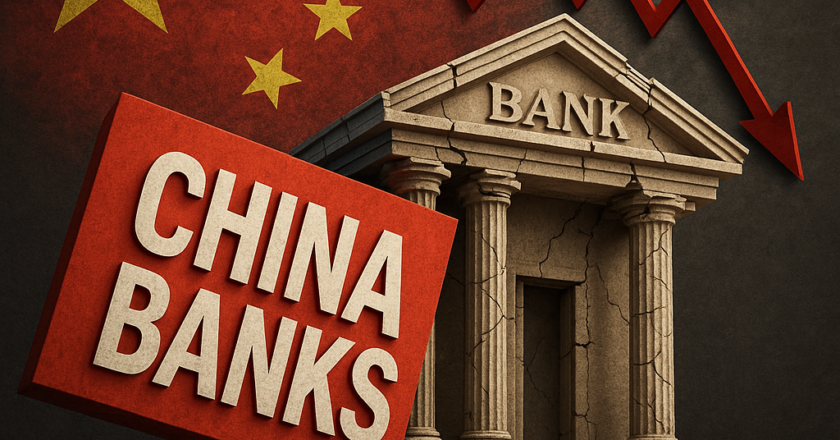
China’s economic landscape is facing unprecedented turbulence, as revealed by the latest report from the People’s Bank of China. While Beijing has long projected an image of strength and stability, the central bank’s findings expose eight interwoven crises that threaten to unravel the nation’s economic and social fabric. These crises—spanning deflation, real estate collapse, local government debt, weak consumption, financial system risks, export declines, unemployment surges, and capital flight—are not isolated issues but rather a self-reinforcing cycle of decline. China’s consumer price index (CPI) fell 0.1% year-on-year, while the producer price index (PPI) dropped 2.3%, signalling sustained deflation. The central bank acknowledges weak demand and calls for price recovery—an unus...
Poorest 75 nations face ‘tidal wave’ of debt repayments to China in 2025, study warns
China

Poorest 75 nations face ‘tidal wave’ of debt repayments to China in 2025, study warns

Vulnerable countries to pay record $22bn this year, mostly relating to loans issued under Xi Jinping’s belt and road initiative The most vulnerable nations on Earth are facing a “tidal wave” of debt repayments as a Chinese lending boom starts to be called in, a new report has warned. The analysis, published on Tuesday by Australian foreign policy thinktank the Lowy Institute, said that in 2025 the poorest 75 countries were on the hook for record high debt repayments US$22bn to China. The 75 nations’ debt formed the bulk of the total $35bn calculated by Lowy for 2025. “Now, and for the rest of this decade, China will be more debt collector than banker to the developing world,” the report said. The pressure to repay was putting strain on local funding for health and educatio...
China

‘Tidal wave’: How 75 nations face Chinese debt crisis in 2025

Developing countries to pay a record $22bn this year, mostly linked to loans from China’s Belt and Road Initiative. But many nations are also indebted to private Western lenders. Many of the world’s poorest countries are due to make record debt repayments to China in 2025 on loans extended a decade ago, at the peak of Beijing’s Belt and Road Initiative, a report by the Sydney-based Lowy Institute think tank has found. Under the Belt and Road Initiative (BRI), a state-backed infrastructure investment programme launched in 2013, Beijing lent billions of dollars to build ports, highways and railroads to connect Asia, Africa and the Americas.But new lending is drying up. In 2025, debt repayments owed to China by developing countries will amount to $35bn. Of that, $22bn is set to be ...
China stimulus lies behind a Great Wall of assets
China

China stimulus lies behind a Great Wall of assets

A great wall of debt may not be an obstacle to Xi Jinping’s effort to boost spending in the world’s second-largest economy. By some measures, China’s president has already dug deep to prop up slowing GDP growth. Now officials are taking a broader view of the country’s balance sheet. This may open up a new fiscal chapter for the People’s Republic.Despite a de-escalation this month of a global trade war, China still faces additional 30% tariffs on its exports to the United States. A property crisis, deflationary pressure and unemployment fears mean savers are hoarding money instead of spending it. Yet there is limited space to unleash further stimulus according to orthodox rules. In the past, the State Council rarely budgeted a deficit larger than 3% of GDP, a threshold similar to th...
How is China’s economy faring?
China

How is China’s economy faring?

China’s economy has suffered from slow consumer spending and a slump in the real estate market. The unpredictable trade war with the United States risks further economic problems, but the current pause in tariff increases plus persistent stimulus from Beijing are keeping the worst outcomes at bay.Following the April meeting of China’s politburo (the executive committee of the Communist Party of China) – just a couple of weeks after the United States and China had raised tariffs on one another to considerably more than 100% – the communiqué was surprisingly sanguine. At tariff rates of 145% and 125% respectively, bilateral trade would almost certainly have collapsed in what was, in effect, more trade embargo than trade war, with damaging consequences for both sides. But with a heavy...