
China

According to Stanford’s AI Center, the US has the best AI environment, followed by China.
Asia, China, Market, USA, World

According to Stanford’s AI Center, the US has the best AI environment, followed by China.

The US has been called the Wild West when it comes to AI safety due to a lack of federal governance compared to other countries. But that hasn’t impaired its status as the top AI ecosystem in the world, according to a Stanford University ranking. Stanford’s Institute for Human-Centered Artificial Intelligence (HAI) has created a tool that measures the strength of AI ecosystems based on a country’s economy, infrastructure, education, and yes — governance. Those metrics led a panel of experts to designate the US as the world’s AI powerhouse by a landslide because of its high number of existing models, notable private investments, and research on responsible AI. China follows, with strengths in its number of patents granted, investment, and clear national strategy. “Since the...
China Adds Nine More Countries to Its Visa-Free Entry List – AP
Asia, China, Market, World

China Adds Nine More Countries to Its Visa-Free Entry List – AP

China plans to expand visa-free entry to people from nine more countries from the end of this month, according to a report by Associated Press, which said the moves is part of efforts to invigorate its sluggish tourism and business sectors. The new countries are Bulgaria, Romania, Malta, Croatia, Montenegro, North Macedonia, Estonia, Latvia and Japan. And visitors from these states will be able to stay for up to 30 days without a visa. That means some 38 countries will soon have ‘visa-free’ access, which is a big dup from just three before the country was hit by the Covid pandemic. Meanwhile, people participating in exchanges will also qualify for visa-free entry – a move that seeks to enhance relations through increased cultural and academic exchanges. In recent months, a signif...
October 2024: Retail Increases, Industrial Decline, and Export Growth in China’s Economy
Asia, China, Market

October 2024: Retail Increases, Industrial Decline, and Export Growth in China’s Economy

The National Bureau of Statistics (NBS) has released the trade and economic data for October 2024, reflecting a mixed economic outlook. Retail sales surged 4.8 percent, the highest since February 2024, buoyed by holiday spending and Singles’ Day promotions. However, industrial output growth slowed to 5.3 percent, missing expectations, and the property sector remains sluggish despite recent policy measures. Amid this backdrop, economists highlight the challenges of sustaining growth, particularly with rising global uncertainties. The return of Donald Trump as President-elect of the United States, who has threatened significant tariffs on Chinese imports, poses a potential headwind for China’s trade-dependent sectors. In response, analysts anticipate further s...
SMIC and Huawei of China “will ramp up production” of the newest AI chip.
Asia, China, Market, USA, World

SMIC and Huawei of China “will ramp up production” of the newest AI chip.

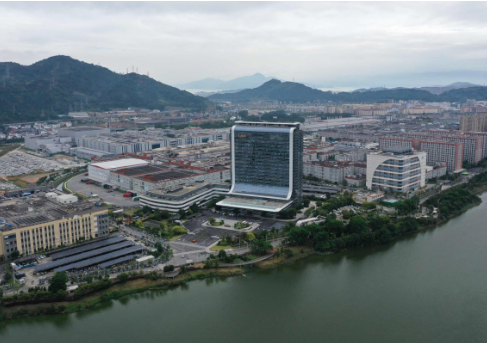
SMIC, China’s largest contract chipmaker, will make the 910C on its N+2 process, it added. Huawei is aiming to ramp up production even as the yield – the proportion of chips that come off the manufacturing line fully functional – of its advanced AI semiconductors remains far below industry standards. Advanced chips need yields of more than 70% to be commercially viable — lower yields mean greater costs and higher defect rates. But SMIC is currently producing the 910C on older, stockpiled chipmaking equipment, which has limited the chip’s yield to around 20%, Reuters said, citing a source. Even Huawei’s current most advanced processor, the SMIC-made 910B, has a yield of only around 50%, forcing Huawei to slash production targets and delay filling orders for that chip, the ...
SMIC and Huawei of China “will ramp up production” of the newest AI chip.
Asia, China, Market, USA

SMIC and Huawei of China “will ramp up production” of the newest AI chip.

Chinese technology giant Huawei and chipmaker Semiconductor Manufacturing International Corp (SMIC) are aiming to begin mass-production of China’s most advanced homegrown artificial intelligence chip, starting next year, according to Reuters. Huawei is racing to rival US chipmaker Nvidia with its AI chips at a time when increasing export restrictions by Washington — and its allies — are slowing the growth of China’s tech industry. As part of that effort, Huawei plans to start mass producing the Ascend 910C, its newest AI chip offering in China, in the first quarter of 2025, Reuters said, citing sources familiar with the matter. SMIC, China’s largest contract chipmaker, will make the 910C on its N+2 process, it added. Huawei is aiming to ramp up production even as the yield – t...
According to a research, the business migration from China is intensifying.
Asia, China, Market

According to a research, the business migration from China is intensifying.

Even before President-elect Donald Trump and his tariff-heavy agenda won the White House, top companies were already planning to shift production out of China at a faster pace, according to a new study. Based on a survey of 166 CEOs and COOs, Bain & Company found that the share of companies moving operations out of China jumped to 69% in 2024 from 55% in 2022. Where will they go? The top destination was the Indian subcontinent, with 39% of execs saying they were headed there. That was followed by 16% moving to the U.S. or Canada, 11% to Southeast Asia, 10% to Western Europe, and 8% to Latin America, rounding out the top five destinations. Meanwhile, more companies are “reshoring” operations to their home countries or “near-shoring” to neighboring countries...
China’s Religious Crisis and the Battle for Moral Domination
Asia, China

China’s Religious Crisis and the Battle for Moral Domination

China’s policies toward religion have changed radically during the Xi era. The state has sought to Sinicize religious practices and bring them under tighter bureaucratic control, while stricter regulations have curtailed public discussion of faith and spirituality on the Internet and social media. Nonetheless, more Chinese than ever are turning to spiritual pursuits in search of comfort and relief from the stress and unpredictability of life in China at a time of economic uncertainty, social disruption, and eroding trust in the Party-state and its secular materialist ideology. Internal migration and rapid urbanization have weakened community life and family ties, creating a sense of social isolation. A highly competitive education system, bleak employment prospects, and the pressures o...
According to reports, ByteDance, a Chinese computer titan, increased its worth to $300 billion.
China, Market, World

According to reports, ByteDance, a Chinese computer titan, increased its worth to $300 billion.

TikTok owner ByteDance now values itself at around $300 billion, among the highest valuations for a Chinese tech company. The company’s valuation came in a recent share buyback at about $180 a share, The Wall Street Journal reported, and indicates that it expects its business to grow even as its app TikTok faces a potential ban in the US. Both TikTok executives and experts in Washington believe President-elect Donald Trump could reverse the law, which goes into effect the day before he is inaugurated, and his election “significantly improves the picture for TikTok,” the National Security Agency general counsel told Bloomberg. ByteDance also owns various other businesses, including a Chinese version of TikTok called Douyin.
Morgan Stanley and Goldman Sachs reduce China’s prospects for economic development.
Asia, China, Market

Morgan Stanley and Goldman Sachs reduce China’s prospects for economic development.

Hong Kong stocks are cheap but may miss out on the benefits of China's economic support, analysts at Goldman Sachs said, while Morgan Stanley warned tensions and tariffs could hurt, as both brokerages downgraded market forecasts.  Goldman Sachs trimmed its recommendation on Hong Kong shares to "underweight" from "market weight".  Morgan Stanley downgraded China to slight "underweight" from "equal weight" in emerging markets, with analysts noting that efforts to revive the economy and a Republican sweep of Congress and the White House could significantly impact markets. "We expect even stronger headwinds on corporate earnings and market valuation in the coming months," Morgan Stanley analysts said in a note dated Nov. 17.  Morgan Stanley's base-case target for Ch...
Ahead of more US technology and trade restrictions, China targets vital metal exports.
Asia, China, Market, USA, World

Ahead of more US technology and trade restrictions, China targets vital metal exports.

Beijing will expand export controls on critical minerals like tungsten, graphite, and magnesium needed to make electronics, a move analysts say is in anticipation of expected sweeping US tariffs on Chinese goods and increased curbs on advanced semiconductor chips and AI technology to China following the re-election of US President Donald Trump. The restrictions also apply to specific technologies that can be used for both civilian and military purposes. China controls more than 80% of the world’s supply of tungsten and about 90% of global magnesium production, according to one official estimate; the minerals are indispensable in building defense technology, weapons, aviation equipment, and spacecraft. Washington has pushed to delink the supply chain from China ...