China

China, Market

The Actual Economic Crisis in China

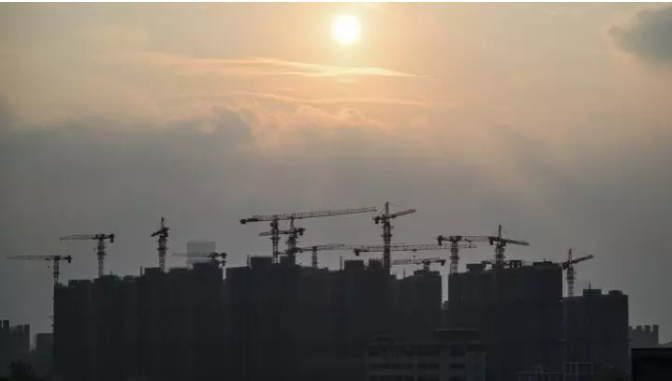
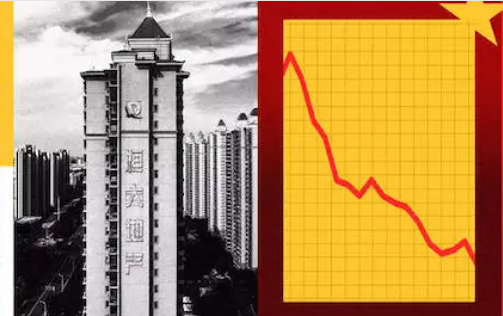
The Chinese economy is stuck. Following Beijing’s decision, in late 2022, to abruptly end its draconian “zero COVID” policy, many observers assumed that China’s growth engine would rapidly reignite. After years of pandemic lockdowns that brought some economic sectors to a virtual halt, reopening the country was supposed to spark a major comeback. Instead, the recovery has faltered, with sluggish GDP performance, sagging consumer confidence, growing clashes with the West, and a collapse in property prices that has caused some of China’s largest companies to default. In July 2024, Chinese official data revealed that GDP growth was falling behind 
China, Market

China’s Real Economic Crisis

Zongyuan Zoe Liu is Maurice R. Greenberg Fellow for China Studies at the Council on Foreign Relations and the author of Sovereign Funds: How the Communist Party of China Finances Its Global Ambitions. The Chinese economy is stuck. Following Beijing’s decision, in late 2022, to abruptly end its draconian “zero COVID” policy, many observers assumed that China’s growth engine would rapidly reignite. After years of pandemic lockdowns that brought some economic sectors to a virtual halt, reopening the country was supposed to spark a major comeback. Instead, the recovery has faltered, with sluggish GDP performance, sagging consumer confidence, growing clashes with the West, and a collapse in property prices that has caused some of China’s largest companies to default. In July 2024, Chinese o...
Asia, China, Market

How Chinese loans trapped Pakistan’s economy

After cash-strapped Pakistan secured a new $7 billion (€6.5 billion) bailout package from the International Monetary Fund (IMF) in July, Islamabad has started talks with Beijing on reprofiling billions in Chinese debt as it seeks to enact economic reforms. On the table are proposals to delay at least $16 billion in energy sector debt to China, along with extending the term of a $4 billion cash loan facility due to depleting foreign exchange reserves. Last week, Pakistani Finance Minister Muhammad Aurangzeb was in Beijing to present proposals on extending the maturity of debt for nine power plants built by Chinese companies under the multibillion-dollar Pakistan China Economic Corridor (CPEC). On Friday, Prime Minister Shehbaz Sharif told a feder...
Asia, China, Market

China’s Service Sector Is an Underutilized Driver of Economic Growth

China’s economic development over the last several decades has been remarkable amid rapid growth. We project growth will remain resilient at around 5 percent in 2024, despite the continued property sector adjustment. At the same time, China has relied too much on investment as opposed to consumption. Diminishing productivity and an aging population risk restricting growth, which we expect to slow significantly in coming years, to around 3.3 percent in 2029. Addressing these challenges requires a comprehensive and balanced policy approach. Given these circumstances, the country’s service sector is an underexploited driver of growth—which was also recognized at the Third Plenum. Reallocating resources to services has helped boost productivity over the past two decades. And i...
Asia, China, Market

China’s PMI data softened slightly in July

Manufacturing and non-manufacturing PMIs both edged slightly lower in July dragged down by weak domestic demand Manufacturing PMI remained in contraction China's July official manufacturing PMI slowed slightly to 49.4, down from 49.5 in June. This marked the third consecutive month the PMI has been below 50 - the threshold between expansion and contraction - and also marked a 5-month low.  By subcategory, we saw some mixed performances but generally, the more important subcategories trended a little weaker. The biggest decline was in production, which fell from 50.6 to 50.1. New orders also fell further into contraction from 49.5 to 49.3, as domestic demand remains sluggish. In contrast, we saw slightly smaller contractions in new export orders (48.5) and imports (47.0)...
China offers Pakistan $300 million in Panda bonds in an effort to alleviate its economic woes.
Asia, China

China offers Pakistan $300 million in Panda bonds in an effort to alleviate its economic woes.

Panda Bonds are onshore renminbi-denominated bonds issued in the People’s Republic of China by non-Chinese entities and serve as a capital-raising platform for foreign countries or companies targeting Chinese investors. With an aim to improve the financial stability of a cash-strapped country which is grappling with several other challenges such as high inflation and declining forex reserves, Pakistan has sought cooperation from Chinese institutional investors to launch Panda Bonds to raise between $250 million and $300 million initially. Federal Minister for Finance and Revenue Muhammad Aurangzeb discussed the plan with the Governor of the People’s Bank of China (PBoC) Pan Gongsheng during a meeting in Beijing, covering a wide range of economic issues on Friday. Panda Bonds are ...
Asia, China, Market

Xi tackles slow growth as economy ‘hits the brakes’

China's economy stumbled in the second quarter, official data shows, just as the country's top leaders gathered for a key meeting to address its sluggish growth. It grew 4.7% in the three months to June, falling short of expectations after a stronger start in the first three months of 2024. The government's annual growth target is around 5%. "China’s economy hit the brakes in the June quarter," said Heron Lim at Moody's Analytics, adding that analysts are hoping for solutions from the meeting under way in Beijing, also called the Third Plenum. The world's second-largest economy is facing a prolonged property crisis, steep local government debt, weak consumption and high unemployment. Past outcomes of the Plenum have changed the course of history in China - in 1978, then l...
Asia, China, Market, World

China’s updated playbook for reviving growth risks more tensions with the world

China’s most senior leadership concluded a major political meeting in July with a communiqué correctly identifying a “grave and complex international environment” and “arduous tasks” at home. But as expected, there was limited indication of new policy approaches to revive its slowing economy and recover from a real estate crisis. Nor did the meeting portend a serious effort to defuse growing backlash in the United States, the European Union, Indonesia, Brazil, and others against China’s economic playbook, which emphasizes increased investments in manufacturing for exports to boost its sluggish growth. The closely watched Third Plenum of the Communist Party’s Central Committee, which occurs approximately every five years, set goals of “innova...
China’s downturn suggests a special liquidity trap
Asia, China

China’s downturn suggests a special liquidity trap

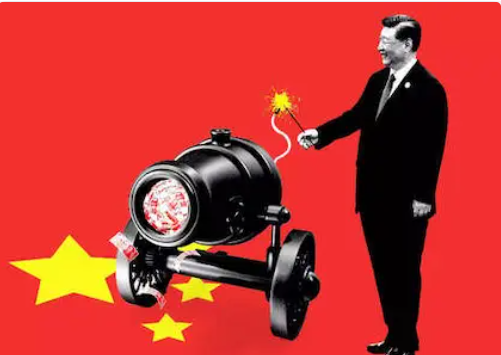
HONG KONG, July 25 (Reuters Breakingviews) - China is awash with money and its growth is slowing. To avert a prolonged stagnation, President Xi Jinping’s administration may need to spend its way out of the problem. Yet this and other classic remedies to such a malaise may not be effective in Beijing’s “socialist market economy”. China’s condition may be seen as what economists call a liquidity trap, though the term means different things to different people. Writing a century ago during the Great Depression, John Maynard Keynes described a situation where bond yields fall to a lower limit and individuals hoard cash. In 1998 after Japan’s property bubble burst, its economy slid into recession and monetary policy lost impact as interest rates were close to zero, Paul Krugman warned,...
Asia, China

China is going through its worst-case scenario of a financial catastrophe in 2008.

China’s leaders on Thursday announced lofty economic goals for the coming years, repeated Chinese Communist Party (CCP) buzz phrases and offered up traditional Marxist jargon after the Communist Party’s much-anticipated Third Plenum. However, as Reuters reported, they provided “no implementation details.” As a result, the Chinese economy will continue to erode. Continued erosion will almost inevitably result in a debt crisis, undoubtedly one of historic proportions. The CCP pledged, at the meeting held once every half decade, to enhance social security and healthcare programs and implement tax and financial reforms, but the ruling organization has promised these changes before. The Plenum communique said China would support “new quality productive forces,” one of Xi J...