Market

The Interpreter: Describe “economic statecraft.”
Asia, Market, World

The Interpreter: Describe “economic statecraft.”

What is “economic statecraft”? Economic statecraft refers to a state’s use of economic policy instruments to achieve foreign policy objectives. Australia uses various tools of economic statecraft – including development assistance, loans, work visas, investment incentives and travel restrictions – as foreign policy levers to achieve its aims. Another term that is frequently used interchangeably with economic statecraft is geoeconomics. Geoeconomics focuses on the broad strategic interplay between economics and geopolitics, encompassing a wide range of economic policies and global power dynamics. What does economic statecraft include? A useful way to think about economic statecraft is in terms of carrots and sticks or, more formally, incentives or inducem...
An economist claims that China’s economy is undergoing a “slow, painful, grinding adjustment.”
Asia, China, Market

An economist claims that China’s economy is undergoing a “slow, painful, grinding adjustment.”

SINGAPORE — Following a slew of data released over the weekend from China that painted a fairly bleak outlook for its economy, analysts have tapered their expectations for the country’s full year GDP growth. “There hasn’t been much good news in this latest round of data, and this has been the pattern for the last few months,” said Eswar Prasad, professor of international trade and economics at Cornell University, on CNBC’s “Street Signs Asia” on Monday. “Both the long term issues related to property prices and so on, and the short term issues related to domestic demand in particular, especially private investment and household consumption have not been doing well at all,” Prasad said. He warned that Beijing’s economic outlook for the second half of the year is now “flas...
Asia, Market

Financial Conditions in Emerging East Asia Improve with Moderate Inflation

MANILA, PHILIPPINES (16 September 2024) — Emerging East Asia’s financial conditions have improved, leading to declining bond yields amid moderating inflation and expected interest rate cuts, according to a new report by the Asian Development Bank (ADB). Emerging East Asia’s financial markets rebounded starting in July, when the United States (US) Federal Reserve hinted at a policy rate cut in September, according to the latest edition of Asia Bond Monitor, released today. Emerging East Asia’s currencies appreciated against the US dollar, and risk premiums narrowed. Meanwhile, regional equity markets gained except for in the People’s Republic of China (PRC) and Hong Kong, China, where weak economic performance weighed on equity performance. Emerging East Asia’s equity market record...
China, Market

In September, China’s consumer prices increased more slowly.

C hina's consumer inflation rate slowed in September, official data showed Sunday, in a sign that demand remains fragile in the world's number two economy. The slowdown comes as authorities have been seeking to boost domestic activity and shore up China's ailing property sector, with officials on Saturday announcing plans for a significant fiscal stimulus package. The consumer price index (CPI), a key measure of inflation, rose 0.4 percent year-on-year in September, down from the 0.6 percent recorded in August, the National Bureau of Statistics (NBS) said. The figure came in below the 0.6 percent forecast in a Bloomberg survey of economists. August's figure, the highest level since February, had raised hopes that consumer confidence may be picking up. While many major Western economies ha...
China, Market, USA

Domestic macro forces have a major role in driving trade balances between the US and China.

China’s widening trade surplus and the growing US trade deficit since the pandemic have renewed concerns about global imbalances and fueled an intense debate on their causes and consequences. There are increasing worries that China’s external surpluses result from industrial policy measures designed to stimulate exports and support economic growth amid weak domestic demand. Some worry that the resulting overcapacity could lead to a “China shock 2.0”—a surge of exports that would displace workers and hurt industrial activity elsewhere. This trade and industrial policy view of external balances is incomplete at best and should be replaced with a macro view. External balances are ultimately determined by macroeconomic fundamentals, while the link to trade and industrial policy i...
Expert: China has the funds to handle the real estate crisis without affecting the rest of the world.
Asia, China, Market, World

Expert: China has the funds to handle the real estate crisis without affecting the rest of the world.

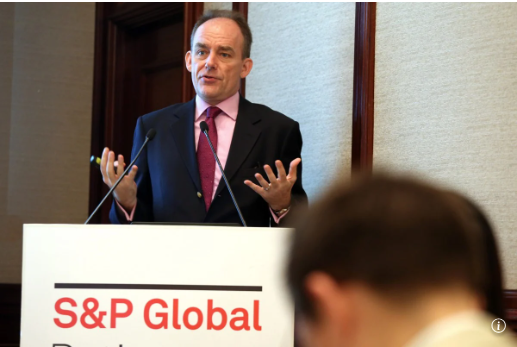
China’s property market remains the biggest downside risk to its economic growth target this year, with policymakers seemingly not in a hurry to make significant changes because its impact is mostly confined to the world’s second-largest economy, according to the chief economist for a global ratings agency. “China has the savings to deal with this. It’s not really spilling over too much to the rest of the world,” said Paul Gruenwald, global chief economist at S&P Global Ratings. “So they’re not going to be forced into dealing with the property excesses by any external or market pressure. They can do it at their own time, but we are not at the bottom yet.” In May, China unveiled wide-ranging measures to stabilise its property sector, which has been in contraction sin...
Chip shortage hits Huawei’s Mate70 manufacturing
China, Market

Chip shortage hits Huawei’s Mate70 manufacturing

Huawei Technologies, based in Shenzhen, is facing challenges in securing enough high-end chips for its upcoming Mate70 smartphone. This struggle is a direct result of the ongoing the trade war against China which includes thechip war also. Both Huawei and its partner, Semiconductor Manufacturing International Corp (SMIC), are under US sanctions. They aimed to produce 2.5 million chips for the Mate70's September launch but fell short due to limited manufacturing capacity and productivity issues. According to The Information, the primary reason for this shortfall is the persistent impact of a four-year-old US ban on supplying chip manufacturing tools to Huawei and SMIC.  Initially, it was expected that Huawei would launch the Mate70 in China on September 10, a day after Apple's ...
Market, USA, World

US employment vacancies are declining; learn more about economics.

1. US job openings decline Job openings in the United States fell to a 3.5-year low in July, which suggests the labour market is losing steam. The number of unfilled jobs, shown in the Job Openings and Labor Turnover Survey (JOLTS), fell to its lowest since May 2021. It meant there were 1.07 open positions for every unemployed person in July. Investors and policymakers are watching the labour market closely, after four monthly increases in the unemployment rate stoked fears of a recession. "The labour market is still in pretty good shape, but it has cooled dramatically over the last year and a half," Bill Adams, chief economist at Comerica Bank, told Reuters. "Most Americans who want jobs have them, but there are fewer opportunities or alternatives for workers who ar...
Bangladesh was driven by fast fashion, but its struggling economy now needs more
Asia, Market

Bangladesh was driven by fast fashion, but its struggling economy now needs more

Bangladesh is the beating heart of the global fast fashion business. The clothes its factories export stock the shelves at H&M, Gap and Zara. Over three decades, this has transformed the country from one of the world’s poorest to a lower-middle income nation. But its garment industry, worth $55bn (£42bn) a year, is now facing an unsettled future after weeks of protests toppled the government of Sheikh Hasina in August. Hundreds of people were killed in the unrest. At least four factories were set alight, while manufacturers struggled to operate under a nationwide internet blackout. Already, some big brands have looked elsewhere for next season’s clothes, three firms that help supply to companies such as Disney, US supermarket chain Walmart and other global apparel companies t...
Asia, China, Market

Xi is immobilized due to China’s economic chaos. The entire world will compensate.

Just about everyone has a view on China’s economic troubles. Its deepening property crisis, deflationary currents, and increasing protests are all Asia observers can talk about. Yet one very important voice is barely saying a word about the state of Asia’s biggest economy: President Xi Jinping. This is true both rhetorically and by way of policy actions. The deafening silence on the latter front is especially perplexing as virtually every Chinese growth engine—from investment to exports to household spending—sputters. Less quiet are commodity traders bidding down prices of oil, copper, and other commodities as China turns further inward. Hopes for smoke signals from Beijing that fresh stimulus might be coming are being dashed day after day. And keeping global marke...