
Market

China’s Chemicals Makers Reap Reward of Shift From Oil to Coal
Market

China’s Chemicals Makers Reap Reward of Shift From Oil to Coal

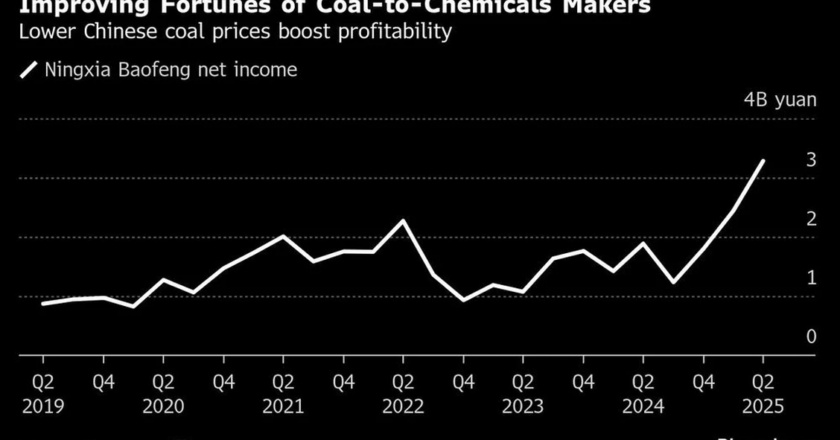
Falling coal prices are shifting the profitability of China’s chemicals sector, away from traditional oil-based producers to the growing number of plants that use the solid fuel as their feedstock. China’s biggest coal-to-chemicals producer, Ningxia Baofeng Energy Group Co., saw first-half profits surge 73%, while top miner China Shenhua Energy Co. reported a near 20-fold increase at its Inner Mongolia chemicals facility. Meanwhile, oil refining giant Sinopec lost 4.5 billion yuan ($630 million) at its chemicals unit over the first six months of the year, even worse than the 3.6 billion yuan it shed in the same period in 2024. The diverging fortunes of the old and new guard are reflected in their outlooks, as overproduction of lower-value, bulk chemicals slashes prices and margi...
Asia shares up on hopes for US rate cuts, Nvidia a hurdle
Market

Asia shares up on hopes for US rate cuts, Nvidia a hurdle

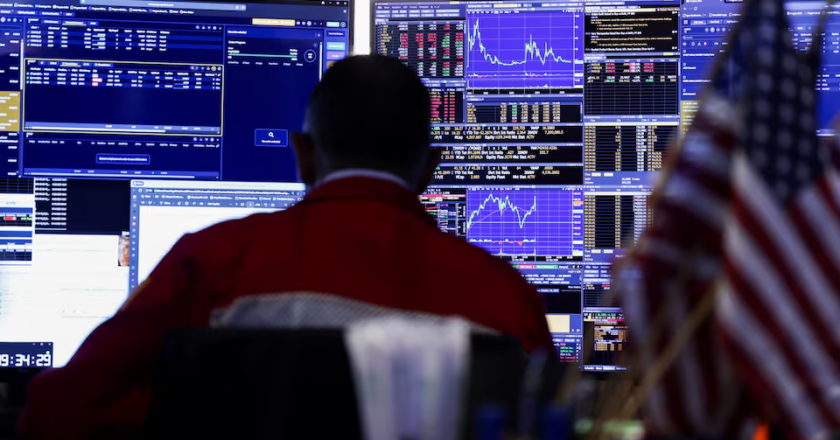
Asian share markets rose on Monday as investors gave a cautious welcome to the likely resumption of U.S. interest rate cuts, while hoping AI-superstar Nvidia's results this week will help justify the sector's stratospheric valuations.Federal Reserve Chair Jerome Powell's dovish change of course has seen futures price in an 84% chance of a quarter-point rate cut in September, and at least 100 basis points of easing to 3.25-3.5% by the middle of next year. The shift shoved Treasury yields and the dollar lower, flattering the outlook for corporate earnings, though it also implies policymakers now see more danger of a downturn in employment and the economy."The news reinforces our view that the Fed will ease in response to softening labor demand and that risk to our forecast for a mate...
<strong>How China is dismantling luxury brand market</strong>
China, Market

How China is dismantling luxury brand market

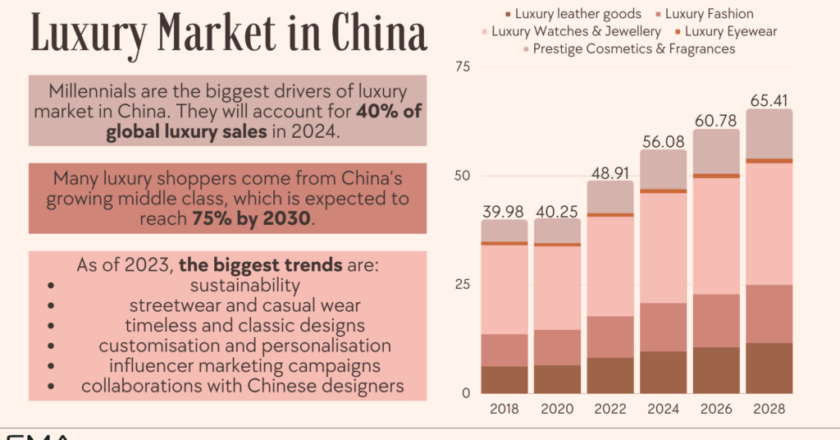
Some Chinese factories and its workers have recently uploaded few videos online claiming that 80% of the global luxury brands are developed in-house in China with “Made in Italy” and “Made in France” labels. China is misusing its social media platforms to create a sense of doubt in the mind of the global buyers regarding the authenticity of luxury brands such as Gucci, Prada, Louis Vuitton, Hermes and etc. and by doing so they are quietly dismantling the luxury brand market. For example, as per few videos by TikTok user ‘senbags2’ a Chinese worker claims that they are the Original Equipment Manufacturer (OEM) of luxury handbags from Gucci, Prada, and Louis Vuitton while boasting about its craftsmanship and supply chain. Many such ‘misleading’ short videos are doing round in the social...
<strong>China’s Economic Brinkmanship:  China’s Stock Market Pays the Price</strong>
China, Market

China’s Economic Brinkmanship:  China’s Stock Market Pays the Price

China is feeling the heat from the tariff war, yet Xi Jinping remains unwilling to act first. The nation’s stock market is reeling, and the Communist Party’s rigid stance risks deepening the economic downturn. Early stimulus efforts offered little relief, and Beijing hesitates to roll out new measures, betting that Washington will yield. But as global markets tremble and political tensions rise, the stakes grow higher. Will China hold its ground, gambling on resilience, or accept that compromise is necessary? The CCP’s unwavering approach could come at a steep cost—financial instability. The world watches as Beijing weighs its next move. On April 28th, China’s stock market endured a significant downturn, amplifying concerns about economic instability. The Shanghai Composite Index s...
Russia’s Wartime Economy: Following Ukraine Internationally?
Market, World

Russia’s Wartime Economy: Following Ukraine Internationally?

Three years into the Ukraine war, Russia’s wartime economy appears not only to be surviving Western sanctions, but thriving — driven by oil revenues, surging military production, and a broader economic reorientation toward war. While much of the world expected Russia to collapse under the weight of its full-scale invasion of Ukraine, the opposite occurred: the Russian economy grew by 3.6% in 2023 and an even higher 4.1% in 2024, outpacing most Western nations. Yet this is not a sustainable economic model for the long term. Growth is heavily militarized and sustained by wartime spending, making it fiscally unsustainable. Inflation has also ticked upward amid rampant state spending, creating a cost-of-living crisis that won’t be easily reversed. Transitioning the Russian wartime economy ...
Turkiye addresses the economic issue on a worldwide scale.
Market, World

Turkiye addresses the economic issue on a worldwide scale.

Shafaq News/ Recent developments in Turkiye's economy will be discussed on an international level, the Turkish Ministry of Treasury and Finance announced on Tuesday. Finance Minister Mehmet Şimşek and Central Bank Governor Fatih Karahan will discuss Turkiye’s latest economic developments in a call at 13:00 GMT, hosted by Citigroup and Deutsche Bank, as part of efforts to reassure investors following recent political and economic turmoil, the ministry stated.On Wednesday, Turkish police arrested Ekrem İmamoğlu, President Recep Tayyip Erdoğan’s main rival. A court later ruled to hold him in pretrial detention on corruption-related charges. The decision sparked the country’s largest protests in over a decade, with opposition figures and European leaders condemning it as “politically mo...
As the rupiah hits Asian crisis lows, Indonesia steps in.
Asia, Market, World

As the rupiah hits Asian crisis lows, Indonesia steps in.

Indonesia's central bank stepped into the currency market to defend the rupiah on Tuesday (Mar 25), as growing concerns over politics, government spending and capital flight pushed the rupiah to its lowest levels since the Asian financial crisis. The rupiah weakened as much as 0.54 per cent to a low of 16,640 rupiah per dollar in morning trade, extending a slide that has been driven by global market uncertainties and concerns over Indonesia's fiscal health and growth outlook. A central bank official told Reuters that Bank Indonesia (BI) had intervened in the spot currency, bond markets and in domestic non-deliverable forwards as the rupiah careened towards its lowest point in 25 years. Its all-time low was 16,800 rupiah per dollar in June 1998 during the Asian Financial Crisis, a...
Turkey rushes to halt the financial disaster
Market, World

Turkey rushes to halt the financial disaster

Turkey’s financial authorities scrambled Monday to stop a rout in the currency and stock market, after the country lurched toward a full-blown political crisis at the weekend with the imprisonment of a rival to President Reçep Tayyip Erdoğan. The lira fell nearly 2 percent against the dollar and the government bond market was also hit by heavy selling as markets reopened after the weekend, but by midday there were signs that emergency measures from the Central Bank of Turkey (TCMB) and stock exchange regulator (SPK) had contained the fallout, at least in the short term. Turkey’s currency had slumped to a new all-time low against the dollar and euro last week after Istanbul Mayor Ekrem İmamoğlu — the man who was set to challenge Erdoğan for the presidency at the next election in 2028...
Global Debt Crisis
Market, World

Global Debt Crisis

“The Romans had a god named Janus – deity of thresholds, beginnings, and transitions, famously depicted with two faces, one looking back, the other forward. Debt management demands that same duality. Like that ancient god, we too must look in two directions at once: backward at the debts we’ve accumulated, and forward to the futures they will shape,” said UN Trade and Development (UNCTAD) chief Rebeca Grynspan in her opening remarks at UN organised 14th International Debt Management Conference last week in Geneva. A perfect illustration showcasing that debt management requires countries to balance their past borrowings with the impact they will have on the future. Several developing nations are currently struggling with a severe debt crisis. UNCTAD Report indicates that in 2023, their ...
Amid a migration and economic crisis, the president of Tunisia fires the prime minister.
Market, World

Amid a migration and economic crisis, the president of Tunisia fires the prime minister.

Tunisian President Kais Saied sacked Prime Minister Kamel Maddouri less than a year after his appointment amid a faltering economy and a growing number of migrants arriving from countries in sub-Saharan Africa. Maddouri was replaced by Sara Zaafarani, who is an engineer and has been minister of equipment and housing since 2021. She is Tunisia's third prime minister in less than two years. In recent months, Saied has sharply criticised the performance of ministers, saying many have not met the required standards and that the expectations of the Tunisian people are high. Last month, he sacked Finance Minister Sihem Boughdiri. In a meeting broadcast on the presidency's Facebook page, Saied called on Zaafarani "to further coordinate government action and overcome obstacles to meet th...