
USA

In the third quarter, the U.S. economy grew at a faster rate of 3.1% than previously predicted.
Market, USA

In the third quarter, the U.S. economy grew at a faster rate of 3.1% than previously predicted.

The American economy grew at a healthy 3.1% annual clip from July through September, propelled by vigorous consumer spending and an uptick in exports, the government said in an upgrade to its previous estimate. Third-quarter growth in U.S. gross domestic product — the economy’s output of goods and services — accelerated from the April-July rate of 3% and continued to look sturdy despite high interest rates, the Commerce Department said Thursday. GDP growth has now topped 2% in eight of the last nine quarters.Consumer spending, which accounts for about two-thirds of U.S. economic activity, expanded at a 3.7% pace, fastest since the first quarter of 2023 and an uptick from Commerce’s previous third-quarter estimate of 3.5%. Exports climbed 9.6%. Business investment grew a lackluster 0...
Last month, retail sales increased steadily, which is the most recent indication of the strength of the US economy.
Market, USA

Last month, retail sales increased steadily, which is the most recent indication of the strength of the US economy.

WASHINGTON (AP) — Consumers stepped up their spending at retail stores last month, providing a boost to the economy in the early phases of the winter holiday shopping season. Retail sales rose 0.7% in November, the Commerce Department said Tuesday, a solid increase and higher than October’s 0.5% gain. Sales jumped 2.6% at auto dealers, driving most of the gain. Some of that demand likely reflected a need for new cars in parts of the southeast slammed by Hurricane Helene in October, as well as healthy incentives provided by car dealers. Big discounts at many retail chains also attracted some consumers. The boost in spending underscores that the economy is still growing at a healthy pace even with higher interest rates, a trend that could cause the Federal Reserve to lower borrowing c...
Sectors That Can Succeed amid Economic Downturns
Market, USA

Sectors That Can Succeed amid Economic Downturns

The U.S. economy was rapidly falling into a recession amid the COVID-19 pandemic in 2020. The Federal Reserve raised interest rates and kept them higher than expected as late as 2023, forecasting another recession. It then announced in November 2024 that, "Recent indicators suggest that economic activity has continued to expand at a solid pace." The Federal Reserve maintained a somber tone but it brought the red flag down from the pole.1 The economy was rocked by a short-lived but gruesome period in the first quarter of 2020, sometimes referred to as the Great Lockdown. Only 32 stocks in the S&P 500 representing 6% of the total index posted positive returns during this period.2 These stocks increased for many reasons. Looking at which stocks did well can nonetheless show broad p...
Economic Forecast for the United States
Market, USA

Economic Forecast for the United States

The US economy has had the strongest recovery from the COVID-19 pandemic of any major developed economy. Annual inflation is approaching the Federal Reserve’s target without a recession, non-managerial real wages have exceeded pre-pandemic trends, consumer spending is continuing to exceed expectations, investment in factories is at record levels, and the United States is a net exporter of petroleum products.1 Against this backdrop, in January a new administration will take charge of government. Initial market response to the news was favorable,2 with the expectation that the new administration will be able to build on the economy’s strong foundations and unlock further growth. At the same time, there remains uncertainty around the potential implications of economic policies of the inco...
Economic Forecast for the United States
Market, USA, World

Economic Forecast for the United States

The US economy has had the strongest recovery from the COVID-19 pandemic of any major developed economy. Annual inflation is approaching the Federal Reserve’s target without a recession, non-managerial real wages have exceeded pre-pandemic trends, consumer spending is continuing to exceed expectations, investment in factories is at record levels, and the United States is a net exporter of petroleum products.1 Against this backdrop, in January a new administration will take charge of government. Initial market response to the news was favorable,2 with the expectation that the new administration will be able to build on the economy’s strong foundations and unlock further growth. At the same time, there remains uncertainty around the potential implications of economic policies of the...
A new dollar bloc: Reglobalization in the face of United States-China hostilities
Asia, China, Market, USA

A new dollar bloc: Reglobalization in the face of United States-China hostilities

The fragmenting of free trade and the rise of industrial policy have resulted in the nascent formation of a trade, finance and currency bloc organized around American economic and security interests. Although not formalized, the democracies in the West and their primary trading partners in Asia, excluding China, appear to be coalescing around mutual economic and security interests in a de facto dollar bloc, with the U.S. Federal Reserve as the lender of last resort. A trading bloc of democracies would include more than 56% of the world’s gross domestic product. China, by contrast, has a 16.8% share of world GDP, while India has 3.4% and Russia 1.9%. In some respects, this dollar bloc evolved out of the crucible of the 2008−09 financial crisis and lessons learned around supply cha...
Asia, Market, USA, World

Asia Economic Monthly: Asia’s Trump surprise

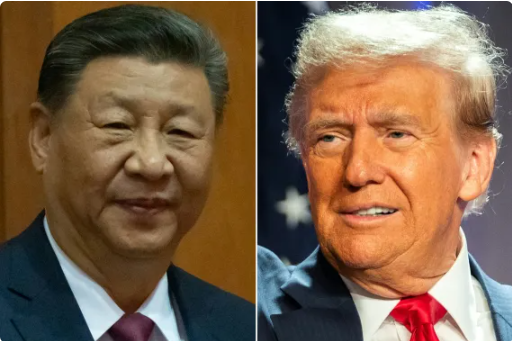
Donald Trump has won the US presidential election. Tariffs and tax policy will likely be the focus under Trump 2.0, according to Nomura analysis. The administration may implement 60% tariffs against China, which may come into effect by mid-2025, and baseline tariffs of 10% on most foreign products imported by the US. What Trump 2.0 means for Asia Asia is better prepared this time. Trump’s re-election has less of a shock factor given greater familiarity with his policies. Asia is also more resilient, due to the ongoing trends of US-China decoupling, shifts in global supply chains and lower Asian exports to China. Yet, Trump 2.0 will likely mean more policy uncertainty, which may be a negative for Asia. There could be a larger drag on 2025 GDP growth. Even prior to t...
Before the long weekend, the dollar declines due to a dump of economic data.
Market, USA, World

Before the long weekend, the dollar declines due to a dump of economic data.

The dollar fell broadly on Wednesday in thin pre-holiday trade, digesting a slew of indicators that underscored U.S. economic resilience while investors assessed the risk that President-elect Donald Trump will start a tariff war no one will win. The decline further unwound the dollar's recent rally. Few traders were interested in building or holding positions before a long Thanksgiving weekend for many of them that dovetails with month end. Markets are closed Thursday and exchanges close early on Friday. Moreover, revised data showing gross domestic product rose at a 2.8% rate in the third quarter, as expected and the same as last month's first estimate, did not much bolster the case for the Federal Reserve to ease again next month, although traders still leaned that way, lifting od...
Unrevised US third-quarter GDP growth was 2.8%.
Market, USA

Unrevised US third-quarter GDP growth was 2.8%.

The U.S. economy grew at a solid clip in the third quarter, the government confirmed on Wednesday, amid robust consumer spending. Gross domestic product increased at an unrevised 2.8% annualized rate, the Commerce Department's Bureau of Economic Analysis said in its second estimate of third-quarter GDP. Economists polled by Reuters had forecast GDP would be unrevised. Slight downward revisions to consumer spending, government outlays and exports, were offset by upgrades to private inventory accumulation, business investment as well as state and local government spending. The economy grew at a 3.0% pace in the April-June quarter. It is expanding at a pace that is well above what Federal Reserve officials regard as the non-inflationary growth rate of around 1.8%. Consumer spendi...
A trade crisis is sparked as the US threatens to impose tariffs on Canada and Mexico.
Asia, Market, USA, World

A trade crisis is sparked as the US threatens to impose tariffs on Canada and Mexico.

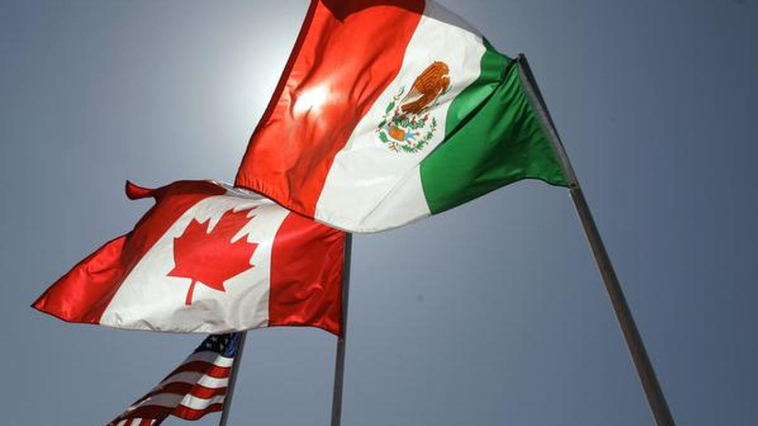
The United States is threatening a significant shake-up in its trade relations with Canada and Mexico. President-Elect Trump has proposed imposing tariffs of up to 25 per cent on key imports. A Reuters report highlights that it includes crude oil, automobiles, and agricultural goods. This move comes amid escalating disputes over border security and trade imbalances. For Canada, the potential tariffs on crude oil could severely impact the nation’s economy, given that over 80 per cent of its oil exports are destined for the US. Meanwhile, Mexico, which relies heavily on automobile and agricultural exports to its northern neighbour, could face severe economic repercussions. Mexican president Claudia Sheinbaum during a press conference highlighted and I quote “to one tariff will c...