
USA

China, Market, USA

China is defending against the dollar’s dominance

The country is implementing defensive economic strategies, at least for now Financial security has become an indispensable part of China’s national security discourse since the 1997 Asian financial crisis. Rising geopolitical tensions with the US since 2018 and the West’s financial sanctions against Russia have further incentivised Chinese policy-makers to fortify the economy by diluting the dollar’s centrality and developing an alternative system. To this end, the Chinese government has pursued three primary strategies. First, China has supported and promoted regional and multilateral currency and financial co-operation through regional or non-western partnerships. In 2000, it supported the launch of the Chiang Mai Initiative in the aftermath of the Asian financial crisis and the B...
Asia, Market, USA, World

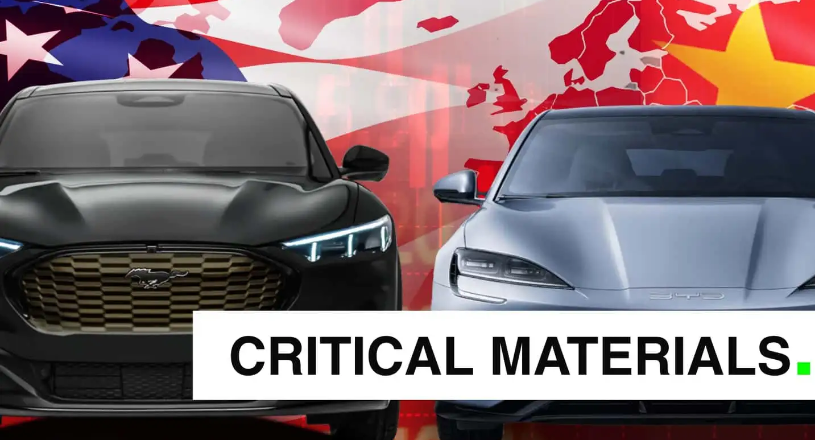
BMW and Jaguar used banned China parts – US probe

BMW, Jaguar Land Rover (JLR) and Volkswagen (VW) used parts made by a supplier on a list of firms banned over alleged links to Chinese forced labour, a US congressional report has said. At least 8,000 BMW Mini Cooper cars were imported into the US with components from banned Chinese firm Sichuan Jingweida Technology Group (JWD), according to the report by Senate Finance Committee chairman Ron Wyden's staff. "Automakers’ self-policing is clearly not doing the job," the Democrat Senator said. BMW said it had "strict standards and policies regarding employment practices, human rights, and working conditions, which all our direct suppliers must follow". It added it had taken steps to "halt the importation of affected products and will be conducting a service action with custo...
China, Market, USA

Janet Yellen urges EU to join US in curbs on cheap Chinese exports

Janet Yellen, the US treasury secretary, has urged the EU to intervene urgently to dampen the growing export levels of Chinese cut-price green technology including solar panels and wind turbines, pushing European leaders to move to a full-scale trade war. At the same time she urged German bank executives on Tuesday to step up efforts to comply with sanctions against Russia and shut down efforts to circumvent them to avoid potential penalties themselves that could see the US cut them off from dollar access. Her remarks, in Frankfurt, come just hours after the European Commission president, Ursula von der Leyen, gave her strongest hint yet that the EU would join the US and impose tariffs on Chinese electric vehicles after a soon-to-be completed investigation into alleged state su...
China, Market, USA

Biden slaps new tariffs on Chinese imports, ratcheting trade war

President Joe Biden has slapped major new tariffs on Chinese electric vehicles, advanced batteries, solar cells, steel, aluminium and medical equipment, taking potshots at Donald Trump along the way as he embraced a strategy that’s increasing friction between the world’s two largest economies. The Democratic president said on Tuesday that Chinese government subsidies ensure the nation’s companies do not have to turn a profit, giving them an unfair advantage in global trade. “American workers can outwork and outcompete anyone as long as the competition is fair,” Biden said in the White House Rose Garden. “But for too long, it hasn’t been fair. For years, the Chinese government has poured state money into Chinese companies … it’s not competition, it’s cheating.” China immediately p...
China, Market, USA, World

Biden announces $18bn tariff hikes on Chinese imports

US President Joe Biden announced a series of tariff increases on various Chinese imports, including electric vehicles, computer chips, and medical products. This move risks an election-year standoff with Beijing as Biden aims to appeal to voters critical of his economic policies. Biden will maintain tariffs introduced by his Republican predecessor, Donald Trump, while increasing others. The White House stated that this decision is due to “unacceptable risks” to US “economic security” from what it sees as unfair Chinese practices that flood global markets with cheap goods. The new measures affect $18 billion worth of Chinese imports, including steel and aluminium, semiconductors, batteries, critical minerals, solar cells, and cranes, according to the White House. In 2023...
<strong>Yuan losing sheen among Chinese exporters</strong>
China, USA, World

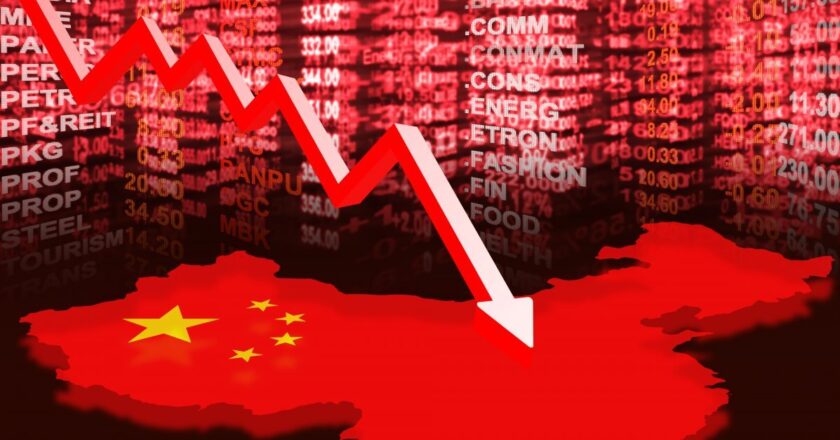
Yuan losing sheen among Chinese exporters

China has for long been promoting yuan as a formidable global tradeable currency, but in recent times it has not been able to match the soaring value and worth of the US dollar. The volatility, low returns, and unexpected shift in external demand for yuan has prompted the Chinese exporters to shift their loyalty to the US dollar. Chinese traders have read the market condition well and are certain of yuan’s depreciation against the dollar. US dollar has been performing well at the global stage and the US Federal Reserve has defined expectations and refrained from downgrading its interest rates due to looming inflation threat. The Chinese exporters are investing their capital in US assets for better returns. This perhaps is a negative trend for China and is a result of recent dwindlin...
<strong>China flooding international markets with cheap goods</strong>
China, USA

China flooding international markets with cheap goods

 With tension between China and the US far from tapering off anytime soon, it is in trade and economic areas where Beijing’s activities appear to have further hit panic button in Washington DC as Secretary of State Antony Blinken, during his April 24-26 visit to East Asian country, raised his concern on dumping of Chinese products, including steel and Aluminium in the American market. US State Department Spokesperson Matthew Miller was quoted by Reuters as saying that at a meeting with Chinese top officials, Blinken raised “concerns” about China’s trade policies and non-economic practices. This is the second time in a month when a senior official of the Joe Biden administration put the issue-related to dumping- on the table before Chinese authorities. Earlier, US Trea...
Bypassing Barriers: China’s clever use of Mexico to penetrate U.S. markets
Asia, Market, USA, World

Bypassing Barriers: China’s clever use of Mexico to penetrate U.S. markets

China operates with a singular objective: to maximize profits, employing any means necessary. Recently, we have witnessed escalating tensions between the United States and China over trade relations. This conflict has significantly impacted the American market, prompting the U.S. government to impose substantial tariffs on Chinese goods imported into the country. However, China has ingeniously devised a strategy to circumvent these hefty tariffs while simultaneously reducing shipment costs. Chinese companies utilize Mexico as a back door to enter the US amid the ongoing trade war with the US. Many Chinese firms have moved to industrial parks in northern Mexico over the past few years to get closer to the American Market. Market Manoa Furniture in Monterrey producing recliners and plush...
How the global economy is being affected by the strong US currency
USA

How the global economy is being affected by the strong US currency

With the world's finance ministers gathered in Washington this week, one topic is coming up over and over: A surge in the value of the U.S. dollar against most other major currencies is making life complicated for economic policymakers around the world. Why it matters: The flip side of the stronger dollar is weakening in other major currencies, which tends to fuel inflation in countries that have already been struggling to bring price pressures down. It also makes dollar-denominated debts overseas — especially common in emerging markets — more onerous, essentially throttling economic activity. It creates hard questions in some countries about whether to intervene to prop up their currency in hopes of arresting capital outflows, as Indonesia did this week. The big p...
The US economy is strong, according to the IMF, but rising debt poses financial risks.
USA

The US economy is strong, according to the IMF, but rising debt poses financial risks.

The U.S. economy has grown faster than other developed countries in the wake of the COVID-19 pandemic, partly due to its policy of deficit spending, the IMF says.The financial arm of the United Nations credited the U.S. with powering the global economy while warning that the national debt poses financial risks both in the short and long term.The national debt has grown in recent years because spending on COVID-19 stimulus and infrastructure has been funded by debt instead of new taxes.The U.S. economy has led the world in recovering from the COVID-19 pandemic—but that performance is largely due to heavy government spending that may be unsustainable in the face of mounting debt, according to the International Monetary Fund. The financial arm of the United Nations leveled the criticism o...