World

Anti-China EV Laws Won’t Keep America Safe Indefinitely
Asia, China, USA, World

Anti-China EV Laws Won’t Keep America Safe Indefinitely

You may look at the auto industry's current chaos in Europe and think that those problems won't come to America. That this country is now taking aggressive steps to protect its auto market with 100% tariffs on Chinese-made EVs or a software ban that will effectively prohibit those cars from being sold here entirely. From that, you may think that it's all problem solved—the U.S. keeps new players from China out for good. But the truth is that these protectionist measures are temporary at best, and even the auto industry seems to get it. Or at least, the smart folks in the business do.  That leads off this midweek edition of Critical Materials, our morning roundup of tech and industry news. Also on tap today: Hyundai's online sales program with ...
Asia, China, Market, World

The world economy is stabilizing, but it is still weak. These are the main economists’ predictions for the economy.

The global economic outlook is stabilizing amid continuing economic uncertainty. The World Economic Forum's September 2024 Chief Economists Outlook found that a majority of chief economists (54%) expect the condition of the global economy to remain unchanged over the next year while more than a third (37%) expect it to weaken. “There are reasons for cautious optimism such as an easing of inflation and evidence of the resilience of global commerce,” the report notes. “Yet, if the economy is stabilizing, it is doing so at the weakest level in decades.” The Chief Economists Outlook, published three times a year, surveys leading chief economists from across industries and international organizations. The latest edition explores key trends in the global economy, includi...
Asia, Market, World

Rate increases will persist even when the Bank of Japan fires in September.

What’s happened? The Bank of Japan (BOJ, the central bank) decided to keep its policy rate unchanged at 0.25% at its policy board meeting on September 20th, pausing after a 15-basis-point increase in July. On the same day, official data showed that headline consumer price inflation accelerated to a 10-month high of 3% in August, from 2.8% in July, following strong growth in prices for food and utilities. Why does it matter? The BOJ is determined to pursue monetary normalisation by raising interest rates and winding down its asset-purchase programmes. However, the pace of the policy shift and the terminal policy rate will depend on Japan’s economic fundamentals, notably the strength of private demand and inflation expectations. The pause in September was factored into EIU’s foreca...
<strong>China is looking all set for a recession</strong>
China, USA, World

China is looking all set for a recession

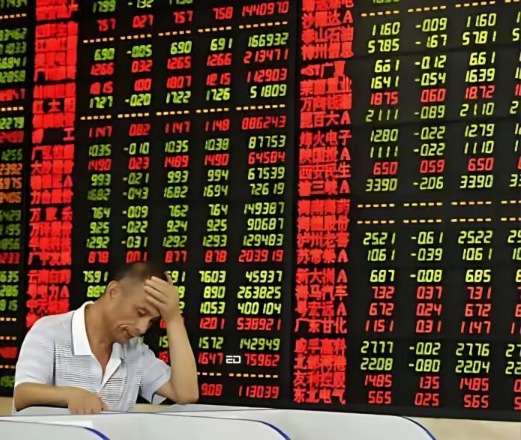
Ray Dalio the owner of American investment management firm, Bridgewater Associates which helps top investors worldwide to grow their money, in a recent interview with Bloomberg television, said that he had sold most of the investments in China. He warned that China was facing serious economic problems. “You have an environment in China which is changing and becoming a more difficult environment,” Dalio said. The trouble is evident in the stock market. The Shanghai Shenzhen CSI 300 index is on a free fall for more than two years. Investors both foreign and domestic are divesting investments to stop loss. Foreign investors are going to other emerging markets. Chinese nationals are holding on cash or buying gold coins and bars to prevent further erosion of personal wealth. “The...
Asia, Market, World

The geopolitics of the green transformation in Southeast Asia

As their green-transition efforts are increasingly caught up in the US–China rivalry, Southeast Asian states must find a way to convert potential short-term economic gains into long-lasting ones. With policymakers focused on global geopolitical flashpoints from the South China Sea to Myanmar and the Middle East, Southeast Asia’s growing emphasis on its green transition has generally been an under-appreciated agenda item. Following the latest Association of Southeast Asian Nations (ASEAN) Foreign Ministers’ Meeting in Vientiane in July 2024, however, the meeting’s 36-page Joint Communique highlighted the importance of ‘green growth’ in advancing sustainable development. Indeed, nine out of ten ASEAN members have pledged to achieve carbon neutrality or net-zero emissions by mid...
The Interpreter: Describe “economic statecraft.”
Asia, Market, World

The Interpreter: Describe “economic statecraft.”

What is “economic statecraft”? Economic statecraft refers to a state’s use of economic policy instruments to achieve foreign policy objectives. Australia uses various tools of economic statecraft – including development assistance, loans, work visas, investment incentives and travel restrictions – as foreign policy levers to achieve its aims. Another term that is frequently used interchangeably with economic statecraft is geoeconomics. Geoeconomics focuses on the broad strategic interplay between economics and geopolitics, encompassing a wide range of economic policies and global power dynamics. What does economic statecraft include? A useful way to think about economic statecraft is in terms of carrots and sticks or, more formally, incentives or inducem...
<strong>China targets Canadian Canola amid trade dispute</strong>
China, World

China targets Canadian Canola amid trade dispute

Trade wars are a common occurrence in the global market, and the friction between China and Canada is no exception. These conflicts are often fuelled by geopolitical issues. Back in 2019, China halted Canadian meat imports after Huawei’s CEO, Meng Wanzhou, was detained. Officially, China blamed banned feed additives in the meat, but many saw it as a diplomatic move in response to the Ottawa-Beijing rift. Now, China is considering probing Canada for allegedly dumping canola into its market. In the realm of international trade, dumping refers to selling a product at a lower price in a foreign market than in the domestic one, essentially a form of price discrimination. Following Canada’s imposition of a 100% tariff on electric vehicles and a 25% tariff on steel and aluminium from Chin...
Expert: China has the funds to handle the real estate crisis without affecting the rest of the world.
Asia, China, Market, World

Expert: China has the funds to handle the real estate crisis without affecting the rest of the world.

China’s property market remains the biggest downside risk to its economic growth target this year, with policymakers seemingly not in a hurry to make significant changes because its impact is mostly confined to the world’s second-largest economy, according to the chief economist for a global ratings agency. “China has the savings to deal with this. It’s not really spilling over too much to the rest of the world,” said Paul Gruenwald, global chief economist at S&P Global Ratings. “So they’re not going to be forced into dealing with the property excesses by any external or market pressure. They can do it at their own time, but we are not at the bottom yet.” In May, China unveiled wide-ranging measures to stabilise its property sector, which has been in contraction sin...
Market, USA, World

US employment vacancies are declining; learn more about economics.

1. US job openings decline Job openings in the United States fell to a 3.5-year low in July, which suggests the labour market is losing steam. The number of unfilled jobs, shown in the Job Openings and Labor Turnover Survey (JOLTS), fell to its lowest since May 2021. It meant there were 1.07 open positions for every unemployed person in July. Investors and policymakers are watching the labour market closely, after four monthly increases in the unemployment rate stoked fears of a recession. "The labour market is still in pretty good shape, but it has cooled dramatically over the last year and a half," Bill Adams, chief economist at Comerica Bank, told Reuters. "Most Americans who want jobs have them, but there are fewer opportunities or alternatives for workers who ar...
Asia, Market, USA, World

Global Economic Situation and Outlook Update for September 2024

After years of turbulence and significant volatility in economic output, the world economy is on a more stable trajectory. Global growth performance has held up surprisingly well in the face of recent shocks, including aggressive interest rate hikes by major central banks during 2022–2023 and an escalation of conflicts with international spillovers. Robust consumer spending in several large developed and developing economies – buoyed by high levels of employment, rising real wages, and relatively healthy household balance sheets – has sustained economic resilience. In a large number of economies, inflation has slowed considerably and is approaching central bank targets, providing room for monetary easing. In most cases, economies experienced disinflation without a significant deterioratio...