World

Amid concerns about high inflation, the central bank of Sri Lanka maintains steady interest rates.
World

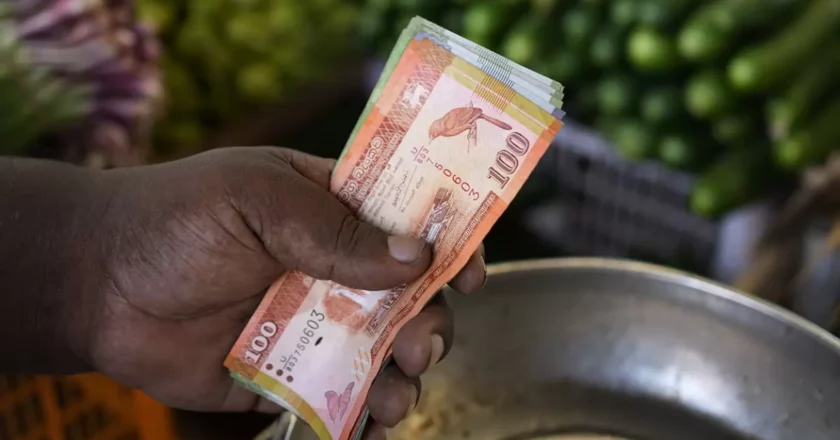
Amid concerns about high inflation, the central bank of Sri Lanka maintains steady interest rates.

Sri Lanka's central bank decided to maintain interest rates unchanged on Tuesday in order to keep inflation under control. As the country continues to grapple with the severe financial crisis, the rate hold comes as a measure to stabilize the economy. The Central Bank of Sri Lanka (CBSL) announced that it has kept the Standing Deposit Facility Rate steady at 8.50 per cent and the Standing Lending Facility Rate at 9.50 per cent. In March, the CBSL implemented a 50 basis points reduction in rates as part of its ongoing easing cycle, which has resulted in a total decrease of 700 basis points since June. As per a report by Reuters, this partially offsets the 1,050 basis points increase that occurred since April 2022. In April month, Sri Lanka's annual inflation rate stood a...
The middle class in China is thrown off balance by the country’s real estate crisis.
World

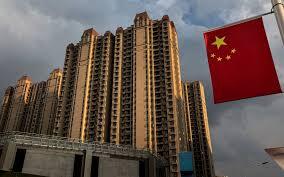
The middle class in China is thrown off balance by the country’s real estate crisis.

Chinese leader Xi Jinping's relentless pursuit of multi-storied housing projects has pushed country's once flourishing real estate sector into deep uncertainty. Now a study has found that China's middle-class families remain vary of spending on property.  In a quarterly survey of household wealth and income, researchers at a Chinese university found that their index of families' expected future spending was even lower than the early days of Covid pandemic, South China Morning Post reported. In the China Household Wealth Index Survey conducted by Southwestern University of Finance and Economics in Chengdu, Sichuan province, the index of spending expectations fell to 101.9 in the first quarter of this year, down from 103.0 in the fourth quarter of 2023.The survey measures the spe...
Asia, China, Market, World

G7 steps up economic and financial war against Russia and China

The three-day meeting of the finance ministers and central bankers of the G7 group of imperialist powers held in Stresa, Italy, concluded on Saturday. Significantly, it stepped up its aggressive stance against Russia and China, as well as giving carte blanche to the Israeli genocide in Gaza. A major item on the agenda was how the $300 billion worth of foreign assets of the Russian central bank, frozen by the US and European powers at the start of the Ukraine war, could be used to finance the Zelensky regime as it prepares to throw thousands more men into the meat-grinder, on top of the hundreds of thousands already killed or wounded. As well, revealing the interconnected character of the imperialist war fronts, the meeting adopted a more strident attitude to China and its so-called ...
Politics of Asia’s Economic Crisis: Agreements and Disagreements
World

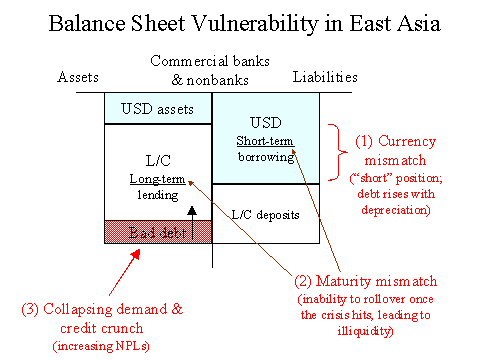
Politics of Asia’s Economic Crisis: Agreements and Disagreements

The Politics of the Economic Crisis in Asia: Consensus and Controversies offers an assessment of the political economy factors that contributed to the Asian financial crisis and that will shape its recovery. It reports the findings of the Carnegie Economic Reform Network meeting in Bangkok in June 1999, which included former financial Ministers, high ranking regional officials and academics, and staff of the Carnegie Endowment for International Peace. This publication was prepared by Lesley O'Connell under the direction of Nancy Birdsall. The Background paper on which it is based was prepared by Stephan Haggard, with input before the meeting and revision after by Daniel Morrow, Nancy Birdsall, and David Lipton. 62 pp.
Asia, Market, USA, World

BMW and Jaguar used banned China parts – US probe

BMW, Jaguar Land Rover (JLR) and Volkswagen (VW) used parts made by a supplier on a list of firms banned over alleged links to Chinese forced labour, a US congressional report has said. At least 8,000 BMW Mini Cooper cars were imported into the US with components from banned Chinese firm Sichuan Jingweida Technology Group (JWD), according to the report by Senate Finance Committee chairman Ron Wyden's staff. "Automakers’ self-policing is clearly not doing the job," the Democrat Senator said. BMW said it had "strict standards and policies regarding employment practices, human rights, and working conditions, which all our direct suppliers must follow". It added it had taken steps to "halt the importation of affected products and will be conducting a service action with custo...
Asia, China, Market, World

Assessment of the coupling coordination relationship between the green financial system and the sustainable development system across China

Abstract Green finance (GF) is recognized as a key driver of sustainable development. While existing studies have extensively discussed the relationship between GF and the Sustainable Development Goals (SDGs), few have explored the coupling coordination relationship between GF and SDGs. In this paper, we use data from thirty Chinese provinces (municipalities and autonomous regions) from 2008–2021 to examine the degree of coupling coordination development (CCD) between GF and the SDGs systems using the CCD model. We find that most SDGs and their sub-goals exhibit a significant upward trend, except for SDG8, 14–16. GF presents a fluctuating upward trend, with a significant decline in 2010 and 2019. The CCDs between GF and SDGs and their sub-goals generally show an M-shaped upward trend i...
China, Market, World

Financial Cooperation between the Bank of Thailand and the People’s Bank of China

Mr. Sethaput Suthiwartnarueput, Governor of the Bank of Thailand (BOT) and Mr. Pan Gongsheng, Governor of the People’s Bank of China (PBC), together with their respective delegations met in Beijing, the People’s Republic of China on 21 May 2024. The discussions focused on strengthening banking and financial cooperation, including the promotion of local currency usage as well as cross-border payment and settlement. On this occasion, both governors signed the Memorandum of Understanding (MoU) on a Framework for Cooperation to Promote Bilateral Transactions in Local Currencies. The MoU is aimed at enhancing accessibility and efficiency in local currency usage to promote its broader adoption. This aligns with the BOT’s continuous efforts to create ecosystems that facilitate trade and inves...
Asia, Market, World

The renminbi’s long march

The dollar remains the most dominant currency in global trade finance and forex reserves. But geopolitical tensions and rising trade fragmentation are driving the slow but steady ascent of China’s renminbi. In a geopolitical landscape of rising bifurcation, money talks – and it is telling a story of two worlds drifting ever farther apart. Visual Capitalist shows what the currencies are telling us. Global geopolitical tensions and the rising fragmentation of trade and foreign direct investment patterns are accelerating changes to the way the world makes cross-border payments and foreign exchange reserves. The currency composition, long dominated by the US dollar, has been slowly but surely shifting. Dollar dominance remains undisputed as the global currency of trade and foreign exc...
Asia, China, Market, World

UK cannot afford to give ‘cold shoulder’ to China, says City minister

The UK cannot afford to give the “cold shoulder” to China, the City minister said on Monday, in comments that will distance the British government from the Biden administration’s protectionist crackdown. Addressing financial services bosses at the City Week conference in London’s Guildhall, Bim Afolami said it was “crucial” to engage with strategic competitors such as Beijing, and that the UK risked losing control of its economic future if it failed to find common ground. “Like with any bilateral relationship, we don’t agree on everything, [but] we are very clear that you simply cannot give the cold shoulder to an economy that is home to a fifth of the world’s globally systemic important banks, four of the world’s largest banks, and almost a third of the world’s leading global finan...
Asia, China, Market, World

Navigating Uncertain Waters: China’s E-CNY Expansion Overseas And The Quest For Global Payment Influence

In recent years, China has embarked on an ambitious journey to redefine its role in the global financial landscape, leveraging technological advancements to potentially reshape how global transactions are conducted. Central to this initiative is the pilot program for the e-CNY, China's digital currency, which is now making its way into overseas markets, notably in Hong Kong, for retail use which was announced in May 2024. This move mirrors China's previous efforts to expand the reach of its payment solutions, such as UnionPay and Alipay, which have had mixed success abroad. The path forward for the e-CNY is shrouded in uncertainty. The introduction of a state-backed digital currency on an international scale presents a myriad of technological, regulatory, and geopolitical challenges...