World

The whole economy is anticipating the outcome of the US election, along with other economic news this week.
Asia, Market, USA, World

The whole economy is anticipating the outcome of the US election, along with other economic news this week.

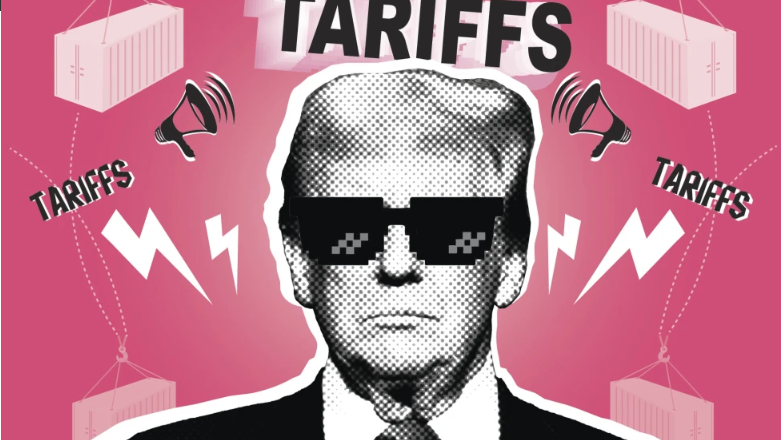
1. US election: Global economic impact in focus One story dominates the financial pages: the United States will choose its next president in a closely watched election on Tuesday, 4 November, featuring a tight race between Republican Donald Trump and Democrat Kamala Harris. The election outcome will have far-reaching consequences for global markets, economic policy and central bank strategies, with investors hoping for a decisive result to mitigate prolonged uncertainty. Reuters highlights the key events that underscore the stakes next week, including Federal Reserve interest rate decisions and China’s trade data release. Election impact: Markets seek clarity as traders brace for volatility. A Trump win could support recent Treasury yield and dollar gains; a Harris ...
Asia, Market, World

According to the Finance Ministry, headline inflation in Pakistan is expected to reach 6-7% in October 2024.

Pakistan’s headline inflation is expected to stay within the range of 6-7% in October and decelerate further to 5.5-6.5% by November, the Finance Division projected on Wednesday. In its ‘Monthly Economic Update and Outlook’, the ministry said economic recovery is expected to take advantage of declining inflation and continuation of fiscal consolidation in the coming months. “It is expected that inflation will remain within range of 6-7% in October and further down to 5.5 – 6.5% by November 2024,” read the report. In September, CPI Inflation 2024 was recorded at 6.9% – lowest level in 44 months – compared to 9.6% in the previous month and 31.4% in September 2023, as per the outlook report. Large-scale manufacturing According to the report, large-scale manufact...
Asia, Market, World

It is anticipated that global growth would continue to be modest but steady.

Global growth is expected to remain stable yet underwhelming. However, notable revisions have taken place beneath the surface since April 2024, with upgrades to the forecast for the United States offsetting downgrades to those for other advanced economies, in particular, the largest European countries. Likewise, in emerging market and developing economies, disruptions to production and shipping of commodities—especially oil—conflicts, civil unrest, and extreme weather events have led to downward revisions to the outlook for the Middle East and Central Asia and that for sub-Saharan Africa. These have been compensated for by upgrades to the forecast for emerging Asia, where surging demand for semiconductors and electronics, driven by significant investments in artificial intelligence, has b...
Asia, Market, World

According to the finance ministry, October inflation will range between 6 to 7%.

Pakistan’s Finance Ministry has shared an optimistic forecast for the economy, citing a decline in inflation and growth in key sectors like manufacturing and agriculture. According to its Economic Update and Outlook for October 2024 report, inflation is expected to further decrease, providing a conducive environment for economic recovery. Easing Inflation Inflation is projected to remain between 6-7% in October, potentially dropping to 5.5-6.5% by November. September’s inflation rate hit a 44-month low at 6.9%, significantly reduced from last year’s 31.4% in the same period. This decline is attributed to enhanced supply chains for key commodities and government measures to curb inflation. Manufacturing Growth Large-scale manufacturing (LSM) continues to show mixed re...
Asia, Market, World

Why, in spite of a suffering economy, Pakistan’s stock market is reaching new heights

Pakistan Stock Exchange is defying the larger economic trend in the country and breaking all records with the KSE100 breaching 90,000 points in intra-day trading. Analysts and experts attributed the phenomenal run of the bull market to the $3 billion IMF loans, expectations of a rate cut by the country’s central bank, low price-to-earnings ratio, and a relatively stabilised currency. Widespread buying activity was seen in key sectors, including oil and gas exploration, oil marketing, power generation, automobile assembly, cement, and banking.  Market analysts attribute this bullish trend to expectations of another rate cut by the State Bank of Pakistan (SBP), fueled by predictions of lower inflation in October with many anticipating a cut of 200 basis points...
Asia, Market, World

Pakistan’s battle to attract Gulf investments in the face of economic downturns

Pakistan is seeking investments from Saudi Arabia and the United Arab Emirates to mitigate its ongoing financial crisis. But attracting this critical Gulf capital requires substantial improvements in Pakistan's investment climate. Successful investment attraction will depends on presenting well-structured projects that promise sustainable growth. The government must also avoid over incentivising foreign investors at the expense of local industries, as this could lead to market imbalances and long-term economic liabilities. Pakistan’s economic situation is teetering on the brink as the country is facing a perilous financial crisis, scrambling to secure external financing to meet growing obligations. The country has received only temporary relief from a US$7 billion staff-level agre...
Asia, Market, World

The IMF projects 3.2 percent economic growth and 9.5 percent inflation for the nation.

ISLAMABAD: The Interna­tional Monetary Fund (IMF) has forecast Pakistan’s economy to grow by 3.2 per cent during the current fiscal year, falling short of the government’s budget target but surpassing projections by two other leading multilateral organisations. This growth rate is expected to be accompanied by a single-digit inflation rate of 9.5pc and a current account deficit nearing 1pc. In its World Economic Outlook (WEO-October 2024) released on Tuesday, the IMF also estimated global economic growth to stabilise at 3.2pc after “winning the battle against inflation”, despite ongoing risks related to regional conflicts, a slowdown in China, and the lasting effects of tight monetary policies and financial market volatility. The IMF, which recently approved a $7 billio...
Asia, Market, World

The global economy requires a triple pivot in policy as inflation declines.

Let’s start with the good news: it looks like the global battle against inflation has largely been won, even if price pressures persist in some countries. After peaking at 9.4 percent year-on-year in the third quarter of 2022, we now project headline inflation will fall to 3.5 percent by the end of next year, slightly below the average during the two decades before the pandemic. In most countries, inflation is now hovering close to central bank targets, paving the way for monetary easing across major central banks. The global economy remained unusually resilient throughout the disinflationary process. Growth is projected to hold steady at 3.2 percent in 2024 and 2025, but some low-income and developing economies have seen sizable downside growth revisions, often tied to intensifying co...
Uncertainty around the election is hardly a cause to sell.
USA, World

Uncertainty around the election is hardly a cause to sell.

As neither party holds a clear advantage in any of the key swing states that could decide the outcome, the race remains too close to call, and we expect volatility to pick up in the coming weeks amid elevated uncertainty. But we also think the potential volatility is unlikely to derail positive equity fundamentals, and remind investors not to make dramatic portfolio changes based on expected election outcomes. The election is taking place against a backdrop of healthy earnings growth and solid economic momentum. Companies that represent about 15% of the S&P 500 market capitalization have reported their third quarter results so far, with nearly 80% of them beating earnings estimates and more than 60% beating sales estimates. Bank management teams are optimistic about the broade...
The Finance Ministry is criticized by the SC for requesting information from debt recovery tribunals.
Market, World

The Finance Ministry is criticized by the SC for requesting information from debt recovery tribunals.

The Supreme Court on Monday pulled up the Union Finance Ministry for seeking data from the Debts Recovery Tribunals (DRT) over the amount recovered on the basis of the tribunals' orders and sought an explanation. A bench comprising Justices Abhay S Oka and Augustine George Masih said the ministry could not treat the judicial staff of the DRTs as its subordinates and owed an explanation for calling upon the tribunals to collect such huge data within a short time. "You are treating the judicial staff as if they are your subordinates. We expect an apology from the government. Such extent of collection of data is sought within three days. If you want data to be collected, additional staff as required by DRT should be provided. This will not be tolerated. Some of them are judicial office...