
Asia

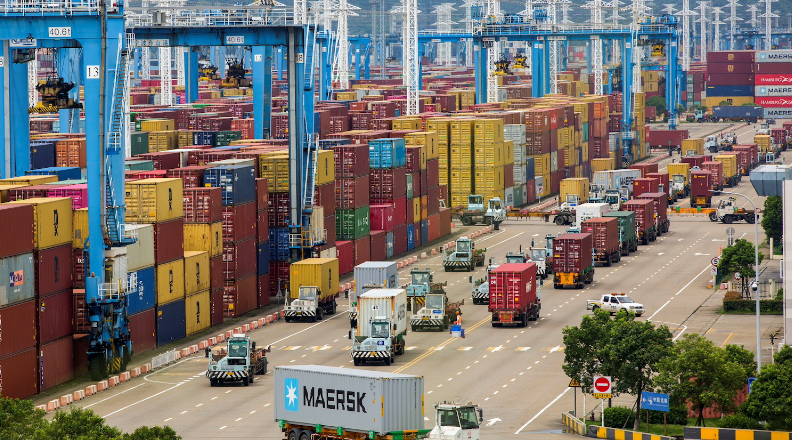
China’s EV domination is humiliated by Europe’s battery issue.
Asia, China

China’s EV domination is humiliated by Europe’s battery issue.

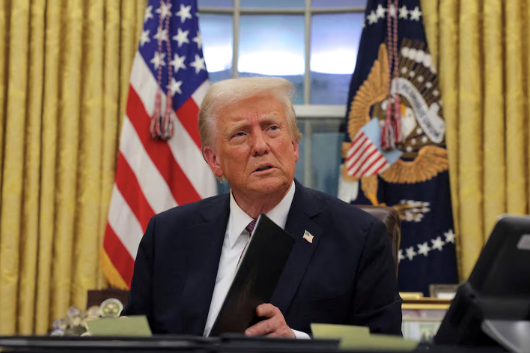
While many businesses worldwide are wringing their hands about Donald Trump’s plans for a “beautiful” tariff war – targeting Canada, Mexico and China on his first day back in the Oval Office – my attention was focused on the sub-Arctic town of Skelleftea in Sweden and the collapse of Northvolt, Europe’s electric-vehicle battery champion. Richard Milne at the Financial Times called Northvolt’s resort to Chapter 11 bankruptcy protection, with US$5.8 billion of debts and just US$30 million cash in its coffers, a “Nordic noir thriller”. The collapse is nothing less than a dagger thrust into the heart of Europe’s future as a global automotive industry leader. Volkswagen has written down most of its 21 per cent stake in the venture. Goldman Sachs is writing off US$896 million in th...
Asia, Market, USA, World

Asia Economic Monthly: Asia’s Trump surprise

Donald Trump has won the US presidential election. Tariffs and tax policy will likely be the focus under Trump 2.0, according to Nomura analysis. The administration may implement 60% tariffs against China, which may come into effect by mid-2025, and baseline tariffs of 10% on most foreign products imported by the US. What Trump 2.0 means for Asia Asia is better prepared this time. Trump’s re-election has less of a shock factor given greater familiarity with his policies. Asia is also more resilient, due to the ongoing trends of US-China decoupling, shifts in global supply chains and lower Asian exports to China. Yet, Trump 2.0 will likely mean more policy uncertainty, which may be a negative for Asia. There could be a larger drag on 2025 GDP growth. Even prior to t...
Asia’s transition to climate resilience
Asia, Market

Asia’s transition to climate resilience

Reflecting on the just-concluded COP29 deliberations, it’s clear that Asia’s climate journey is entering a more ambitious phase. Talks at Baku highlighted the region’s essential role in tackling global climate challenges, with conversations ranging from robust carbon markets to ramping up adaptation actions. While negotiations over a new collective quantified goal for global climate finance are casting a dark shadow, the conversations coming out of COP29 underscore the willingness of governments, businesses, and communities across Asia to move from commitments to actionable, region-specific climate solutions. For me, these are the key themes emerging as we look back on 2024. Innovation in the mobility sector: Asia’s mobility sector is rapidly innovating to reduce emissions, with a dist...
Five reasons why India’s GDP might surpass Japan’s to become the fourth biggest
Asia, Market

Five reasons why India’s GDP might surpass Japan’s to become the fourth biggest

India’s economy expanded by 5.4 per cent in the July-September quarter of the ongoing fiscal year, marking a slowdown from the previous quarter’s 6.7 per cent growth. Despite this deceleration, India maintains its position as the fastest-growing major economy globally. It’s this kind of sustained growth that had led to expectations that India will surpass Japan to become the world’s fourth-largest economy. The International Monetary Fund (IMF) projects that this will happen as early as 2025. The international body estimates Indian economy’s size would be $4.34 trillion, compared to Japan’s $4.31 trillion. Here’s a look at five factors that could be responsible for such an achievement: Attraction of global investments: India’s financial markets have become increasi...
According to a survey, Asian steelmakers are failing to transition to renewable energy.
Asia, Market, World

According to a survey, Asian steelmakers are failing to transition to renewable energy.

Asian steelmakers are among the worst performers at making the switch to renewables, according to a new survey that found many of them are still entirely dependent on fossil fuels for production. Steel production accounts for about 8% of global carbon emissions and about 30% of emissions from industry. A majority of the sector’s emissions are tied to its use of metallurgical coal, which is a key source of heat and carbon needed to turn iron ore into steel. Coal-fired blast furnaces — that melt iron ore and create pig iron — produce 2 metric tons of CO2 for each ton of output. That has put steelmaking in the focus for global climate activists and policymakers, as the world races to make a critical energy transition. But a survey by Sydney-based climate group Action Spea...
Asia in denial
Asia, China, Market

Asia in denial

I saw nothing but denial in my recent post-US election tour of Asia, with stops in Hong Kong, Shenzhen, Beijing, and Singapore. Taking a cue from surging global equity markets, Asians are making every effort to wish away problems at home and abroad. Nowhere is this more evident than in China. President Xi Jinping has long stressed his preference for the “good stories of China” (bit.ly/3Z8EI75). Amid the most serious Chinese economic slowdown since the 1970s, government attempts to put a positive spin (bit.ly/3Ozky0R) on the country’s outlook have intensified. An improvement in equity-market sentiment (bit.ly/4fL6ZaO) — by October 8, the CSI 300 was 35% above its low on September 13 — was the first talking point in all my discussions. Never mind that this rebound, which has si...
Maldives abandons “India-Out” in favor of a financial lifeline
Asia, Market, World

Maldives abandons “India-Out” in favor of a financial lifeline

The state visit to India last month by Maldives President Mohamed Muizzu involved a visible effort to repair the diplomatic relationship. New Delhi more than welcomed the rapprochement and signed a range of agreements with Male. India-Maldives ties were bumped up to “Comprehensive Economic and Maritime Security Partnership,” with an ambitious vision document attached. Muizzu’s visit starkly contrasted the sentiment that accompanied his rise to power. He took took office last year following a politically charged “India-Out” election campaign. Immediately upon victory, he removed from the country the minimal Indian military presence (in place primarily to assist Male operate Indian defence platforms) and “reviewed” and junked important strategic agreements with I...
The diplomatic ties between China and Pakistan have reached a low point.
Asia, China

The diplomatic ties between China and Pakistan have reached a low point.

As if Pakistan’s government wasn’t under pressure enough – with thousands of protesters on the streets and the capital Islamabad in lockdown amid calls to release former prime minister Imran Khan – relations with neighbouring China are also going from bad to worse. Beijing’s growing anger over the safety of its citizens in Pakistan has been illustrated by a surprising diplomatic spat. “It is unacceptable for us to be attacked twice in only six months,” declared China’s ambassador in Islamabad Jiang Zaidong in an unusually direct response to comments made by a senior Pakistan politician seen to be downplaying the risk. “President Xi [Jinping] cares about Chinese people’s security and puts people’s lives first,” Jiang went on to say. “He especially cares about the security of t...
The diplomatic ties between China and Pakistan have reached a low point.
Asia, China, World

The diplomatic ties between China and Pakistan have reached a low point.

As if Pakistan’s government wasn’t under pressure enough – with thousands of protesters on the streets and the capital Islamabad in lockdown amid calls to release former prime minister Imran Khan – relations with neighbouring China are also going from bad to worse. Beijing’s growing anger over the safety of its citizens in Pakistan has been illustrated by a surprising diplomatic spat. “It is unacceptable for us to be attacked twice in only six months,” declared China’s ambassador in Islamabad Jiang Zaidong in an unusually direct response to comments made by a senior Pakistan politician seen to be downplaying the risk. “President Xi [Jinping] cares about Chinese people’s security and puts people’s lives first,” Jiang went on to say. “He especially cares about the security of t...
Beyond the inner ring of the Communist Party, a small group of well-known economists make up the “brain trust” that shapes economic policy.
Asia, China, Market

Beyond the inner ring of the Communist Party, a small group of well-known economists make up the “brain trust” that shapes economic policy.

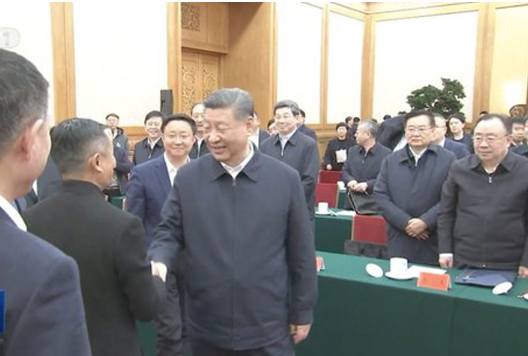
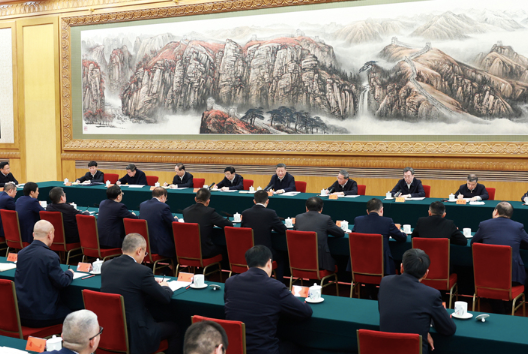
Who truly has Beijing’s ear when it comes to economic policymaking? As China navigates a period of profound economic challenges, this question has taken on new urgency. While outsiders often perceive China’s economic policies as dictated in a top-down, insulated manner, the reality is more nuanced. Policy-making in Beijing frequently involves regular engagement with trusted experts through roundtables, study sessions, and advisory committees. The voices shaping economic strategy extend beyond the Chinese Communist Party (CCP)’s inner circle to include a select “brain trust” of economists whose ideas inform and influence key decisions. To understand China’s policy direction, it is crucial to identify this brain trust. Our project does just that by analyzing the perspectives of econom...