
Asia

Trump’s economic rivalry with China is forcing countries to pick a side
Asia, China, USA, World

Trump’s economic rivalry with China is forcing countries to pick a side

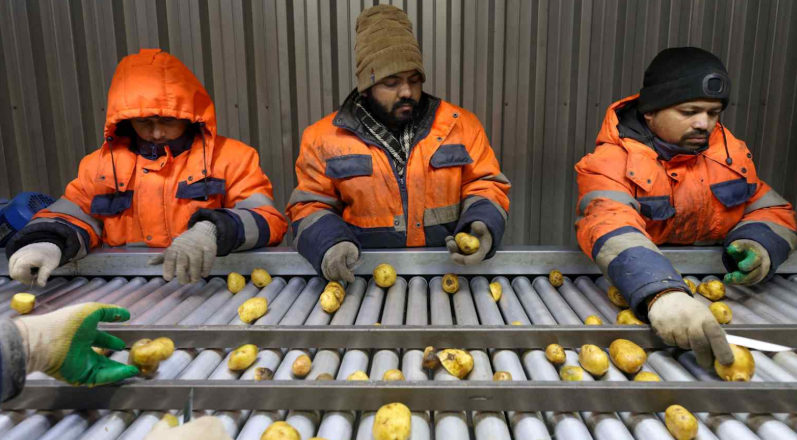
Globalization is dead, at least that’s the verdict of a seemingly endless stream of commentators. But as ever in economics, the story isn’t quite so simple. The prevailing account runs something like this: tariffs first introduced by President Trump, kept in place by President Biden and now turbocharged in Trump’s second term, signal a new age of economic nationalism. According to this view, we are witnessing the start of a grand retreat from the open trading system that has defined the past few decades. The world is turning inwards, and the era of global integration is drawing to a close. But this story doesn’t sit comfortably with the facts. Far from collapsing, global trade volumes have continued to rise and today sit near record highs. If this is the dawn of deglobalization, it...
The economic roots of Nepal’s uprising—and what it means for the region
Asia

The economic roots of Nepal’s uprising—and what it means for the region

Last week, Nepal became the third South Asian country in three years to see its government collapse under the weight of mass protests. On September 8, after the government banned twenty-six social media platforms, young Nepalis poured into Kathmandu’s streets, furious at what they saw as an attempt to silence criticism. The protests escalated, leaving more than seventy people dead and causing hundreds of millions of dollars’ worth of damage. Analysts have rushed to dissect the political intrigue behind the resignation of Prime Minister KP Sharma Oli and the appointment of former Chief Justice Sushila Karki as interim leader. But focusing only on the political aspects of these crises misses the bigger picture: economic despair fueled this...
One Belt, One Road: China’s Strategy for a New Global Financial Order
Asia, China

One Belt, One Road: China’s Strategy for a New Global Financial Order

n late 2013, Chinese premier Xi Jinping announced a pair of new development and trade initiatives for China and the surrounding region: the “Silk Road Economic Belt” and the “Twenty-First-Century Maritime Silk Road,” together known as One Belt, One Road (OBOR).1 Along with the Asian Infrastructure Investment Bank (AIIB), the OBOR policies represent an ambitious spatial expansion of Chinese state capitalism, driven by an excess of industrial production capacity, as well as by emerging financial capital interests. The Chinese government has publicly stressed the lessons of the 1930s overcapacity crisis in the West that precipitated the Second World War, and promoted these new initiatives in the name of “peaceful development.” Nevertheless, the turn to OBOR suggests a regional scena...
Nepal, Indonesia, Bangladesh, Sri Lanka: When demographic dividend isn’t delivered
Asia

Nepal, Indonesia, Bangladesh, Sri Lanka: When demographic dividend isn’t delivered

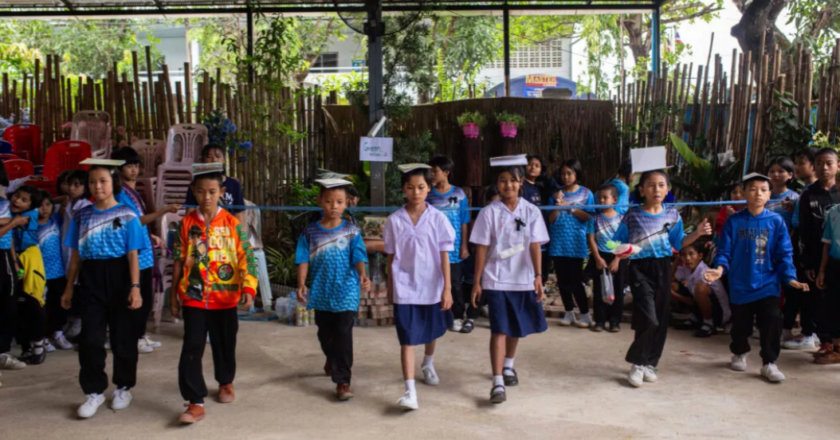
Sri Lanka in 2022. Bangladesh in 2024. Indonesia in August 2025…and now Nepal, a month later. The past few years have been littered with youth-led uprisings in Asian countries, coming at a time when the headline growth numbers have not resulted in better lives for those entering the labour force. At the same time, the ruling elite and business class seem to have prospered. Over the last week, the children of Nepal’s political class have come under heavy fire for displaying their luxurious lifestyles on social media, with the phrase ‘nepo kids’ trending as the Gen Z’s ire over corruption took centre-stage. In 2024, Nepal was ranked 107 out of 180 countries in Transparency International’s corruption rankings. Bangladesh was ranked 151, Sri Lanka 121, and Indonesia 99. If politics ...
Inside Nepal’s economy: Social media ban only tip of the iceberg 
Asia

Inside Nepal’s economy: Social media ban only tip of the iceberg 

Large-scale riots, gunfire at protestors, the Parliament building set ablaze, the prime minister’s resignation: this is what Nepal is witnessing at the moment. A social media ban, which has now been lifted, was only the tipping point. Nepal’s economy has been reeling under internal stress for a long time. The unemployment rate has been consistently above 10 per cent for over three decades. It stood at 10.7 per cent in 2024. Meanwhile, it was 4.3 per cent for South Asia and 4.9 per cent for the world, according to the World Bank. The economic output of Nepal is weak, a fact that’s clearly visible in its low per capita GDP. In 2024, it was only Intl$5,737, nearly half of the South Asian average and one-fourth of the global average. A high unemployment rate and ...
Solving the China puzzle
Asia, China

Solving the China puzzle

From app bans to joint ventures, the government has reset Chinese business in the country. The next step should be a structured model for sustainable engagement. The Prime Minister’s recent visit to China for the Shanghai Cooperation Organisation summit has brought renewed attention to India’s approach towards business relations with its northern neighbour. Since then, several ministers have spoken in different ways suggesting the need to reassess ties, indicating a gradual shift from the restrictive stance taken after the 2020 border clashes. That episode, marked by the Galwan incident, had strengthened the government’s resolve to curb Chinese investments. The measures that followed were wide-ranging. Over 300 Chinese apps, including TikTok, were banned. More significantly,...
<strong>Bangladesh curries favour with China, hit hard by India in trade</strong>
Asia, China

Bangladesh curries favour with China, hit hard by India in trade

By banning imports to India from Bangladesh through land ports, New Delhi has hit back squarely against Dhaka for Chief Advisor of the interim government of Bangladesh Mohammed Yunus saying that he would help turn north-east India into a captive market for China. The latest was a ban on import of certain categories of jute products including bags into India from Bangladesh from the land borders starting 13th August 2025. Imports will only be permitted through the Nhava Sheva port Mumbai. This ban has hit hard the export of garments from Bangladesh, most of which reached India through land routes to West Bengal. The closure of the land ports has also jeopardised the export of Bangladeshi garments to third countries through Indian sea ports. Kolkata Port and Nhava Sheva Port in Mu...
Global Investors Rethink China Exposure
Asia, China

Global Investors Rethink China Exposure

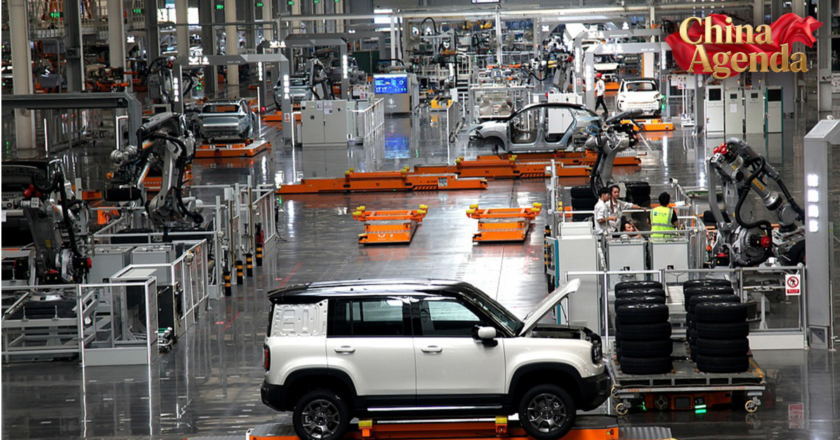
China’s disinflation isn’t just about cautious consumers; it’s rooted in a deeper structural imbalance. The real driver is the persistent gap between policy-fuelled industrial output and actual market demand. From February to May, CPI dipped into deflation, rising just 0.1% in June. This reflects years of unchecked capacity growth in sectors like EVs, solar, steel, semiconductors, and shipping industries prioritized for their export potential, not market viability. For two decades, China’s economic model favoured investment over consumption, with policymakers pushing production in “strategic” sectors. But without global demand discipline, this overcapacity now weighs down prices, revealing the limits of a supply-heavy growth strategy in a cooling global economy. China’s industrial ...
Stablecoins prompt strategic rethink of China’s financial strategy
Asia, China

Stablecoins prompt strategic rethink of China’s financial strategy

China is grappling with the rise of US dollar-backed stablecoins, which it sees as deepening American monetary dominance, while experimenting with yuan-pegged alternatives to boost its currency’s global reach. The state is keeping the domestic focus on its centralised e-CNY while allowing Hong Kong to trial more flexible stablecoin regimes, aiming to balance innovation abroad with strict control at home. The expanding use of US dollar-backed stablecoins in international finance is prompting concern in Beijing about their potential role in reinforcing dollar dominance. While most stablecoins are privately issued, the overwhelming majority are backed by the US dollar or dollar-denominated assets, embedding American monetary power into the emerging infrastructure of global digital fin...
<strong>Factory closures grip China’s manufacturing base as PMI falls deeper into contraction</strong>
Asia, China

Factory closures grip China’s manufacturing base as PMI falls deeper into contraction

The latest data from China’s official Manufacturing Purchasing Managers’ Index (PMI) paints a grim picture of an economy in decline, with factory closures sweeping through the country’s most vital industrial regions.  In July, the PMI dropped further into contraction at 49.3, down from 49.7 the previous month and missing market expectations.  A PMI reading below 50 signals shrinking activity, and for China—a nation that once branded itself as the “world’s factory”—the numbers are a stark confirmation that the slowdown is deepening. The fall in the headline PMI coincided with declines in the new orders index, which slipped to 49.4 from 50.2, and in new export orders, which slid to 47.1 from 47.7.  The non-manufacturing PMI, covering services and construction,...