China

China, Market

To boost its economy, China unleashes a financial bazooka.

What’s happened? On September 24th a series of policies were announced by China’s three top financial officials at a press conference to backstop the stalling economy. These notably included a 20-basis-point cut to the seven-day reverse repo rate (RRR; the policy interest rate); a 50-basis-point cut to the reserve requirement ratio (RRR); a rate cut on existing mortgages; capital replenishment of large state-owned banks; and other measures to support the housing and the stock markets. Why does it matter? The rare, simultaneous rollout of so many measures highlights the urgency for policymakers to prop up the economy. We believe that real GDP growth this year will miss the government’s annual target, and may even undershoot our own conservative growth forecast of 4.7%. The cuts to...
<strong>China is looking all set for a recession</strong>
China, USA, World

China is looking all set for a recession

Ray Dalio the owner of American investment management firm, Bridgewater Associates which helps top investors worldwide to grow their money, in a recent interview with Bloomberg television, said that he had sold most of the investments in China. He warned that China was facing serious economic problems. “You have an environment in China which is changing and becoming a more difficult environment,” Dalio said. The trouble is evident in the stock market. The Shanghai Shenzhen CSI 300 index is on a free fall for more than two years. Investors both foreign and domestic are divesting investments to stop loss. Foreign investors are going to other emerging markets. Chinese nationals are holding on cash or buying gold coins and bars to prevent further erosion of personal wealth. “The...
China, Market

Et tu, Milei? Is Argentina Regaining Contact with China?

When Mauricio Macri was elected president of Argentina in 2015 as leader of the center-right coalition Cambiemos, he adopted a confrontational stance on China, distancing himself from the approach of his predecessor, Cristina Kirchner. He instead privileged relations with the United States and other Western powers to “reinsert Argentina into the world.” It did not last. By the end of his first year in office, Macri had signed a series of economic agreements with Beijing. By the end of his administration in 2019, China had consolidated its role as a strategic partner. Similarly, Javier Milei came to the Casa Rosada skeptical about Argentina’s friendship with China. In his case, however, the libertarian leader also brought an ultra-ideological and personalistic approach to foreign policy...
<strong>China targets Canadian Canola amid trade dispute</strong>
China, World

China targets Canadian Canola amid trade dispute

Trade wars are a common occurrence in the global market, and the friction between China and Canada is no exception. These conflicts are often fuelled by geopolitical issues. Back in 2019, China halted Canadian meat imports after Huawei’s CEO, Meng Wanzhou, was detained. Officially, China blamed banned feed additives in the meat, but many saw it as a diplomatic move in response to the Ottawa-Beijing rift. Now, China is considering probing Canada for allegedly dumping canola into its market. In the realm of international trade, dumping refers to selling a product at a lower price in a foreign market than in the domestic one, essentially a form of price discrimination. Following Canada’s imposition of a 100% tariff on electric vehicles and a 25% tariff on steel and aluminium from Chin...
An economist claims that China’s economy is undergoing a “slow, painful, grinding adjustment.”
Asia, China, Market

An economist claims that China’s economy is undergoing a “slow, painful, grinding adjustment.”

SINGAPORE — Following a slew of data released over the weekend from China that painted a fairly bleak outlook for its economy, analysts have tapered their expectations for the country’s full year GDP growth. “There hasn’t been much good news in this latest round of data, and this has been the pattern for the last few months,” said Eswar Prasad, professor of international trade and economics at Cornell University, on CNBC’s “Street Signs Asia” on Monday. “Both the long term issues related to property prices and so on, and the short term issues related to domestic demand in particular, especially private investment and household consumption have not been doing well at all,” Prasad said. He warned that Beijing’s economic outlook for the second half of the year is now “flas...
China, Market

In September, China’s consumer prices increased more slowly.

C hina's consumer inflation rate slowed in September, official data showed Sunday, in a sign that demand remains fragile in the world's number two economy. The slowdown comes as authorities have been seeking to boost domestic activity and shore up China's ailing property sector, with officials on Saturday announcing plans for a significant fiscal stimulus package. The consumer price index (CPI), a key measure of inflation, rose 0.4 percent year-on-year in September, down from the 0.6 percent recorded in August, the National Bureau of Statistics (NBS) said. The figure came in below the 0.6 percent forecast in a Bloomberg survey of economists. August's figure, the highest level since February, had raised hopes that consumer confidence may be picking up. While many major Western economies ha...
China, Market, USA

Domestic macro forces have a major role in driving trade balances between the US and China.

China’s widening trade surplus and the growing US trade deficit since the pandemic have renewed concerns about global imbalances and fueled an intense debate on their causes and consequences. There are increasing worries that China’s external surpluses result from industrial policy measures designed to stimulate exports and support economic growth amid weak domestic demand. Some worry that the resulting overcapacity could lead to a “China shock 2.0”—a surge of exports that would displace workers and hurt industrial activity elsewhere. This trade and industrial policy view of external balances is incomplete at best and should be replaced with a macro view. External balances are ultimately determined by macroeconomic fundamentals, while the link to trade and industrial policy i...
Expert: China has the funds to handle the real estate crisis without affecting the rest of the world.
Asia, China, Market, World

Expert: China has the funds to handle the real estate crisis without affecting the rest of the world.

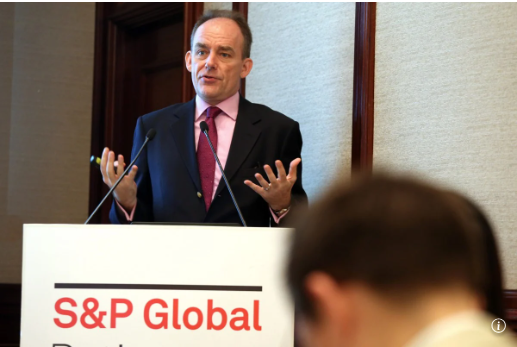
China’s property market remains the biggest downside risk to its economic growth target this year, with policymakers seemingly not in a hurry to make significant changes because its impact is mostly confined to the world’s second-largest economy, according to the chief economist for a global ratings agency. “China has the savings to deal with this. It’s not really spilling over too much to the rest of the world,” said Paul Gruenwald, global chief economist at S&P Global Ratings. “So they’re not going to be forced into dealing with the property excesses by any external or market pressure. They can do it at their own time, but we are not at the bottom yet.” In May, China unveiled wide-ranging measures to stabilise its property sector, which has been in contraction sin...
China’s Housing Rescue Math Is Unworkable, Extending the Crisis
China

China’s Housing Rescue Math Is Unworkable, Extending the Crisis

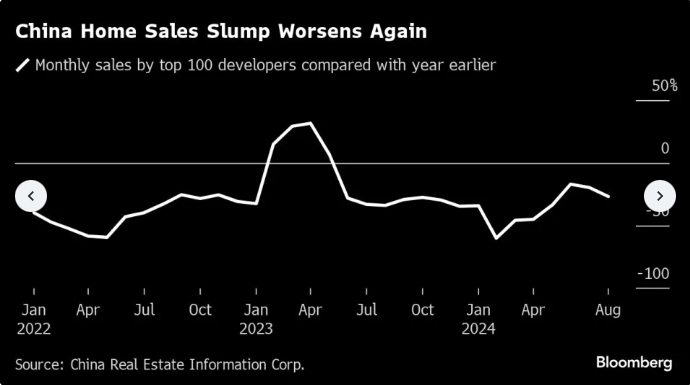
(Bloomberg) -- In May, China’s central government urged more than 200 cities to buy unsold homes to ease oversupply. More than three months later, only 29 have heeded the call. The glacial pace of implementation — driven in large part by the unattractive economics of the plan for local governments — underscores the challenge President Xi Jinping faces as he tries to arrest a record property slump that’s threatening to undermine the country’s growth targets. The plan has been a key part of the government’s attempt to shore up the real estate sector, while achieving Xi’s goal of creating more affordable housing. The disappointing progress raises the pressure for more forceful measures as China tries to deal with 382 million square meters of excess inventory, equivalent to the size of ...
Chip shortage hits Huawei’s Mate70 manufacturing
China, Market

Chip shortage hits Huawei’s Mate70 manufacturing

Huawei Technologies, based in Shenzhen, is facing challenges in securing enough high-end chips for its upcoming Mate70 smartphone. This struggle is a direct result of the ongoing the trade war against China which includes thechip war also. Both Huawei and its partner, Semiconductor Manufacturing International Corp (SMIC), are under US sanctions. They aimed to produce 2.5 million chips for the Mate70's September launch but fell short due to limited manufacturing capacity and productivity issues. According to The Information, the primary reason for this shortfall is the persistent impact of a four-year-old US ban on supplying chip manufacturing tools to Huawei and SMIC.  Initially, it was expected that Huawei would launch the Mate70 in China on September 10, a day after Apple's ...